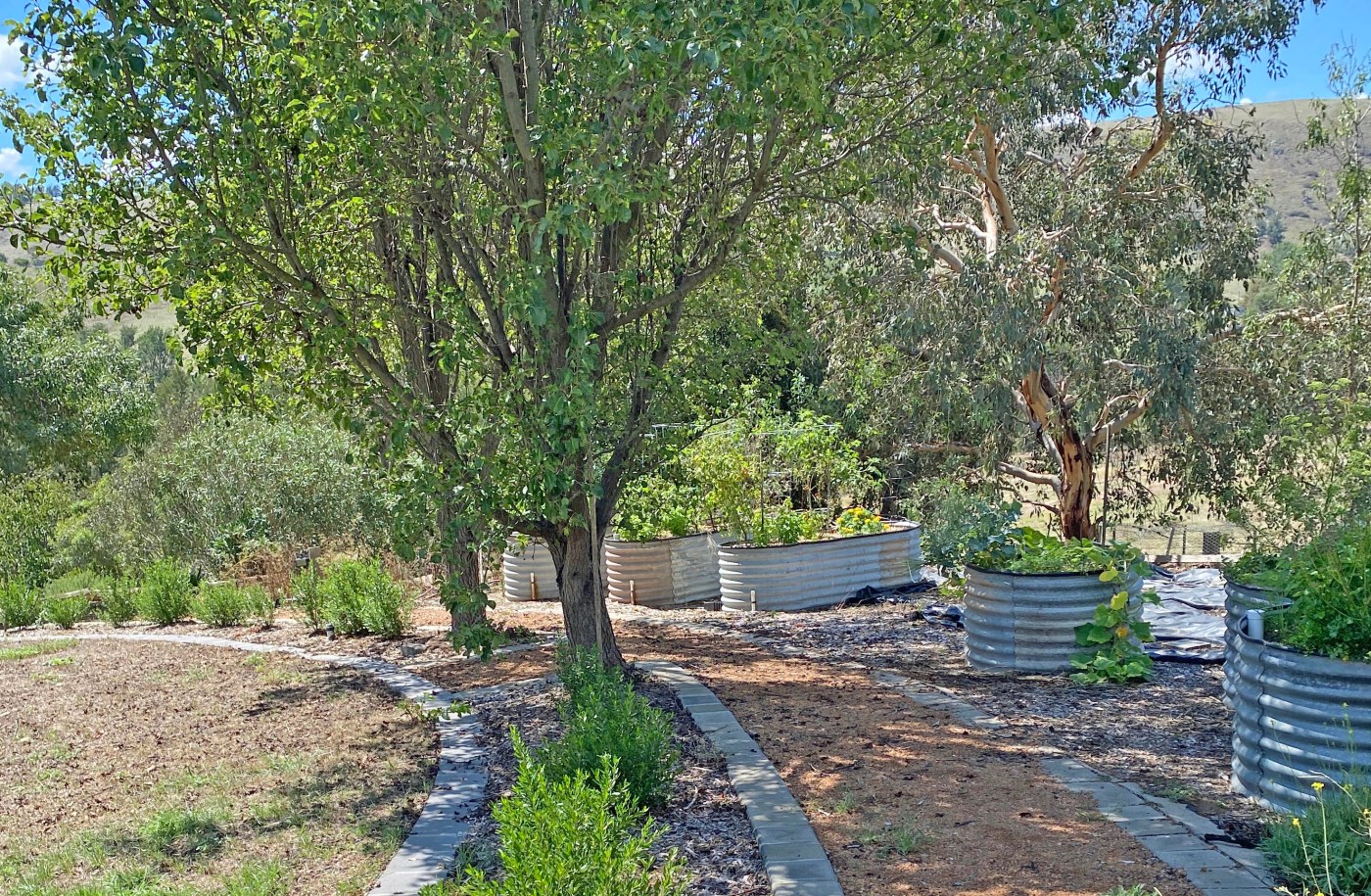
For a lazy gardener, wicking beds have a lot of attraction. There’s not the same level of rushing about with hoses and sprinklers trying to keep a steady supply of water.
I’d looked at a few designs, including ones made from old IBC’s (Intermediate Bulk Containers) which are waterproof and only need to be cut in half to make two raised, wicking, garden beds.
Craig wasn’t wild about the amount of work involved. Also, they’re a bit ugly. You can make them more beautiful and insulated by adding timber planks to the outside, but again, more work.
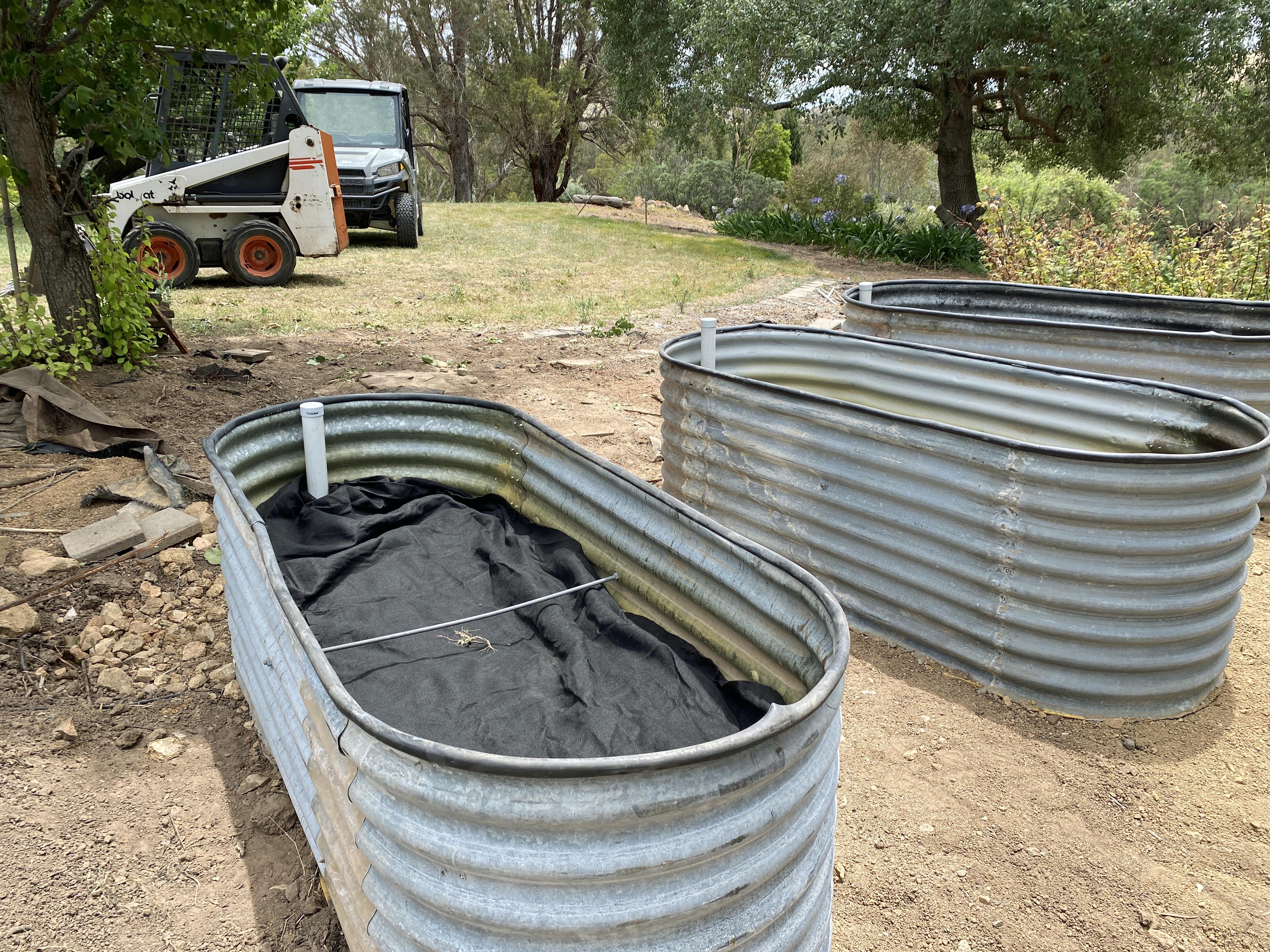
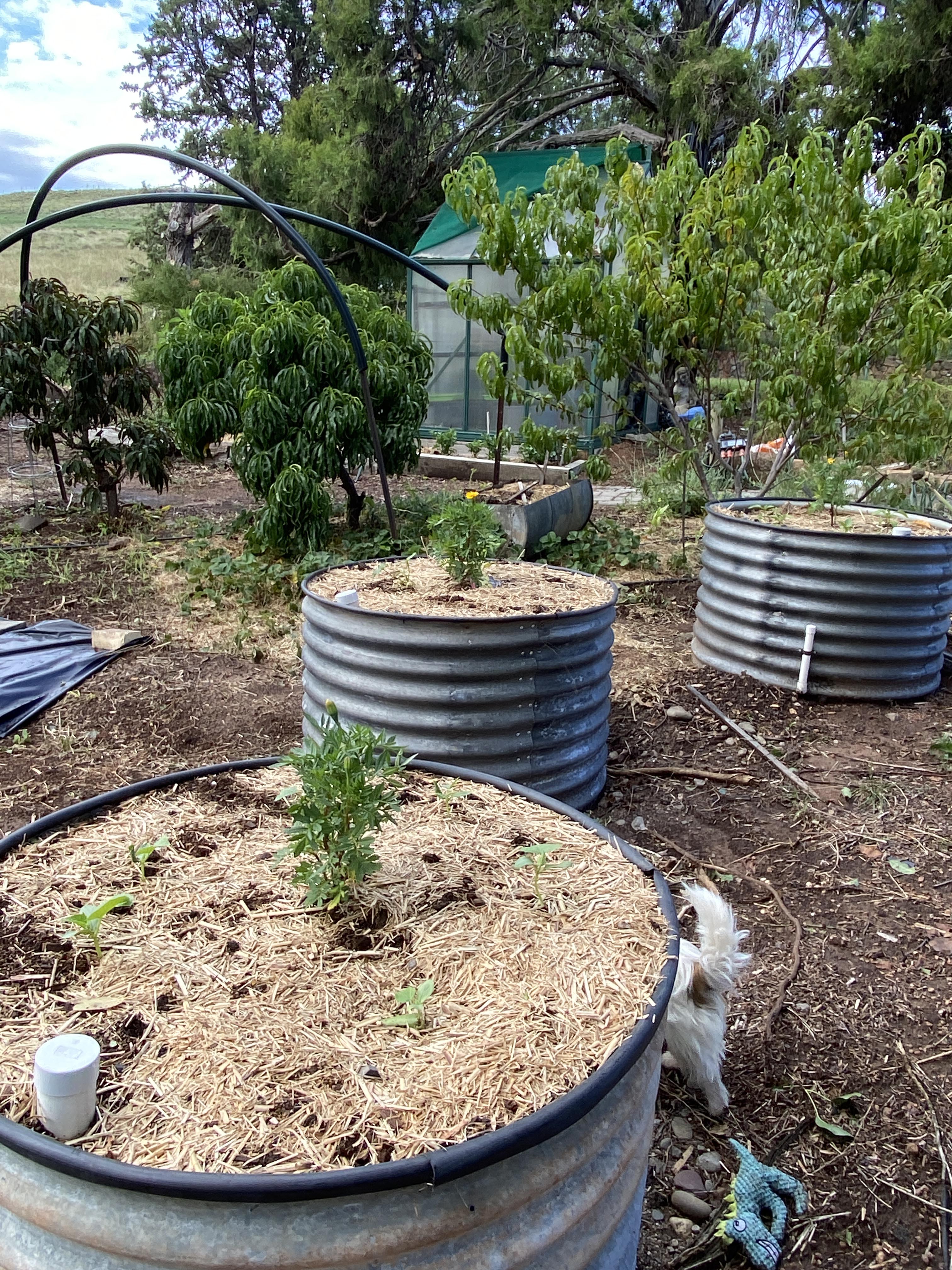
I talked to James, the Bobcat Master, and he recommended Henley’s Rustics, a father-daughter business using salvaged iron in Ungarie NSW. I like that they’re re-using salvaged iron, and the corrugated iron look suits our rural garden all right.
I was worried the metal would be too thin, and therefore too hot, but that hasn’t been a problem. The moisture keeps it cool.
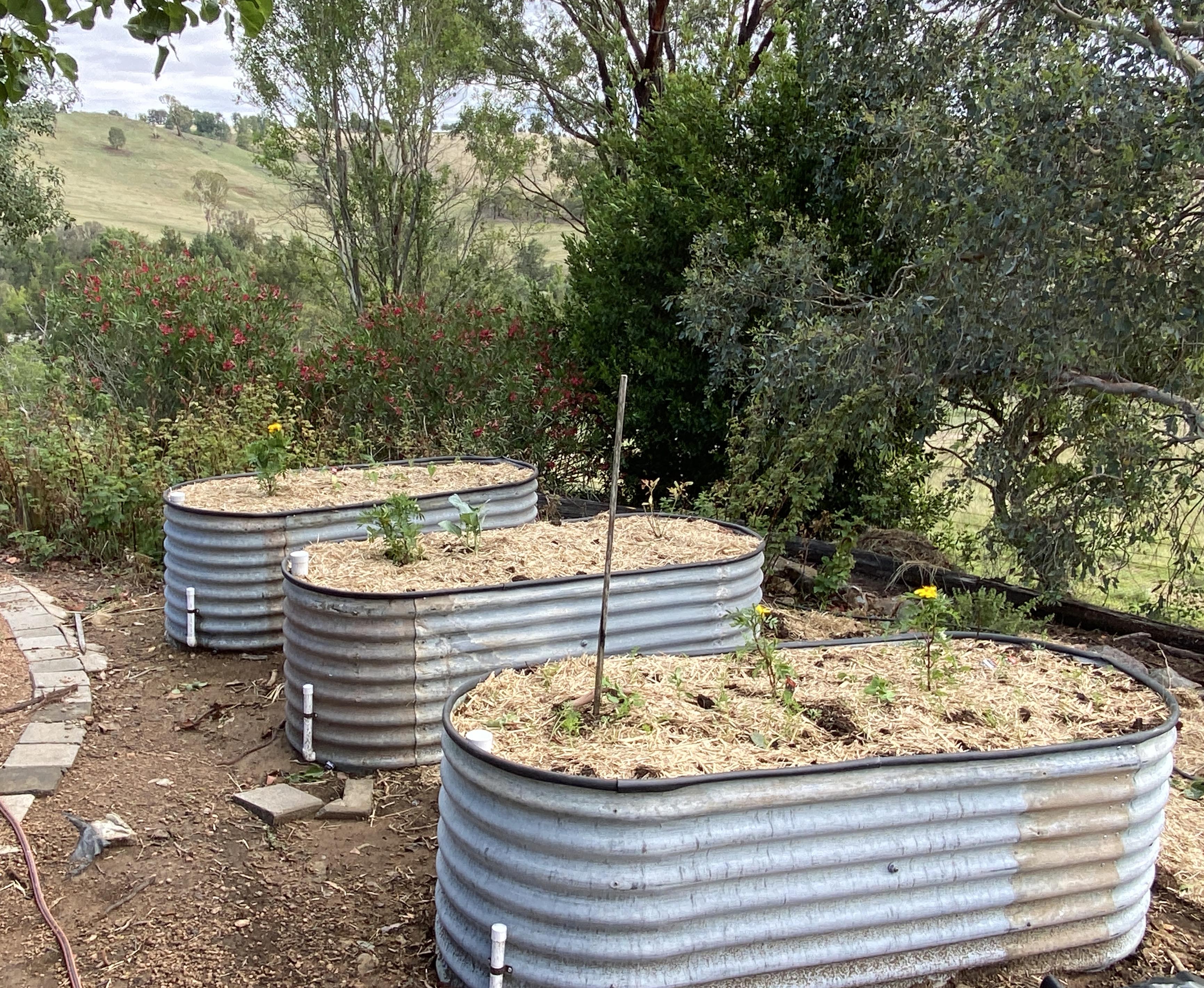
I went for six beds, 3 long and 3 round. Extravagant. I could make use of six more.
An important question is what you have to fill the base with to keep the soil from sinking into the water reservoir. It needs to have a lot of spaces that the water will fill.
- Scoria is light, but you have to buy it unless you live in a volcano
- Plastic bottletops are also light, but could take a while to collect if you haven’t started already
- Broken up Styrofoam is another cheap option. Somehow, I wasn’t enthusiastic about starting new beds with plastic at the bottom, however. Plants aren’t actually in contact with the plastic, because there is a blanket of geotextile separating soil from the water reserve.
- Instead we used gravel and small rocks, because we always have access to stones, and because James was there with his Bobcat to load it into each one.
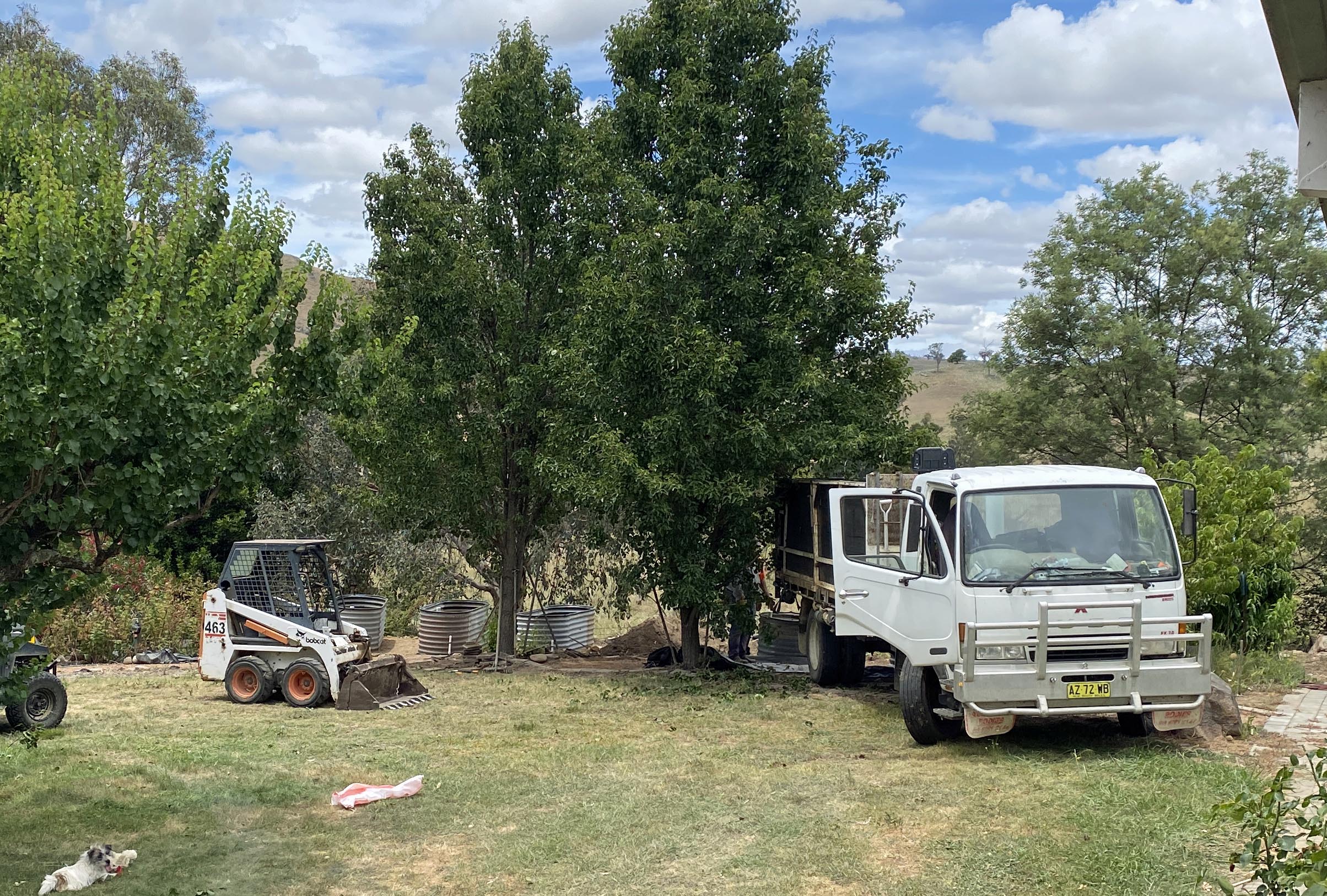
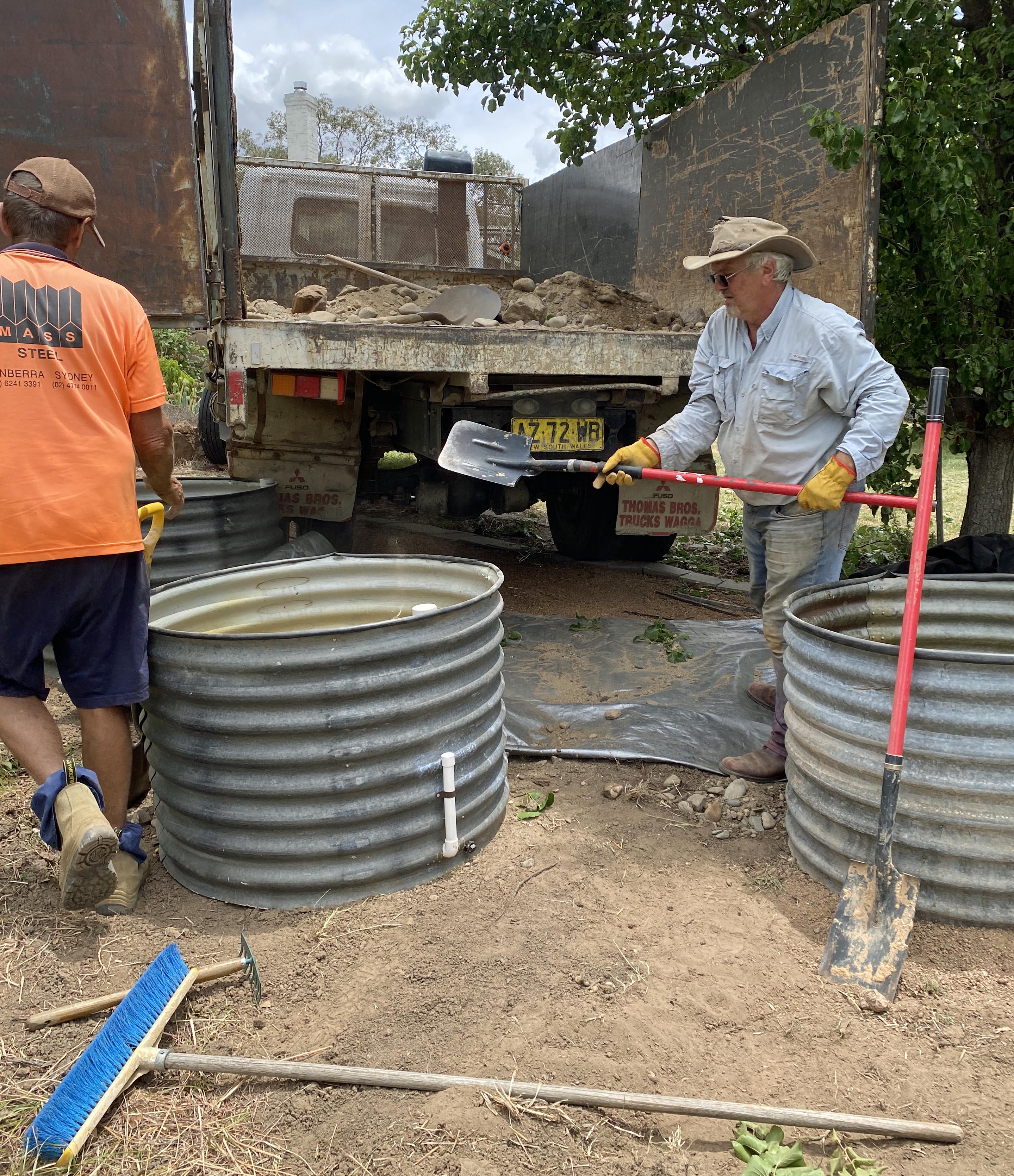
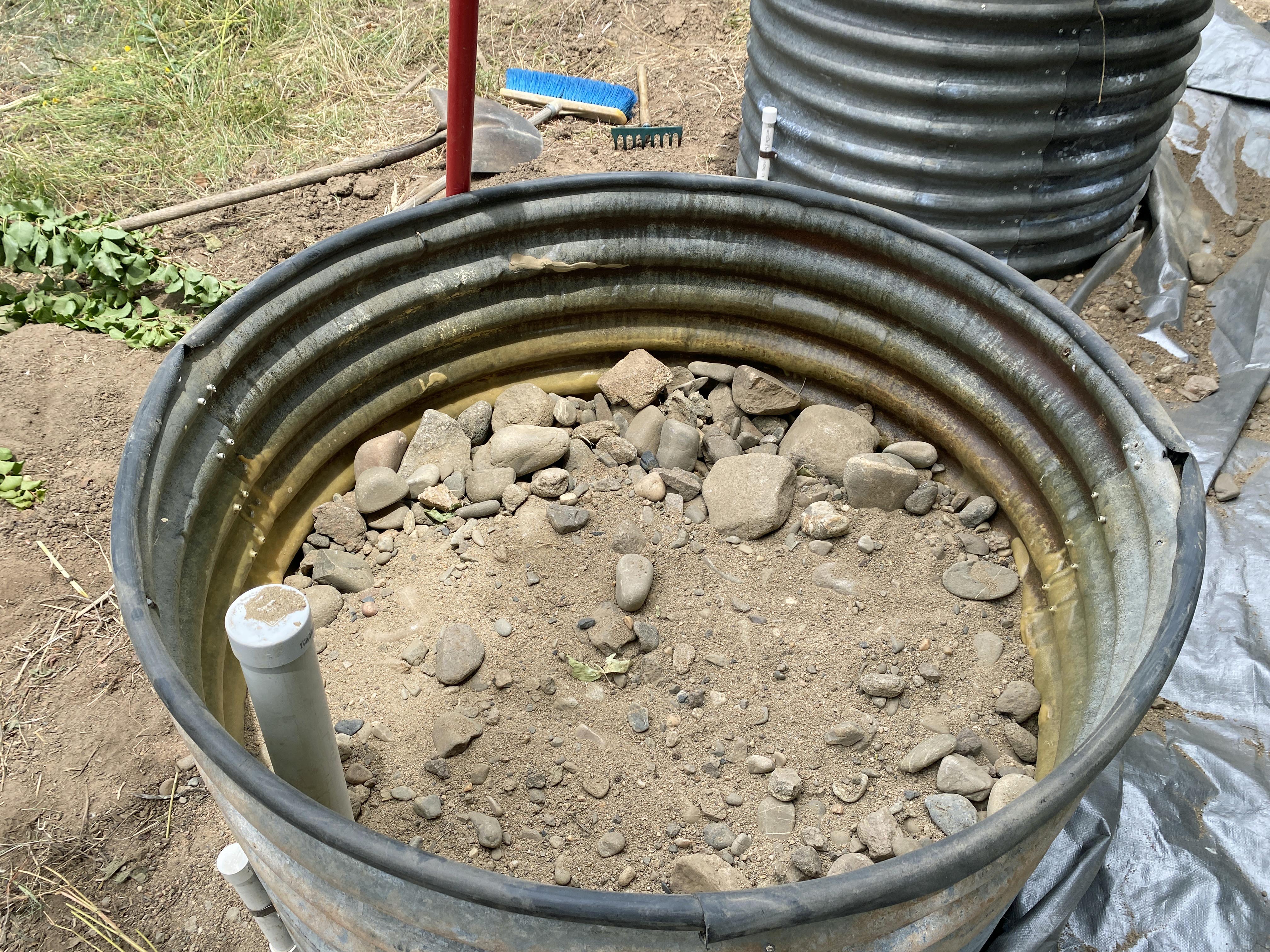
Levelling was an important part of the process. If you don’t get them level, the water supply will be all up one end and you’ll have dry patches where things will die.
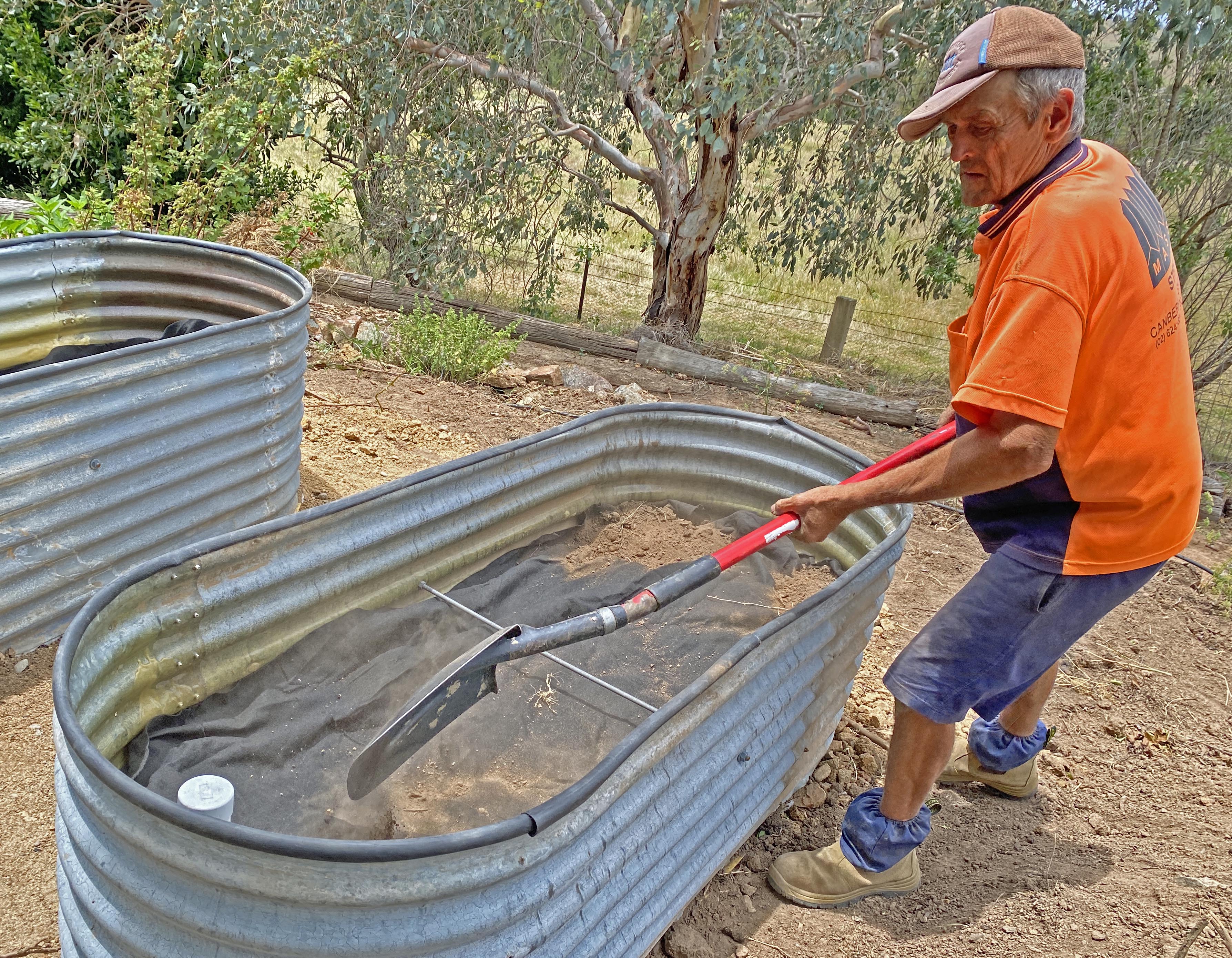
Topsoil for the growing level (above the geocloth) was also needed. We brought in some with a lot of horse manure mixed in. Again, it was great to have the Bobcat (and James) for this because that would be a lot of wheelbarrow loads.
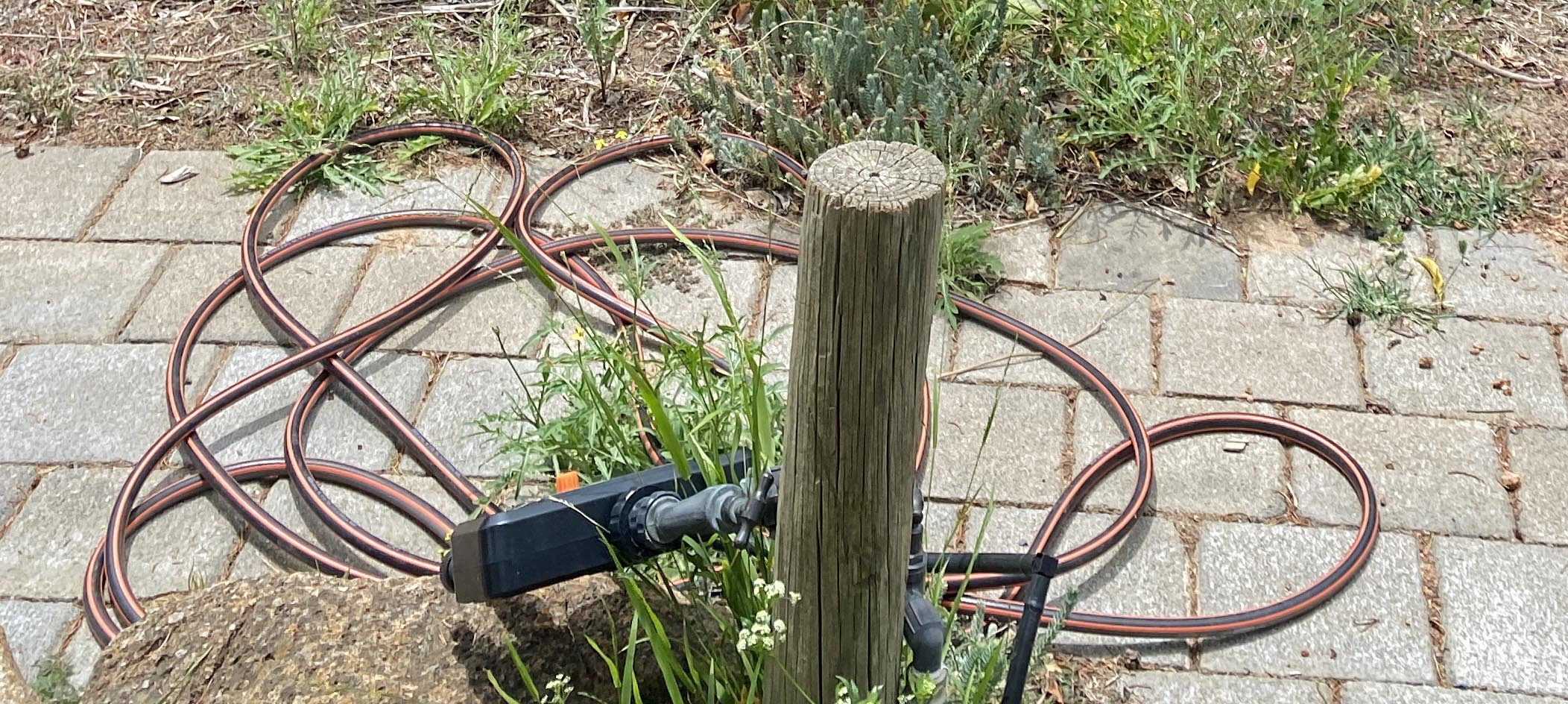
Watering is still a thing (despite what I imagined) because young plants don’t have their roots down far enough to reach the water wicking up from the reserve. You also need to have a hose available to fill up the reserves. During the summer, we do it (okay, Craig does it) at least once a week.
The success rate has been pretty good. The one surviving blueberry from my previous attempts at growing them, is finally looking healthy and happy and produced…several…berries.
We did grow some weird carrots, perhaps because the soil was so fertile they spread horizontally rather than going deep and straight.

The cucumbers I had last year faded a little early in the autumn because they’re not protected like the ones under the canopy of the big cypress in the old veggie garden.
This year, with the brutal heatwaves, up to 40 degrees Celsius, we lost a lot of things that were growing in the soil, including all my strawberry and raspberry plants, but everything in the wicking beds survived.
The wicking beds seem to be out of reach for rabbits and wombats, but they’re just the right height for kangaroos to snack on, and the grasshoppers caused mayhem as well.
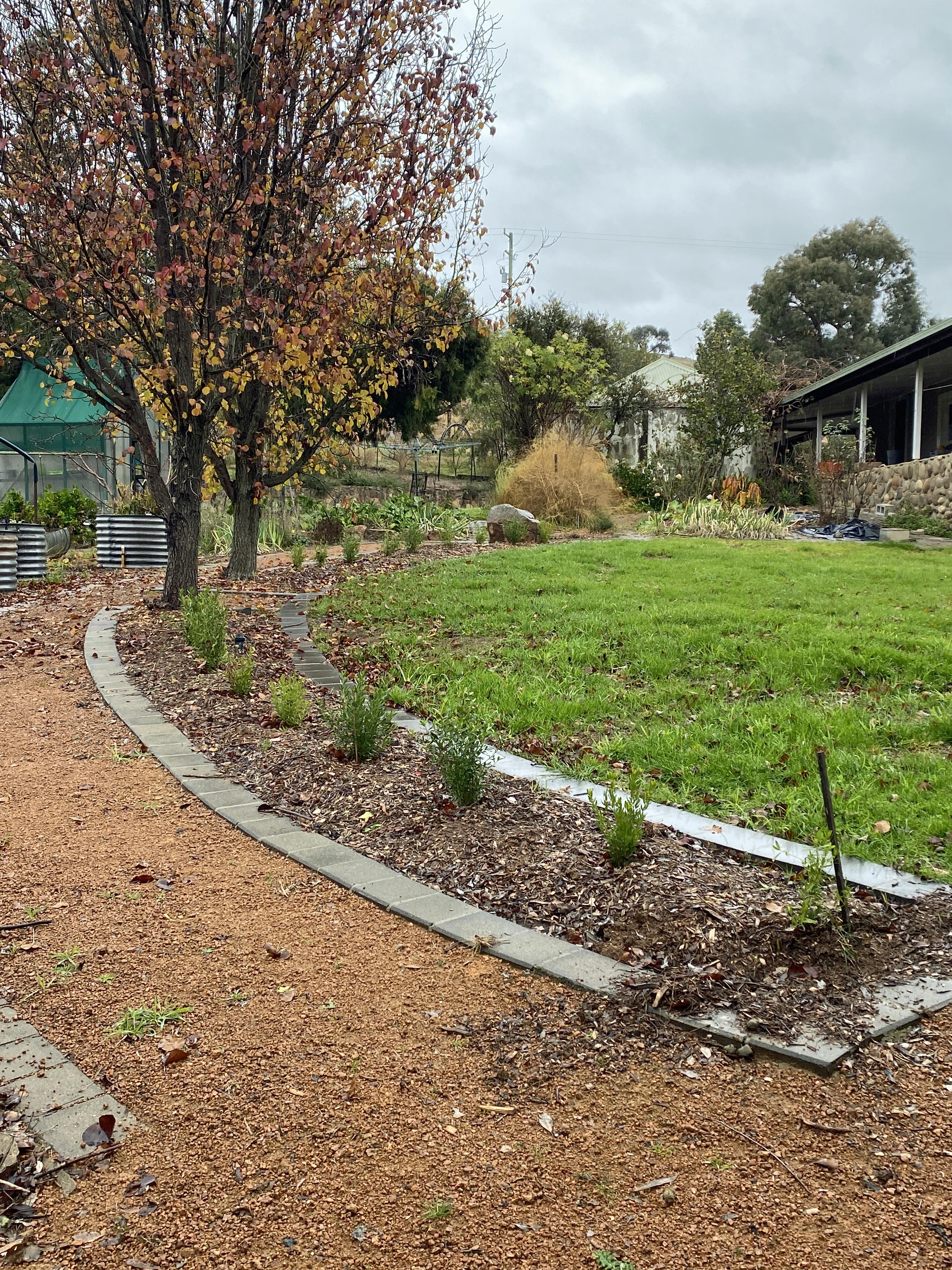
In the meantime, the new correa hedge (replacing the rosemary one that died from too much water in 2022) is beginning to grow up and provide a screen.
 One Bend In The River
Leave a comment