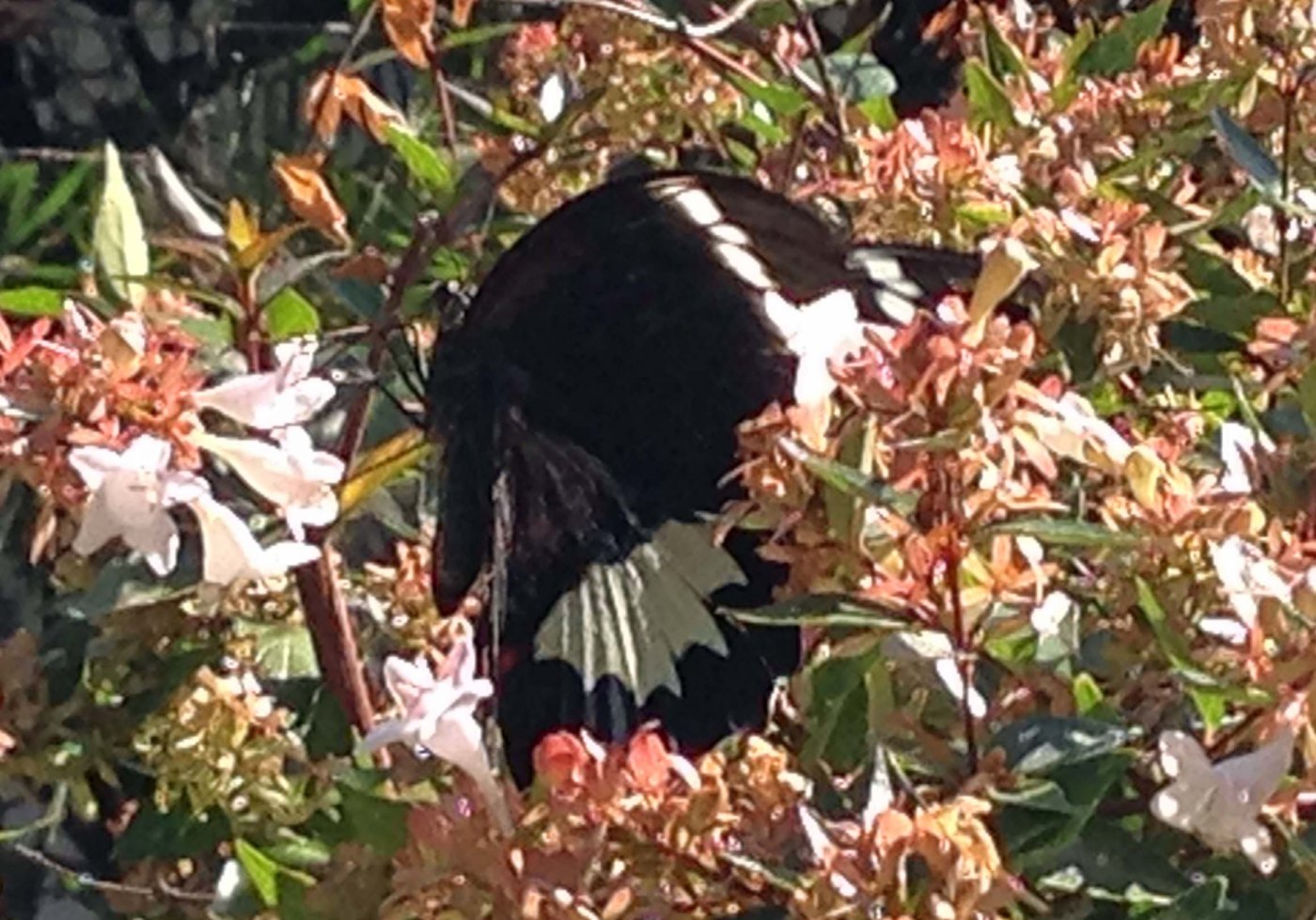
Just before the weather began to turn cooler, a stranger came flapping through the garden.
It was large enough that you could expect to hear the wings beating. 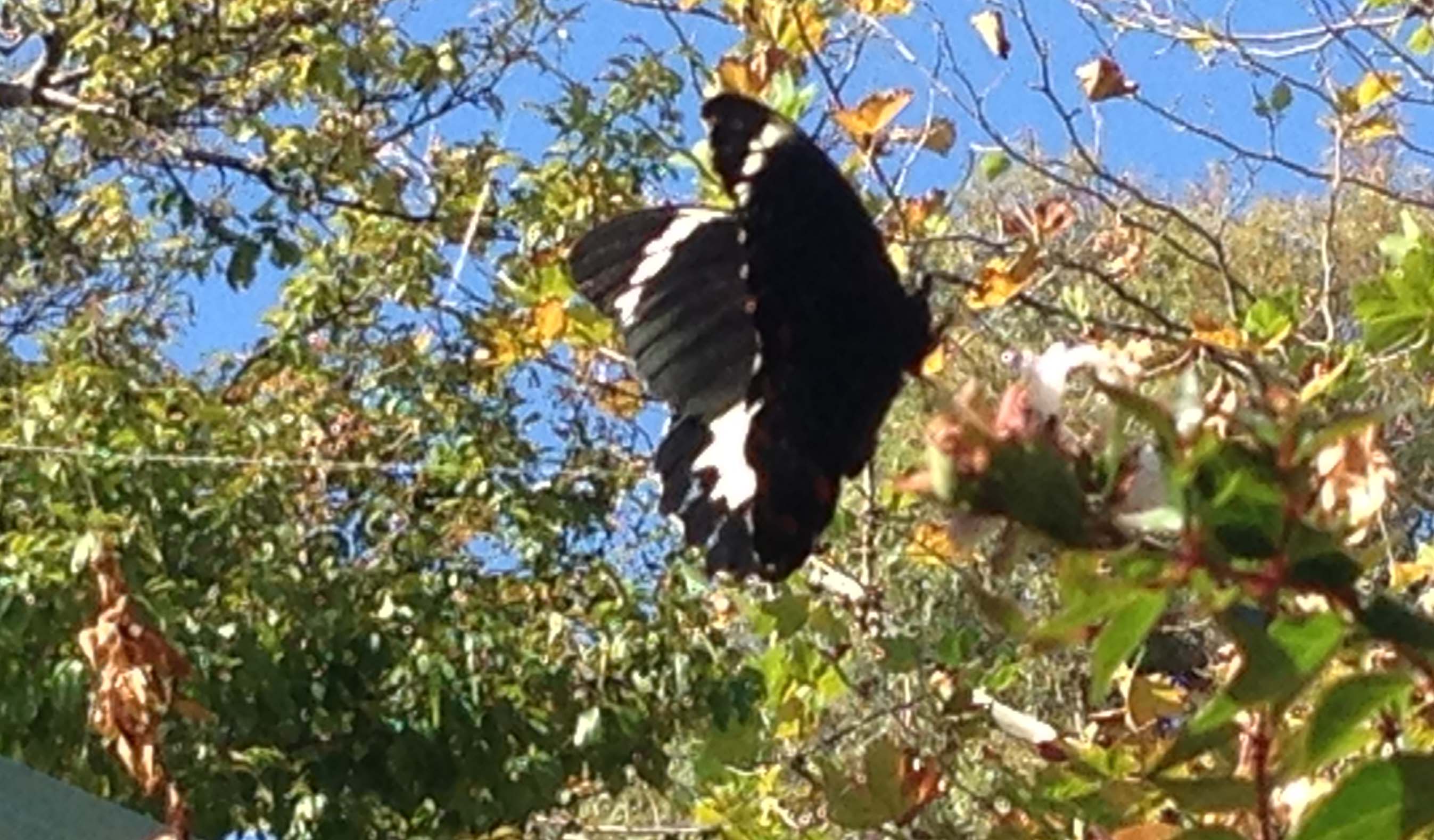
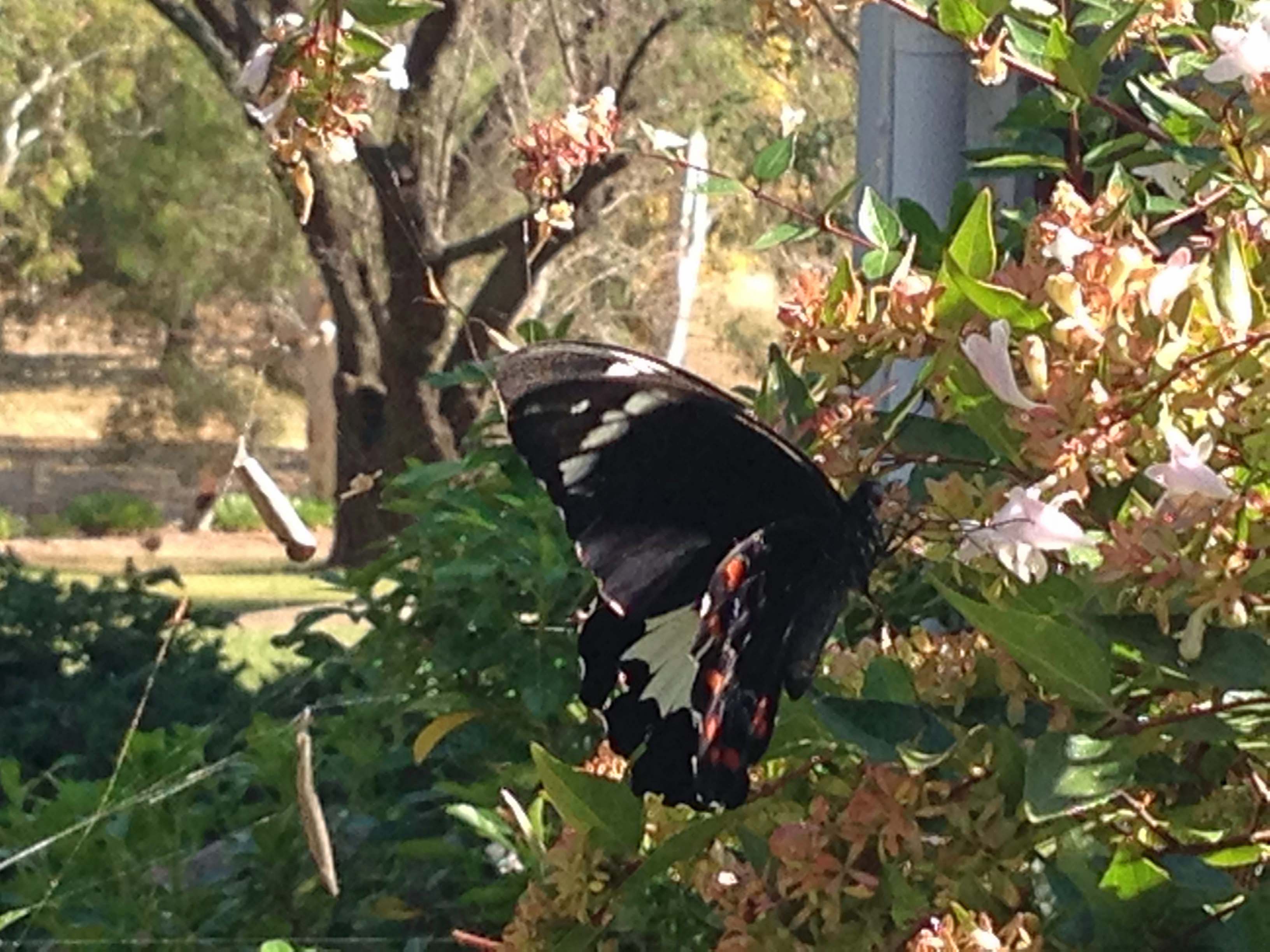
I spent some fruitless hours looking at pictures of Delia butterflies, since the last impressive butterfly I saw was an Imperial Jezebel (Delias harpalyce) in a neighbour’s garden. They eat mistletoe, so it had probably flown up from the creek. But our visitor didn’t seem exactly like a Delia. The rows of orange spots underneath the wings are very distinctive. So Craig sent a cheeky query to Michael Braby, author of the Complete Field Guide to Butterflies of Australia – which we don’t own (but clearly need to have on hand).
Michael Braby replied “Your butterfly is an Orchard Swallowtail (Papilio aegeus); it is native to Australia (and New Guinea) but I doubt the species breeds on native plant(s) in the Canberra region and suspect it ‘moved in’ (i.e. colonised) early last century with the cultivation of lemon and other citrus trees, which it readily exploits in the larval stage. In the bush, it specialises on a wide range of Rutaceae in both rainforest and woodland-scrub habitats.”
I felt less stupid for not recognizing it as a Swallowtail given that it actually doesn’t have a dangling spiky swallow-style tail. 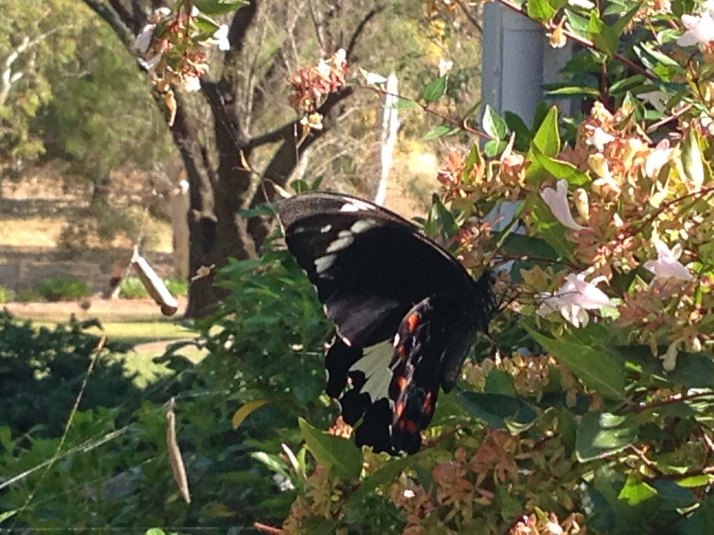 I find it very interesting that they may have moved into the area with citrus cultivation, as we don’t really have many citrus trees. I’ve planted a frost tolerant lime, a lemon and a navel orange since we moved here in 2012, but they are all still very small. Perhaps they are small because Papilio Aegeus caterpillars eating their leaves. I also planted some flowering croweas and boronias which are part of the Rutaceae family that Michael mentions. Or perhaps there are some other members of the Rutaceae family that I don’t know about growing nearby.
 I find it very interesting that they may have moved into the area with citrus cultivation, as we don’t really have many citrus trees. I’ve planted a frost tolerant lime, a lemon and a navel orange since we moved here in 2012, but they are all still very small. Perhaps they are small because Papilio Aegeus caterpillars eating their leaves. I also planted some flowering croweas and boronias which are part of the Rutaceae family that Michael mentions. Or perhaps there are some other members of the Rutaceae family that I don’t know about growing nearby.
It finally sat and sunned itself and let me get a good look at the fine dusting of gold on the black and white velvety wings. 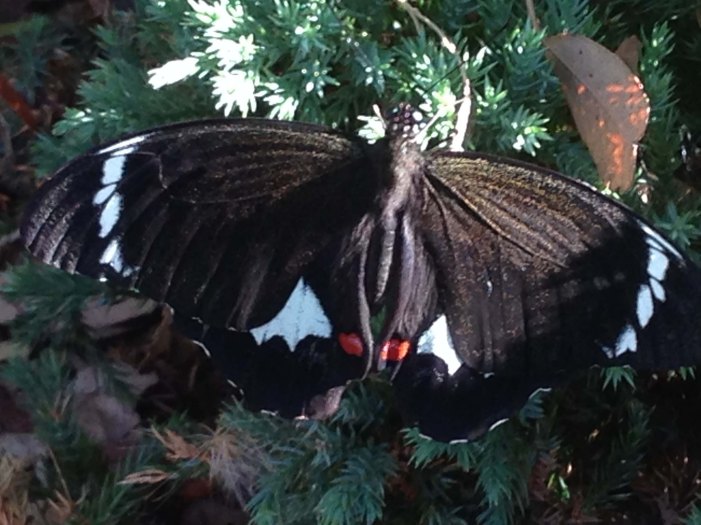
 One Bend In The River
I also had one of these flapping about my garden the other day. I see their caterpillars on my citrus trees often but haven’t managed to get a photograph of the adults. It was so big I thought it was a bird from a distance. You’d done well to get some great photos! I hope I get one pic of an adult one day. 🙂
LikeLike
Thanks Jane. Luckily this butterfly was very unwary, so I was able to come right up to him. When we lived in California I used to watch the Monarch butterflies migrating in flocks over our heads, like very flappy birds. And then the hummingbirds would buzz around just like insects. It’s an amazing world.
LikeLiked by 1 person