Is the method I’ve been using to plant native trees too slow? Is there a better way?
I’ve just had an example of speedy planting, which if it works, will do ten years of my work in two weeks.
Impressive.
I signed a Forestry contract with the carbon capture company Greenfleet late last year. They were recommended as an established group that not only sells carbon credits (where their profit is) but also creates a balanced native habitat of local trees and shrubs, not a horrible monoculture.
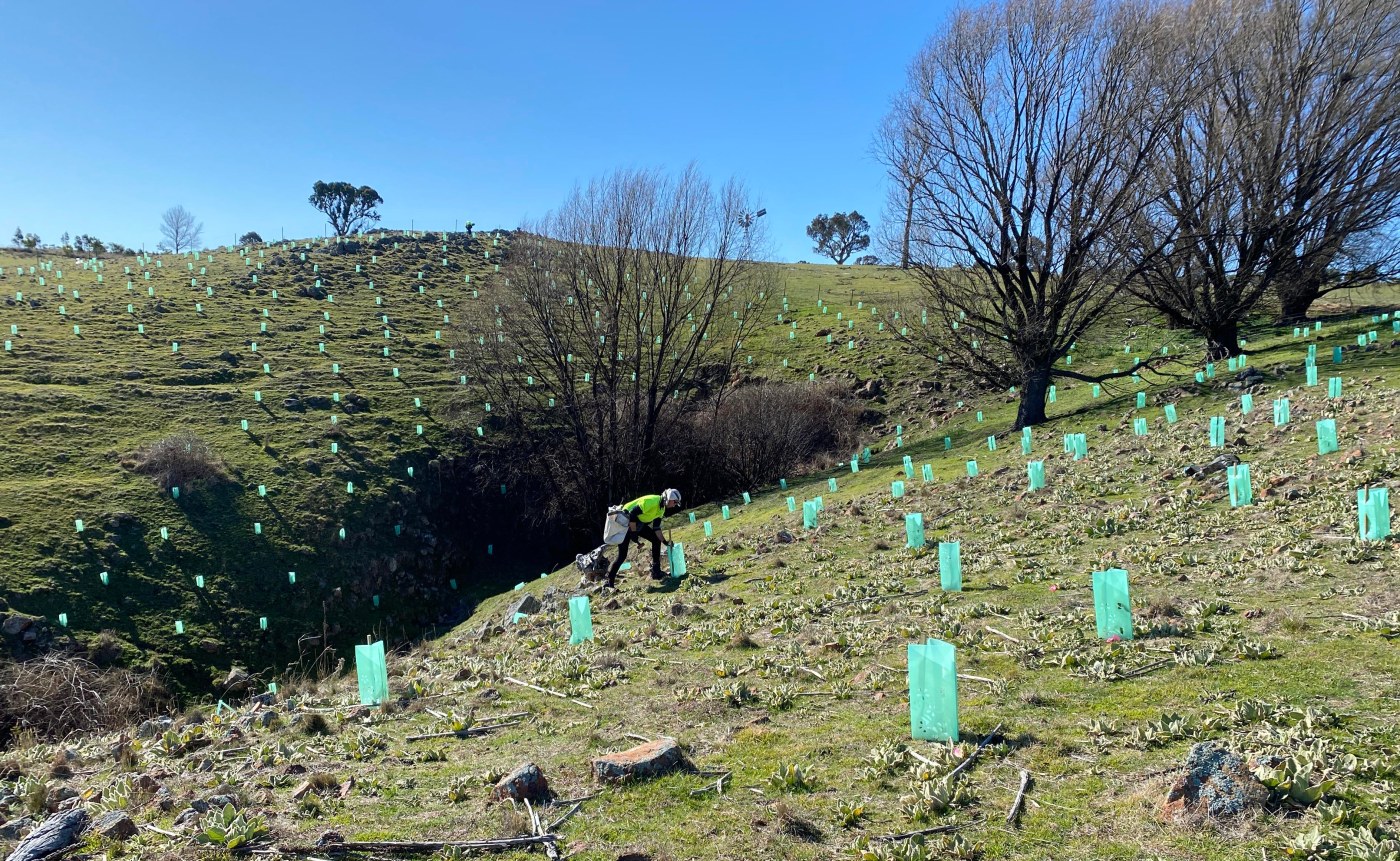
We gave them twenty hectares of steep, rocky land that Craig had announced he didn’t want to be involved in revegetating, because it was too much work.

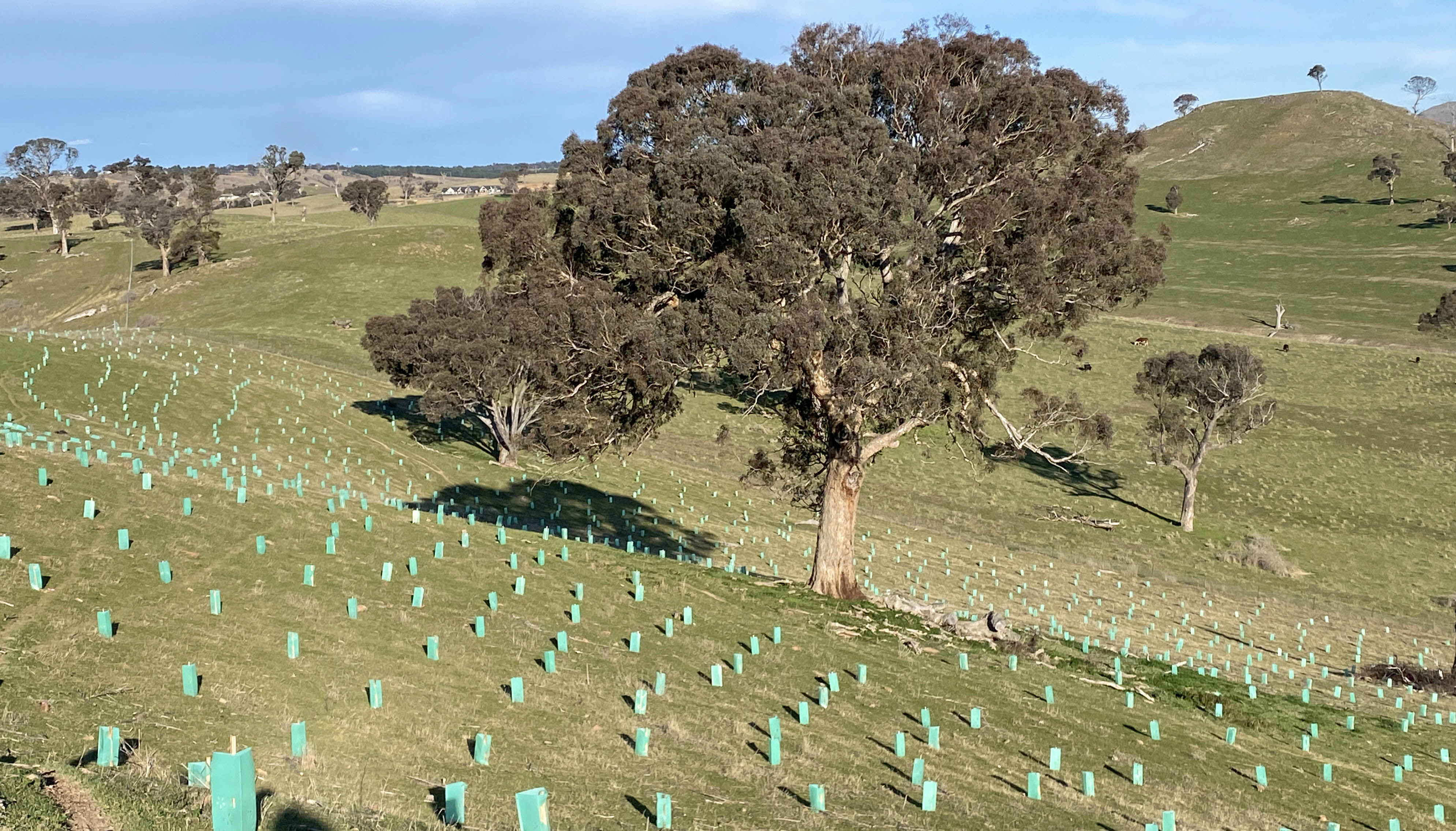
It was impressive to watch the team of planters in action. They use a sharp spade and wear bulky saddle bags to carry the seedlings. Vince, the contractor, said he likes to kick the ground to make a bit of a dip for water first, then stab with the sharp spade, lean it forward to drop the plant inside, then push the ground back around the seedling.
They can do thousands in a day.
In some places they will spray rows ahead of time with glyphosate to kill competing grasses, but didn’t do that here because most of our grasses in those steep areas are native, which don’t compete like exotic Phalaris, for example. Also, the pasture is currently very short with the sheep grazing and cold season.
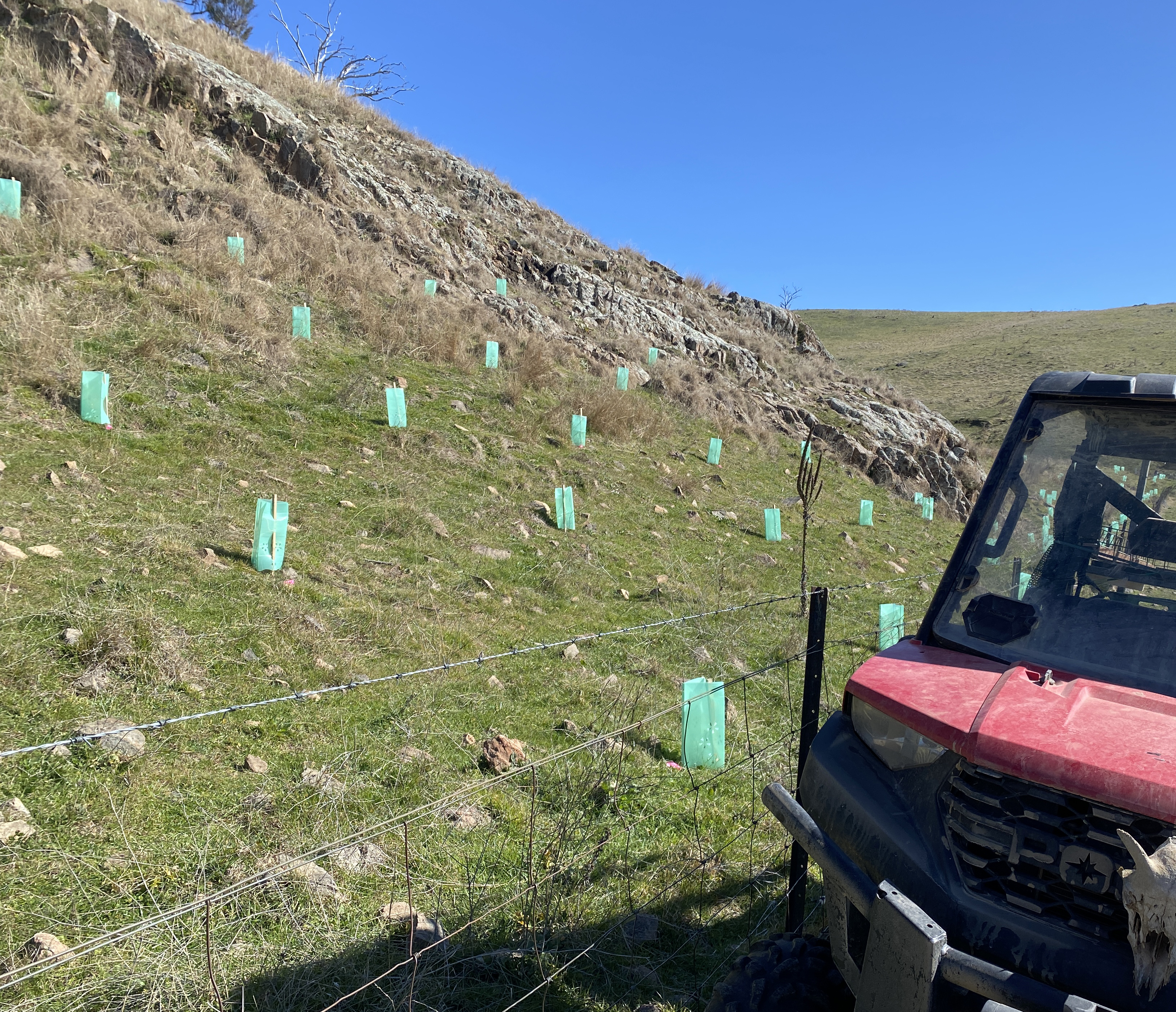
That saved funds to provide the green protective covers, the same as Greening Australia uses, to protect from possible rabbits, and from definite wombats and kangaroos. The covers took twice as long to install as getting the plants in the ground.
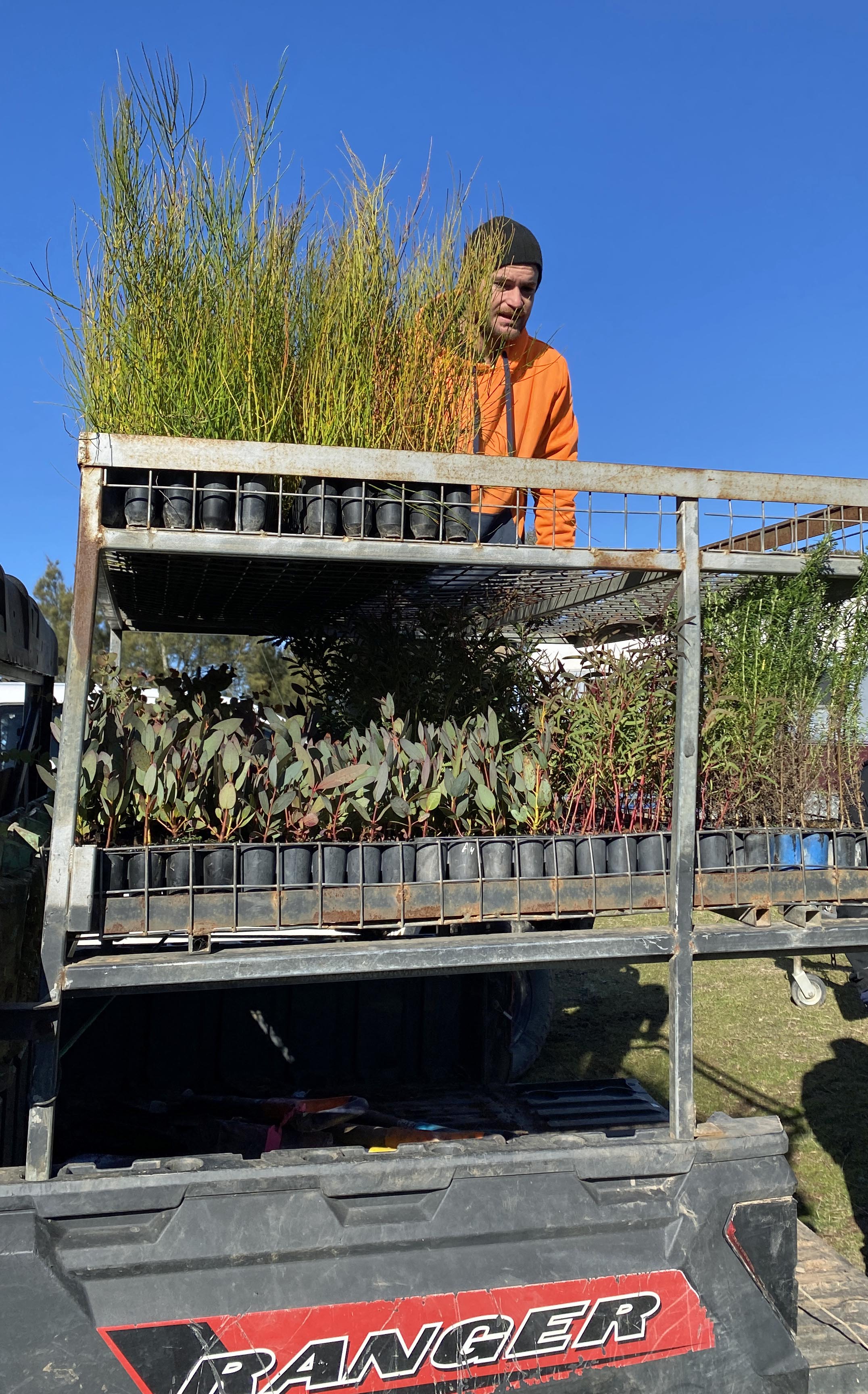
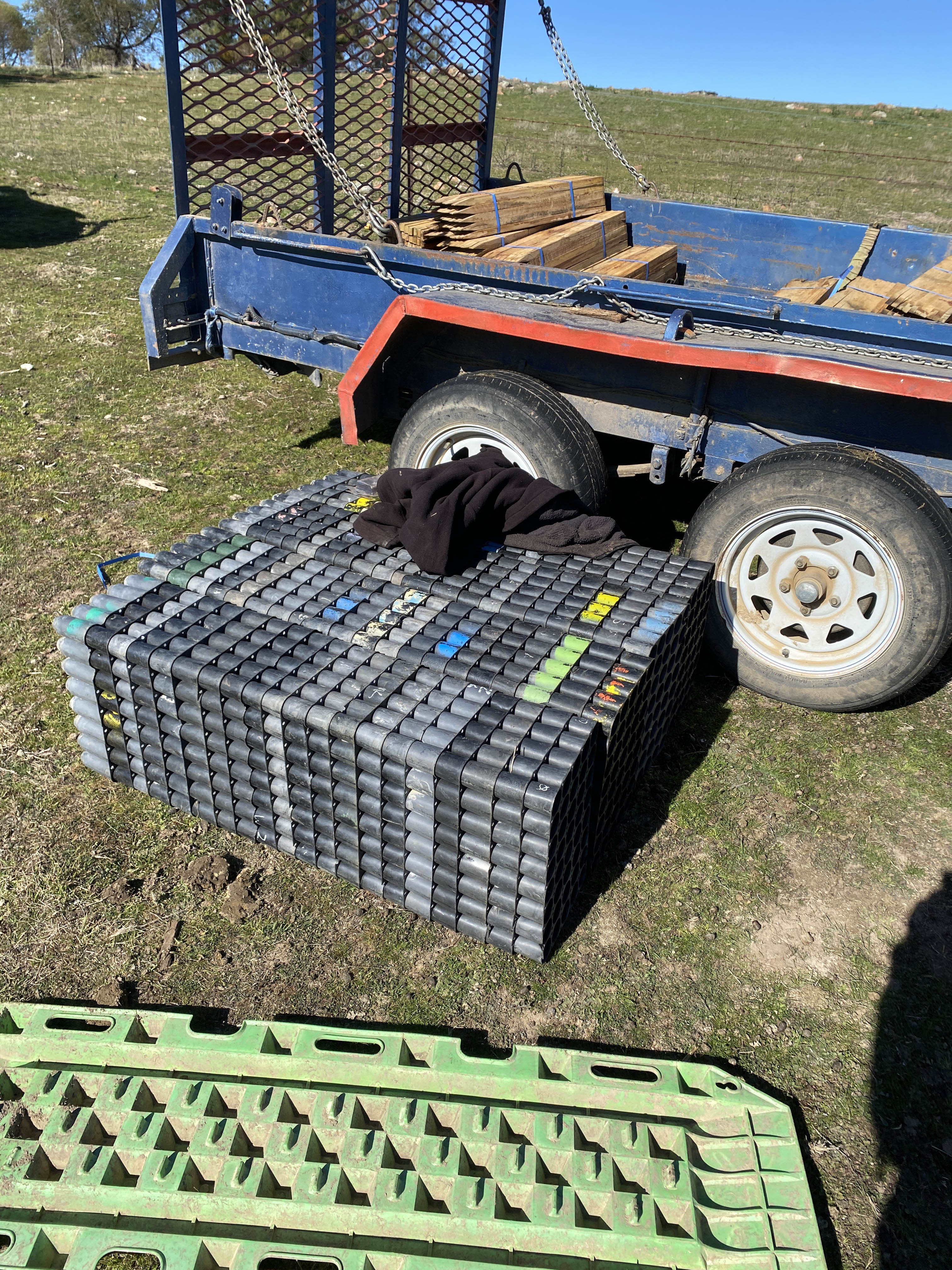
The bulk arrival of 19,000 trees and shrubs, plus a semi-trailer load of corflute covers was staggering. Each plant is part of a tray of forty much smaller tubes than the ones Landcare uses. They looked really healthy, except for several trays of native indigo (Indigofera) that were hit by the cold frosts and shriveled. Vince planted them just in case, but didn’t hold out much hope.


A number were also river red gums (eucalyptus camaldulensis) which probably need more water than than our rocky hillsides will provide. Otherwise, they were exactly the same species as I would have chosen for the same sites.
They were able to go into areas where carrying water and digging bigger holes would have been a huge effort. I enjoyed watching the covers glinting in the sunset from across the river.


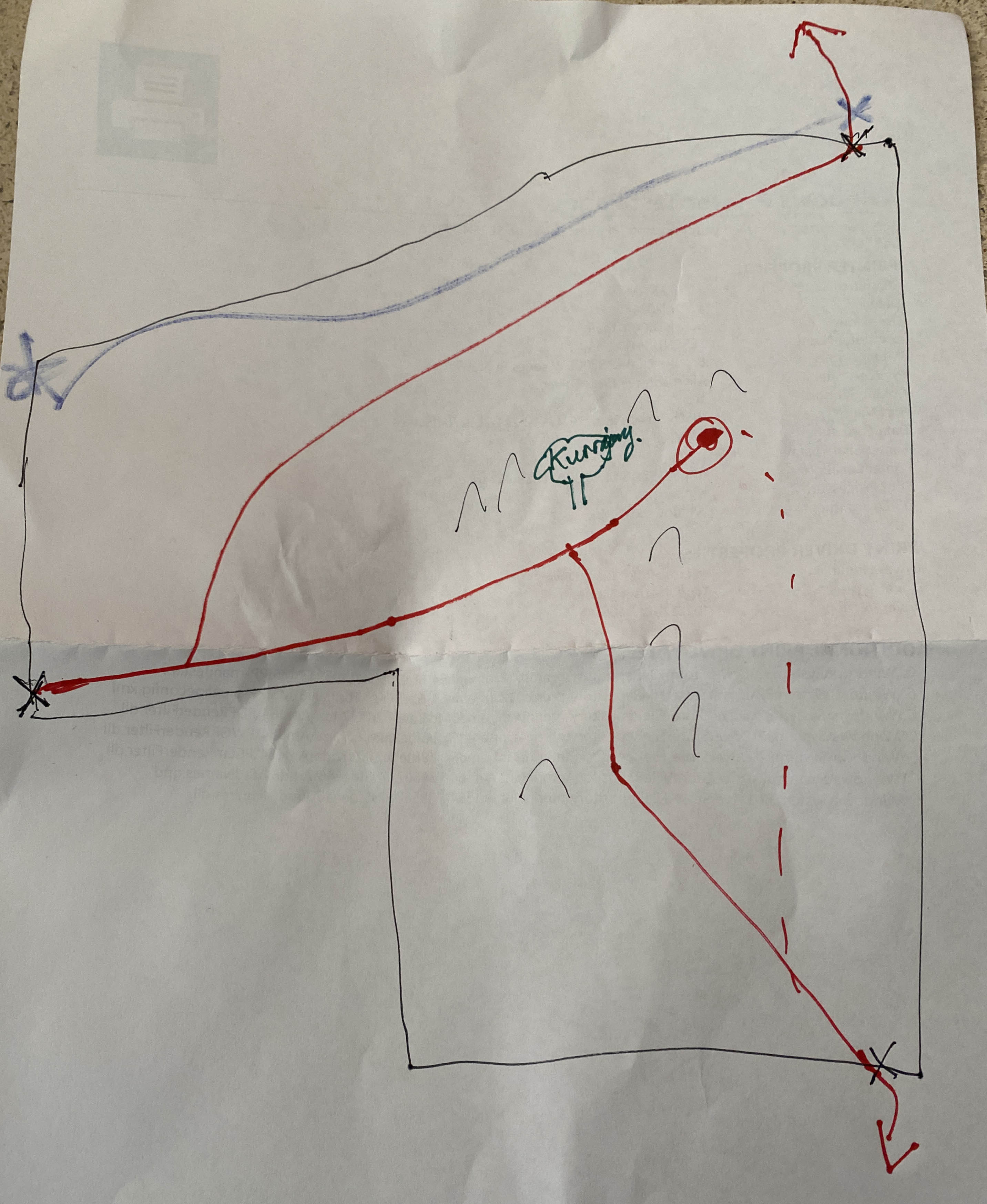
I drew Vince a lovely map of where to avoid planting so that we would have fire trails through Kurrajong Hill. My original sketch map and what happened aren’t very alike, which wasn’t Vince’s fault. I was lucky he could understand it at all.

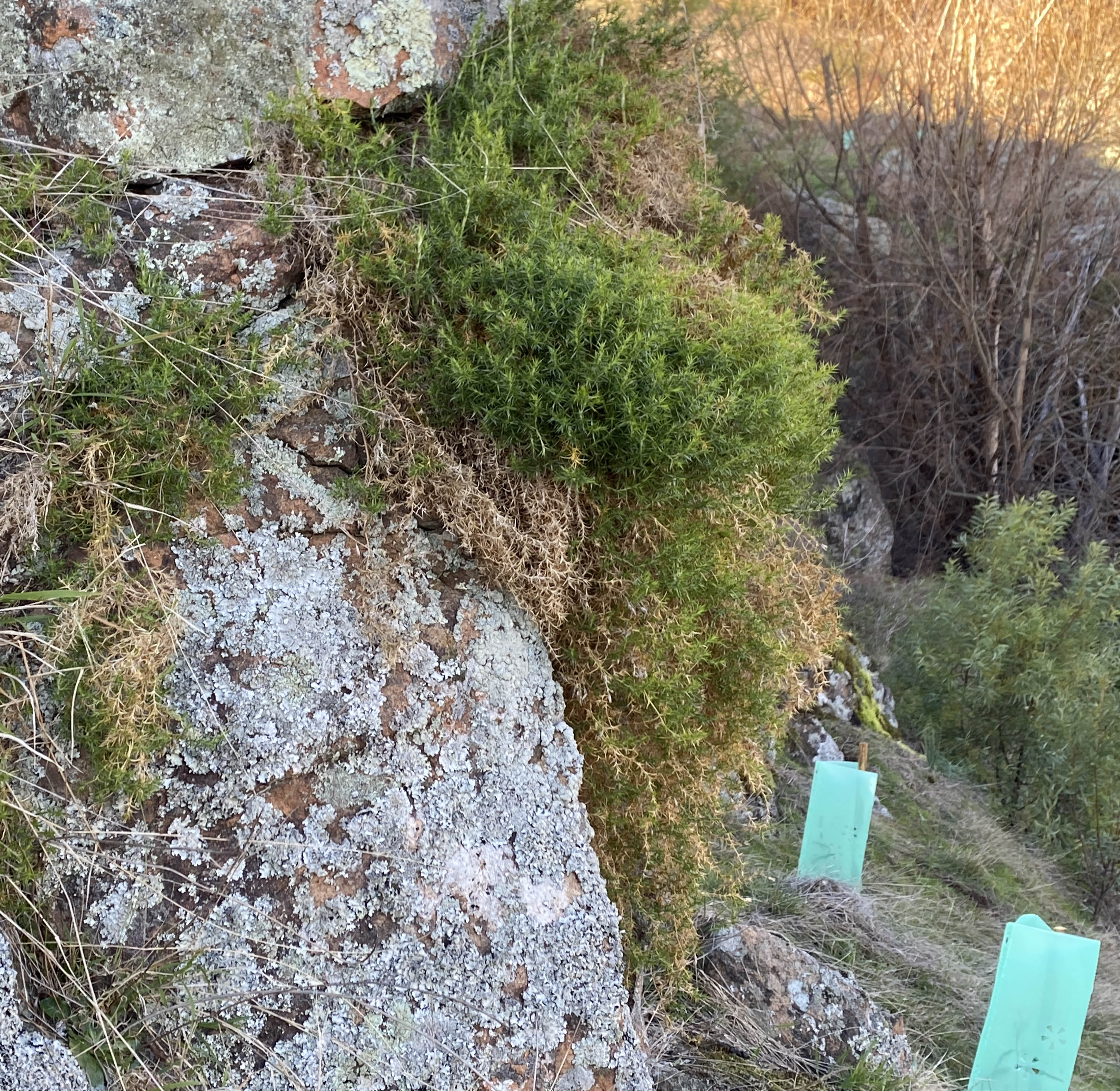
In the preceding months Dmitry and I did a lot of blackberry control, especially on the Waterfall plot below the Adnamira house. I was pleased to see that the remnant native vegetation among the steep rocks was undamaged, and there were things there I didn’t know were on that side of the river, like a nice grove of red-stem wattles and cascades of prickly starwort.
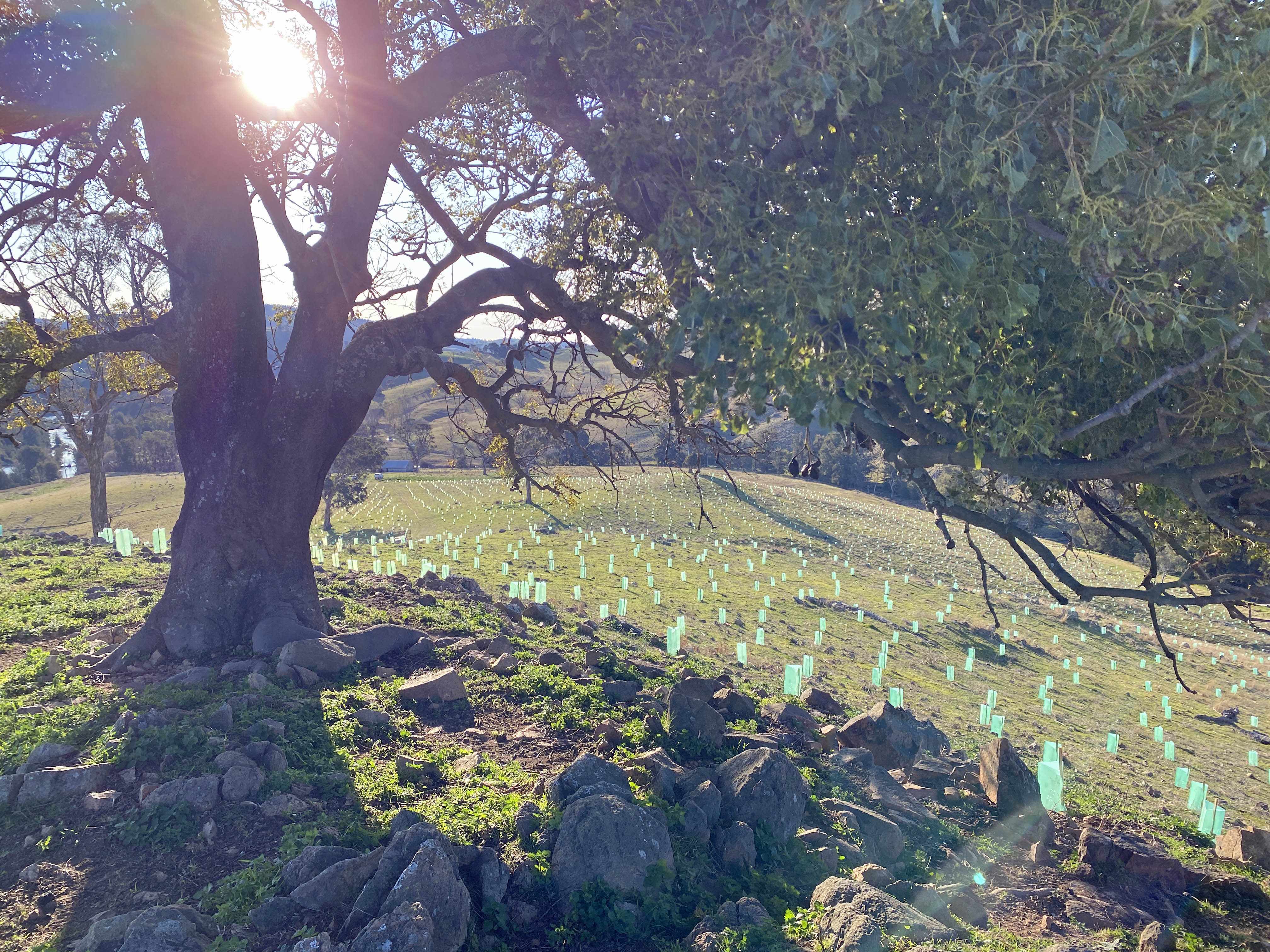
The downside of all the speed is that survival is completely reliant on rainfall. We missed out on a few bits of local rain this winter, and certainly haven’t been getting the deluges that other regions have had in Australia. By the end of the two weeks with only one millimetre of rain, the tops of the ridges were getting dusty and threatening the survival of the brittle gums, cassinias and wattles planted there.
We loaned Vince our firefighting pump setup to give the accessible seedlings some water. I recommended pulling water from Oakey Creek. That was a mistake because it had become too shallow. They immediately sucked up some sludge which made the pump very finicky. Nevertheless, they did about thirty loads of 800 litres each over two days. What’s that? 24,000 litres. A lot.
The firefighting pump was unrepairable, according to Shane the Pump Wizard.
Luckily for the plants, we got ten millimetres of rain in the week after they finished.
Unfortunately, that was all we got for August, and September has been even drier. The issue with big bang planting is that there can be a big bang failure.
I’m hoping not.
 One Bend In The River
Super !
LikeLiked by 1 person
Just a small correction my love – lazy old Craig did climb the slopes to spread blackberry too!
LikeLiked by 1 person
I never said you were lazy!
LikeLike
“Spread”?
LikeLike
Ah. Autocorrect strikes again. I meant “spray”
LikeLike