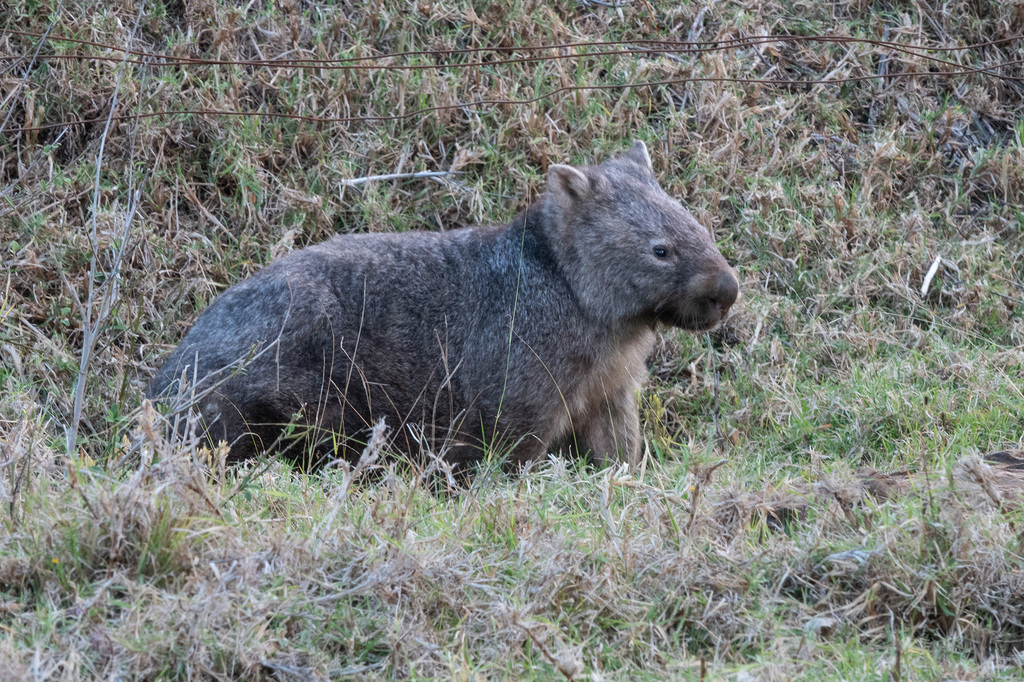
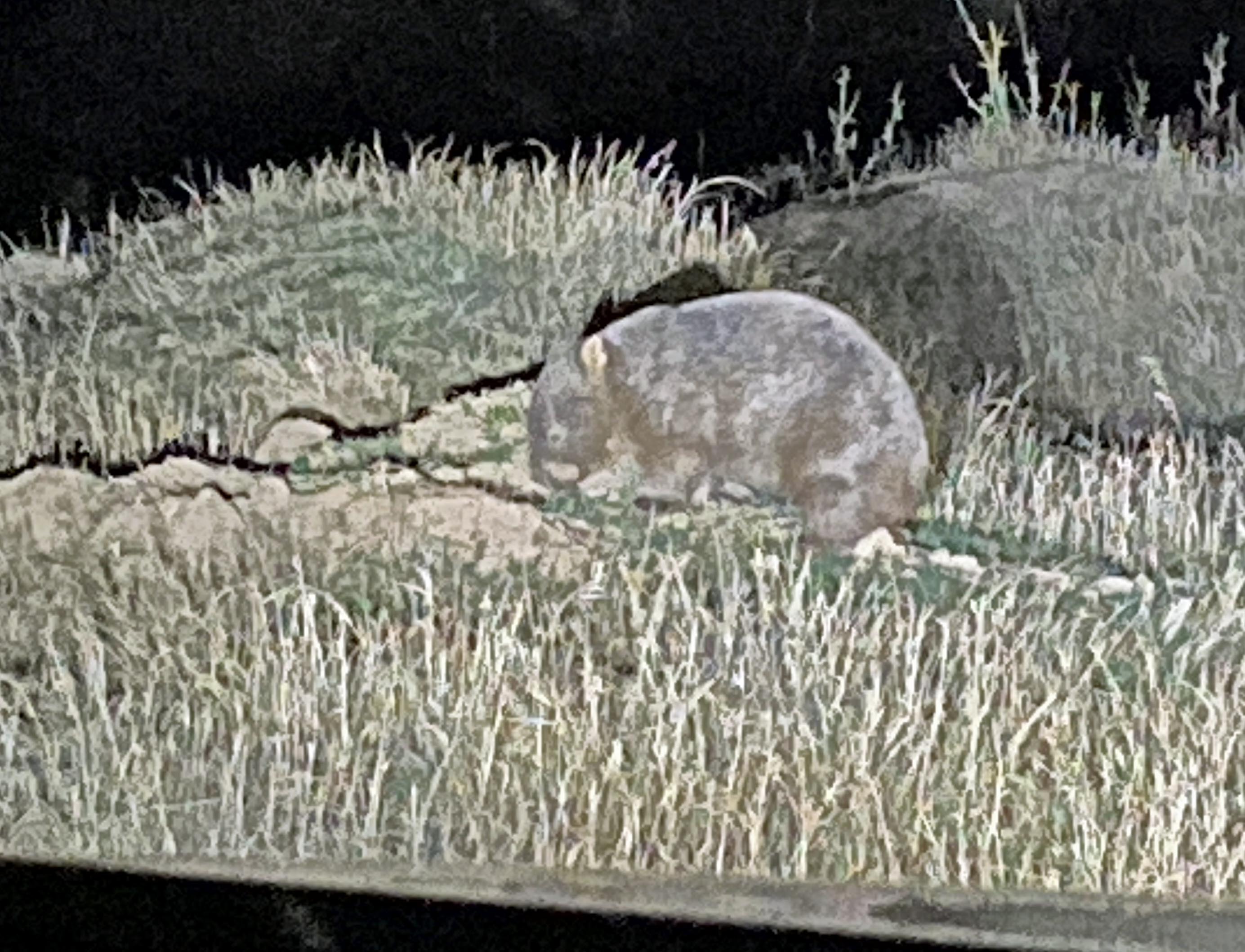
This last winter was not only dry, but infested with wombats.
Wombats are both secretive and stubborn. Each one likes to go where it goes, and each one treats an obstacle as something to be tunnelled through, or under. They rarely deviate from their planned route.
Sometimes, that’s right in front of a car.

In the dark.
And including a sudden appearance from a drainage ditch.
Surprisingly, we’ve only hit them twice in ten years (one fatality), but the trucks carting sand demolish at least one a year.
In many places, wombats will bulldoze under the sheep fences, making a scoop to pass below the bottom wire. Kangaroos that don’t feel like making a spectacular leap over a fence will use the same scoop, kicking with their long back legs to make the hole bigger. Then the sheep will follow.
Into my tree plantations, for example.
This year has been a hungry year for the sheep, as there was very little spring rain, so they were looking for holes.
Meanwhile, our Jack Russell terriers break out of the garden through the wombat holes, hoping to chase the chickens.


The new terrier, Taz, spent time as a puppy with a poddy lamb in an attempt to discourage her from chasing sheep, but she still thinks chickens and kangaroos are fair game for an excited chase.
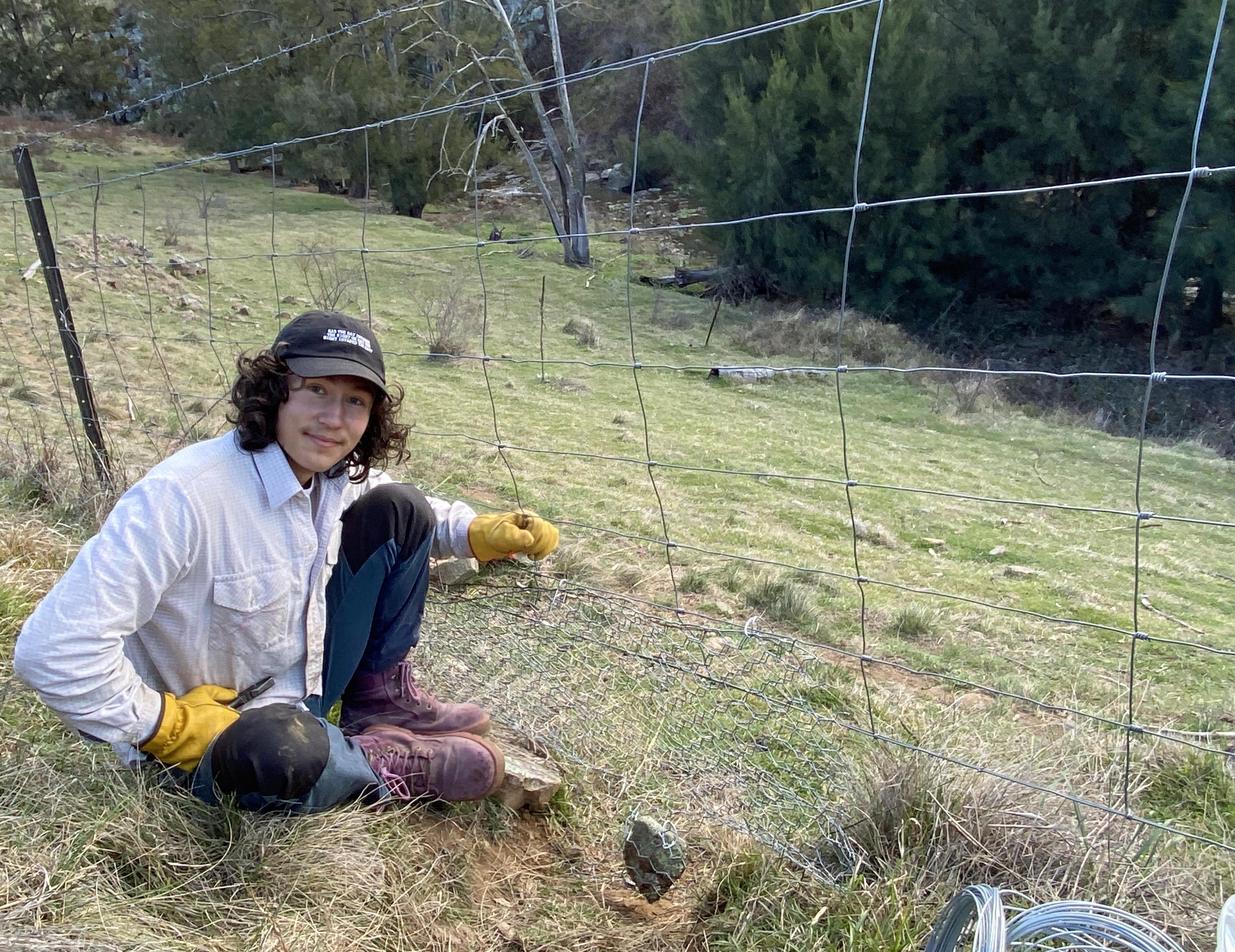


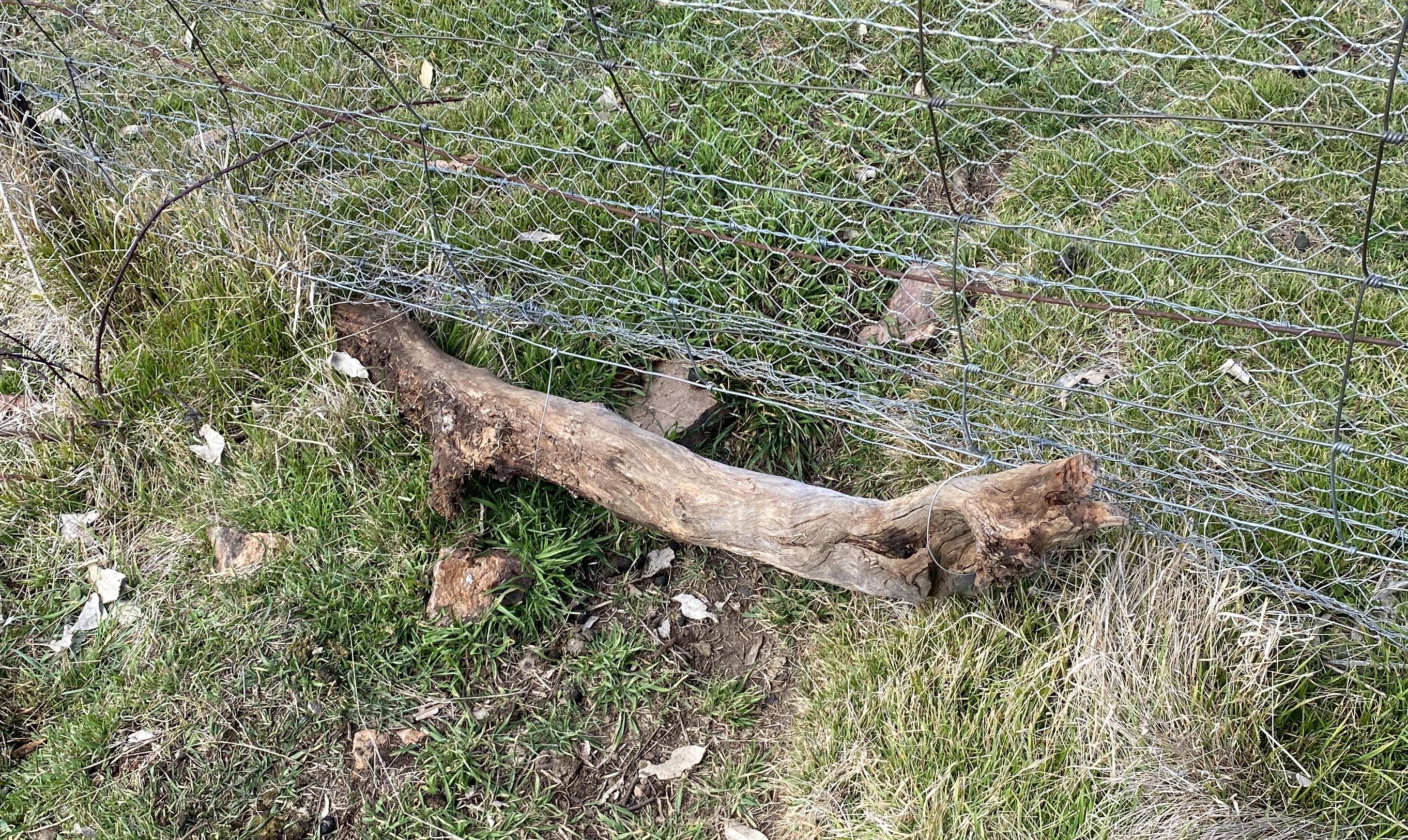
We have a strategy for repairing sheep fences that involves hanging a piece of chicken wire, sometimes with a weight like a rock or a star picket. This allows a determined wombat to push through, but discourages sheep. Dmitry and Braedy worked on several sections of holey fence. The one along Oakey Creek should definitely be replaced. I only remembered when I got there that it had been on my list for replacement ten years ago. Some of the rusty netting pulled apart in our hands, other bits were already propped up with random sticks and star pickets. We patched it until I can get it rebuilt.


Craig had a different strategy for the garden fence, because of the dog escape problem. I had to watch while he determinedly shovelled rocks, gravel and logs over the holes, just to have them dug out again by an irritated wombat the following night. It was a war, all winter long, and the wombat won.
Both sides were extremely stubborn.
I kept gnashing my teeth because there were so many other things to do that weren’t getting done while Craig piled his wombat barriers.
Craig claimed he couldn’t make a weighted gate that kept the terriers in successfully, so he had to do the useless hole blocking.
Finally I managed to get hold of four professionally made, tight-fitting wombat gates from the Wombat Protection Society.
I made him read the excellent information on their web page, and he agreed to install the gates.

It was tricky, because the hole has to be in current use, and the recommendation is to leave the gates open for a few days after they’re installed, to allow the wombat to get used to them and encourage them to use them. The dogs used the opportunity to get out and dance around the chickens again. A wombat dug right underneath the first gate and had to be discouraged with heavy pavers and leaving the wombat gate open.
Meanwhile the wombat had been, probably, laughing at us the whole time. Not only had it dug into our garden, but also into the big gravity-feed water tank on the hill. It’s really important to our garden water supply, as I use it for the thirsty vegetable garden and a few other key places. It also provides water for two sheep troughs in the small paddocks around the house.
Our two house-water tanks are concrete, filled from the rainwater gutters on the house. A third poly tank acts as a staging point for the river pump, so that we can use high pressure sprinklers of river water on the garden when needed. Then the garden pump can also push water up to the hilltop. The poly staging tank was okay, but the river pump was malfunctioning, so we couldn’t fill it. Nor could we fill the big tank.
The hilltop tank (usually) holds 90,000 litres. It’s metal with a flexible liner. It’s a known problem with such tanks that wombats will dig under them. We surrounded it originally with sharp gravel to discourage that. Unfortunately, the gravel got overgrown with grass and wasn’t enough discouragement.
Once we realised the tank was empty, Craig tied it down so it wouldn’t blow away in a storm.
I thought the flood pouring out of the torn liner would have drowned any wombat stupid enough to dig into it, but apparently not. When the repairer, Heath, came to remove the old liner, the wombat was still happily living in the warm dark tank space, along with a red-bellied black snake. “Took me quite a while to get him out” he said. “Not keen to go.” Heath was also wearing bare feet so as not to damage the surface, which made him extra nervous of the snake.
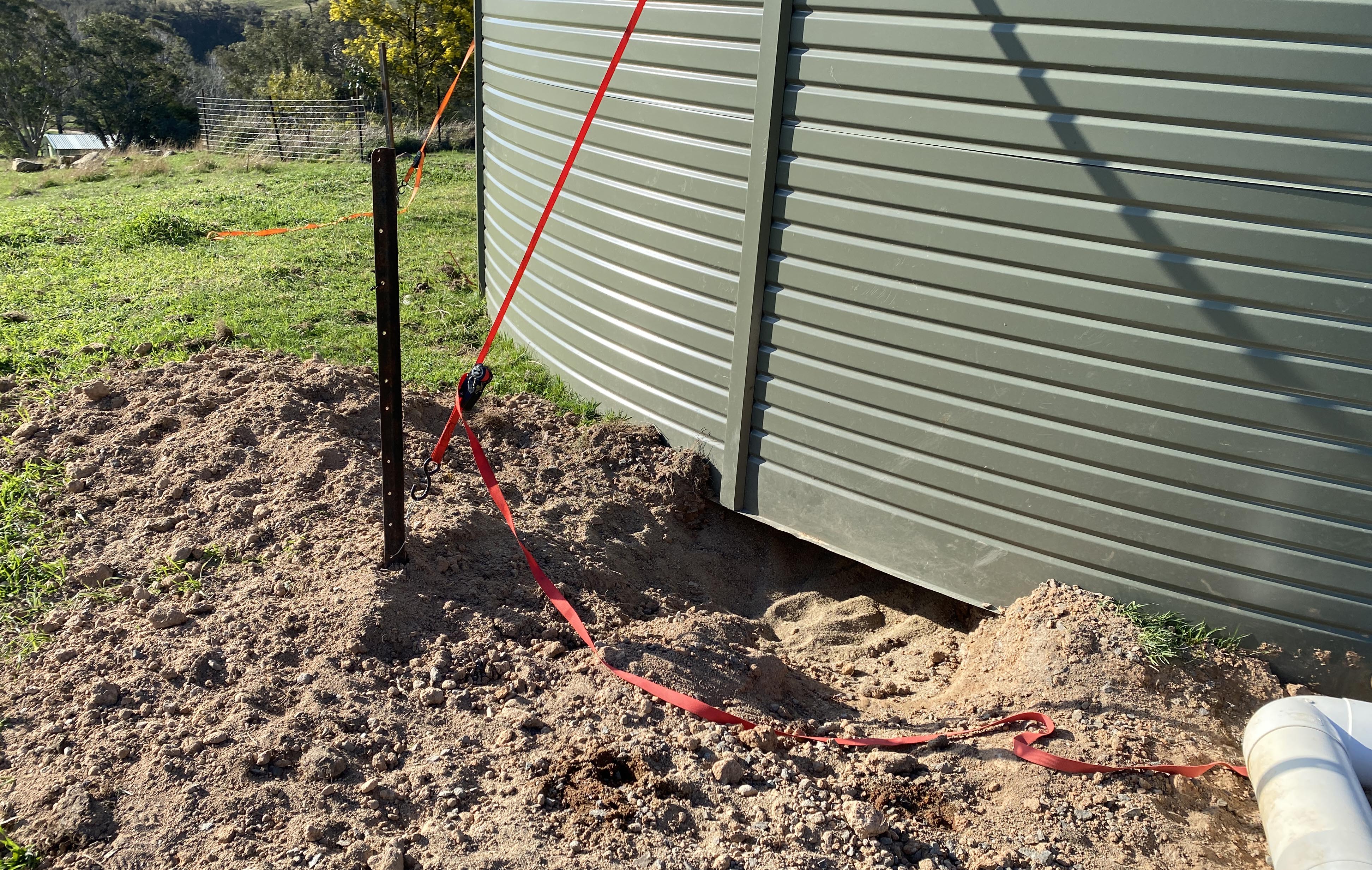

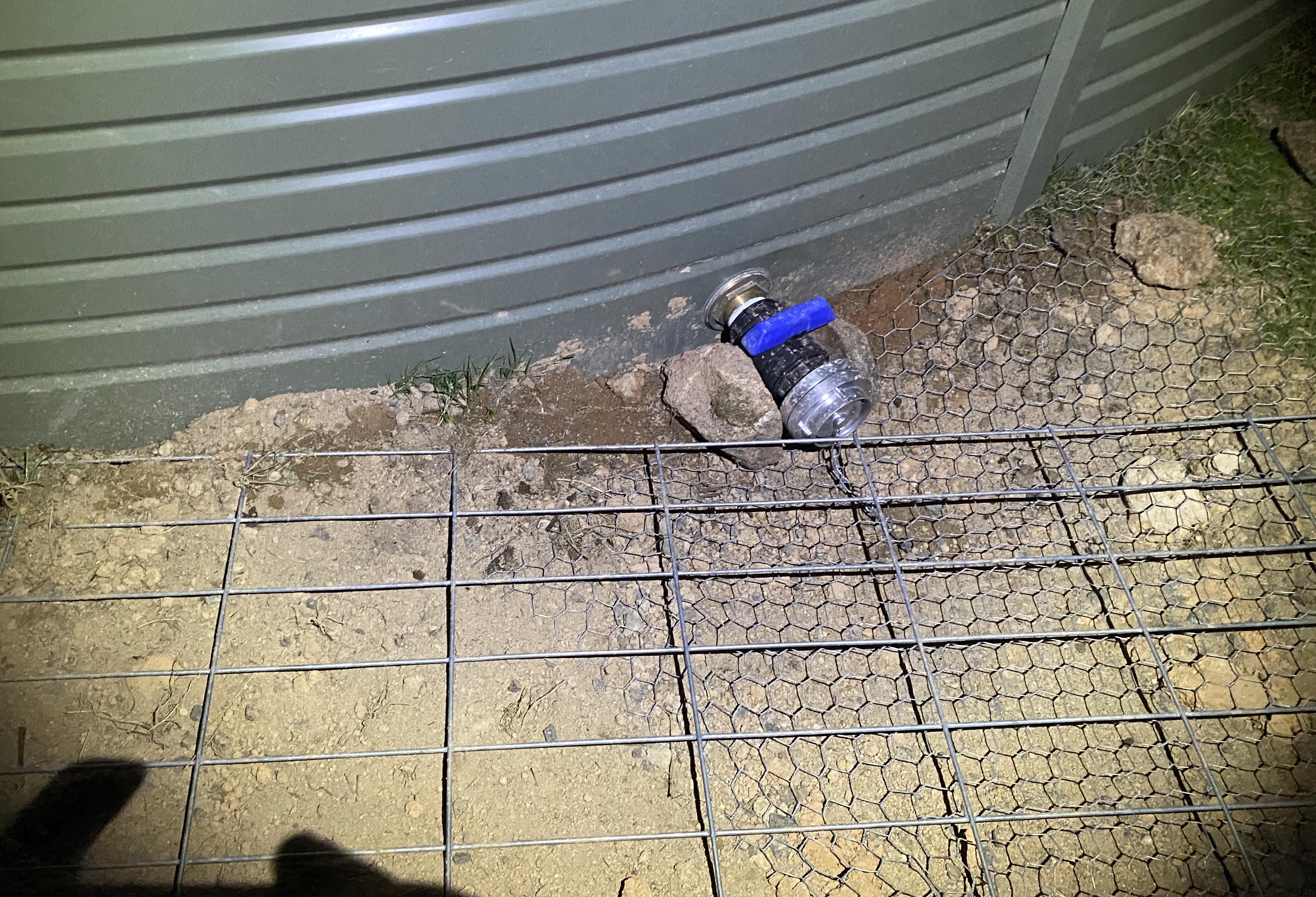
Once the wombat was out, I enlisted Braedy to help me surround the tank with chicken netting, stockyard mesh and rocks.
The wombat returned, luckily not tearing the new liner but kicking aside the netting and tunnelling in.
We filled the hole again, brought more mesh and rocks, to make a complete circle around the tank.
The wombat returned.
We added even bigger and heavier rocks on top of the mesh.
Plus chicken poop as a discouraging smell.
The wombat came back again, although it didn’t actually get under the mesh this time.
Finally, we got a full load of large sharp gravel, which worked. I added chicken poop for good measure.
This all took weeks and weeks, while no rain fell, and the garden shriveled up.
With the wombat (and snake) finally evicted, the pipes could be reconnected, and the desert-like garden could get some water. The repaired river pump pushed water to the staging tank, and the garden pump pushed water up to the top tank. We watched happily as the yellow bobble that indicates the depth of water in the tank began to rise again.
Meanwhile, in revenge (?) the wombat dug a damaging hole in the side of the big silage pit filled two years ago with hay. If air gets into it, the silage will spoil.
Our neighbours Andrew and Leonie battled to get rid of it, resorting to using diesel fuel as well as an old metal gate as a smelly discouragement.
They’re not very fond of wombats. I grit my teeth and remember that the wombats were here first, and we’re the ones that have to adapt to them.
I believe a temporary cease-fire is still going.
 One Bend In The River
People think they are cute and cuddly but reading this, they are tenacious!
LikeLike
Like little bulldozers. I always admire their determination.
LikeLiked by 1 person