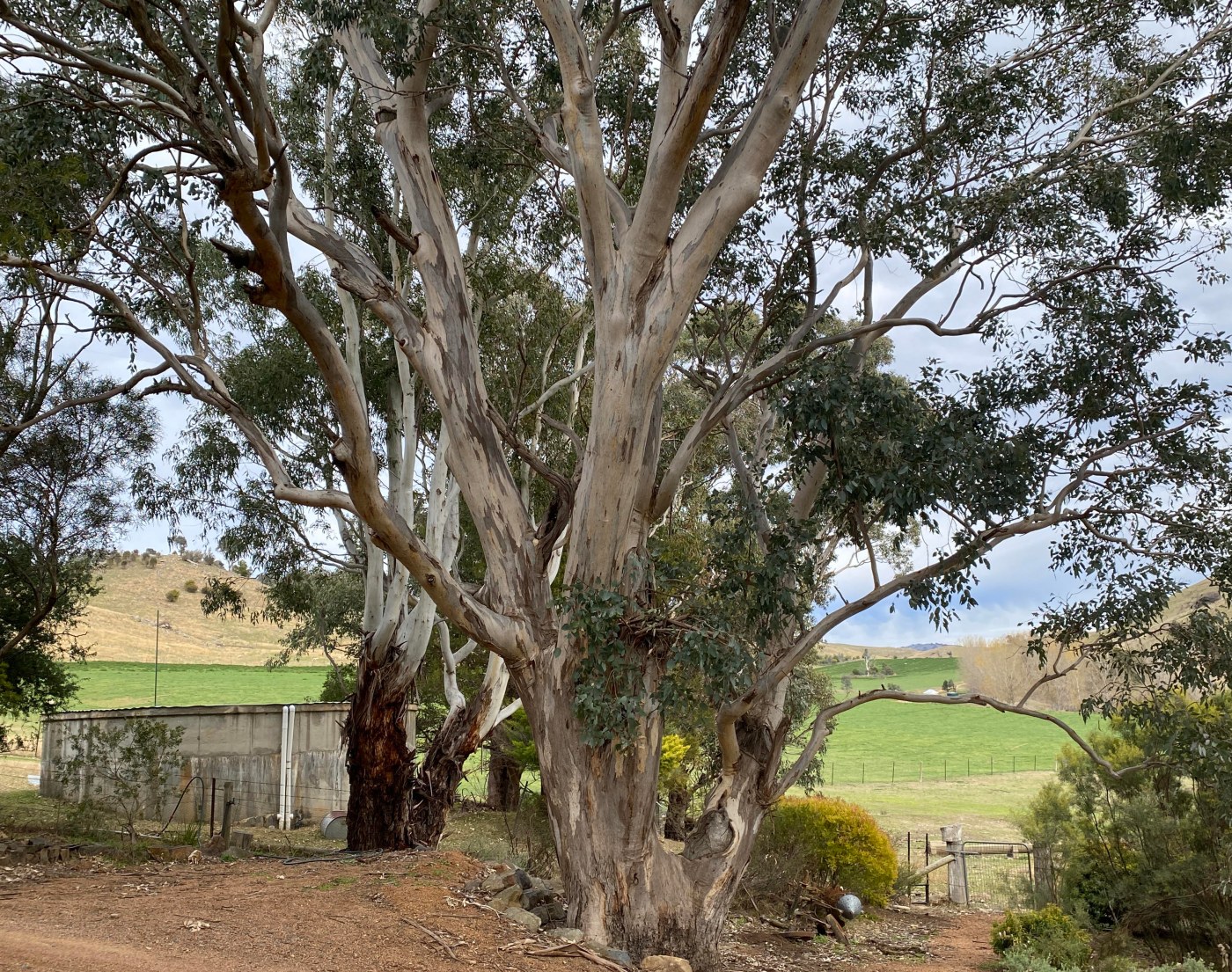
When I look at our big remnant eucalypts I have often wondered how old they are. For many of them, they could be anywhere from one hundred to five hundred years old.
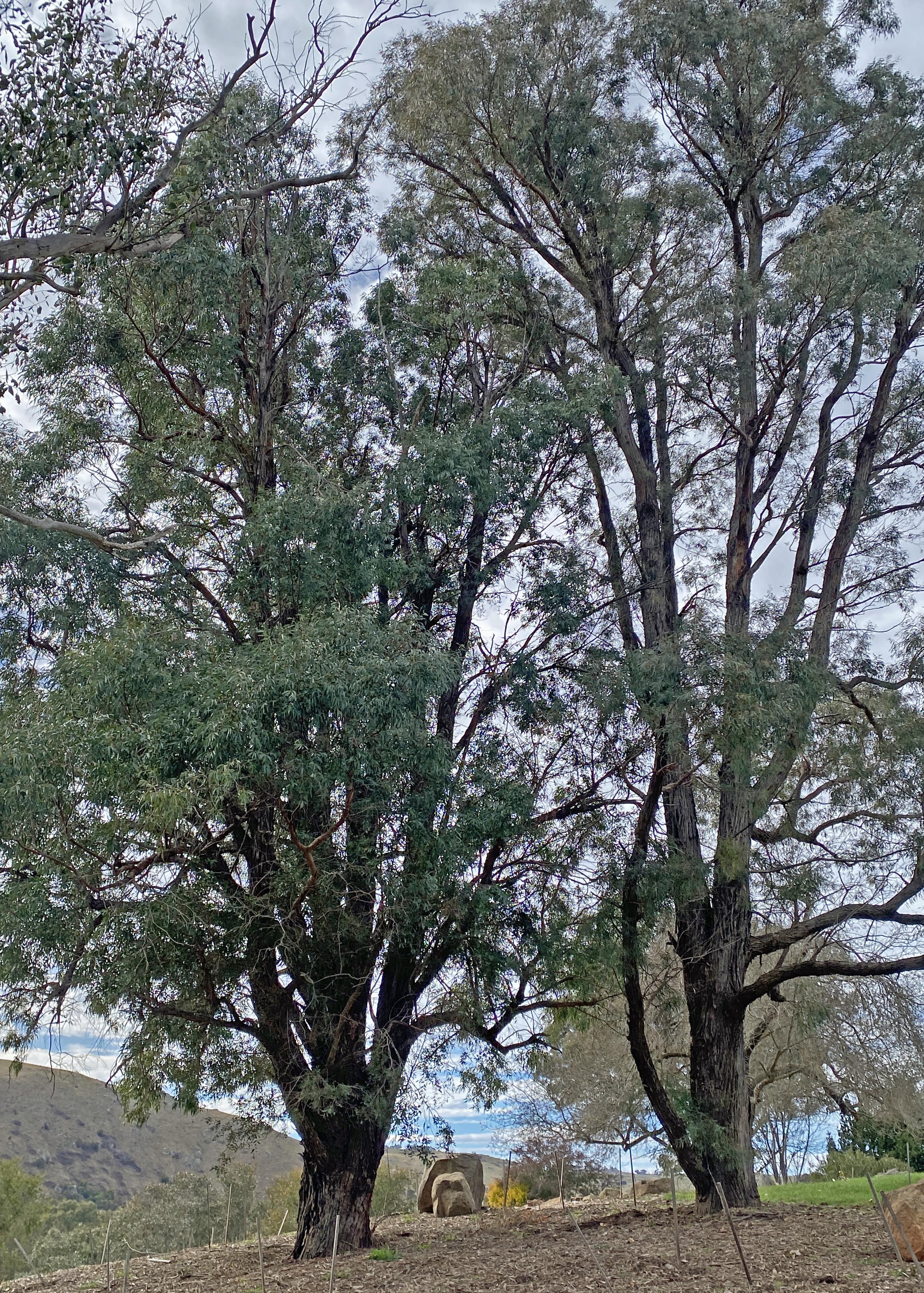
Some types of trees I know to be much younger, particularly the ones I planted myself, or were planted by someone I know within the last fifty years. That includes the Peppermint Gums (eucalyptus Nicholi) in our lawn that were planted by my brother’s Irish girlfriend in 1985.
Then, right beside that one is a remnant Blakely’s Red Gum (eucalyptus blakelyi) which still looks very much like it did in 1980, although in the last few wet years it began to tilt to one side dangerously. Mum hated it, calling it “the birch broom in a fit”, but we managed to persuade her not to chop it down. It’s gone through healthier and sicklier stages over the decades. I suspect it’s on the old end of the spectrum.

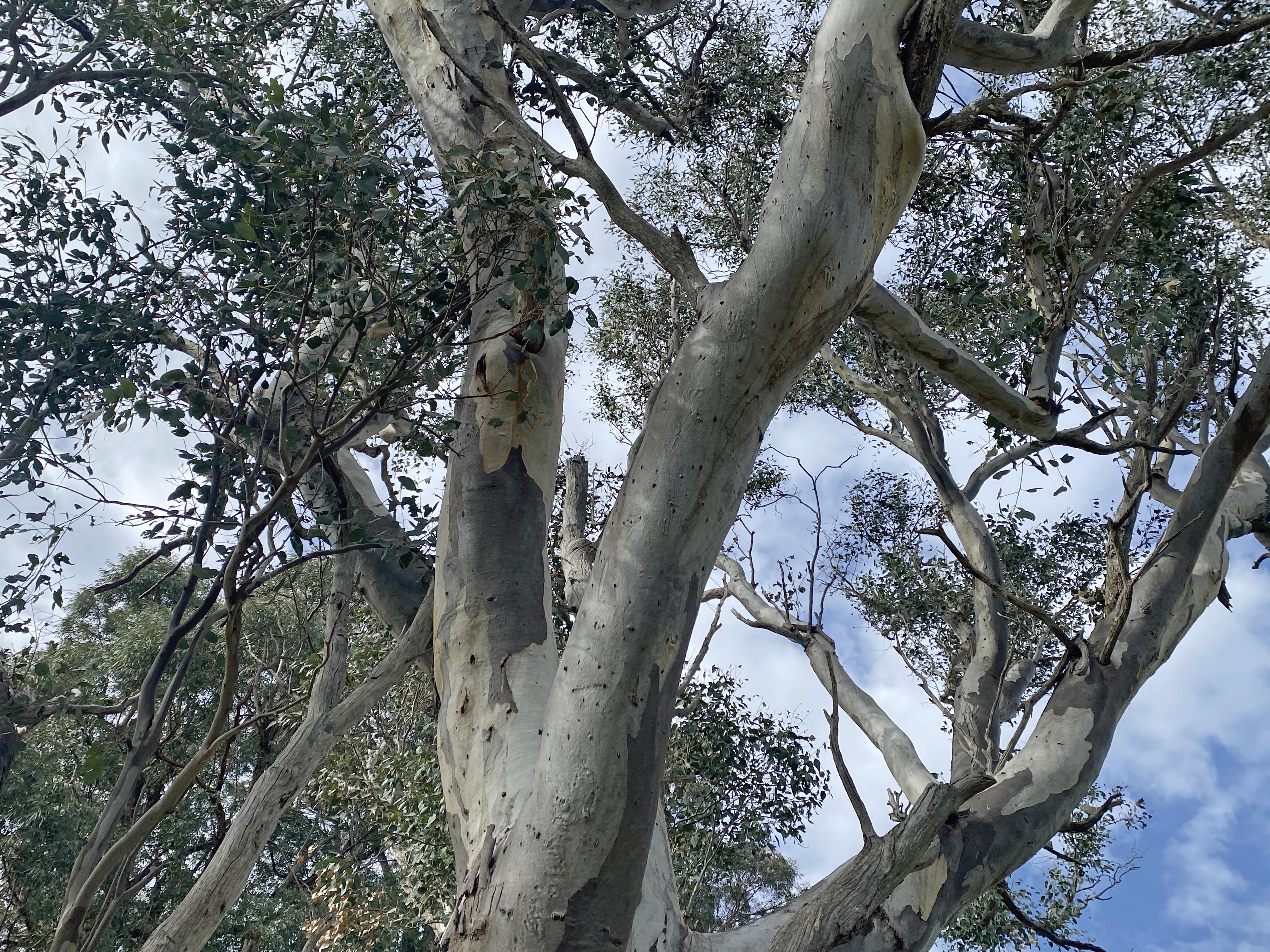

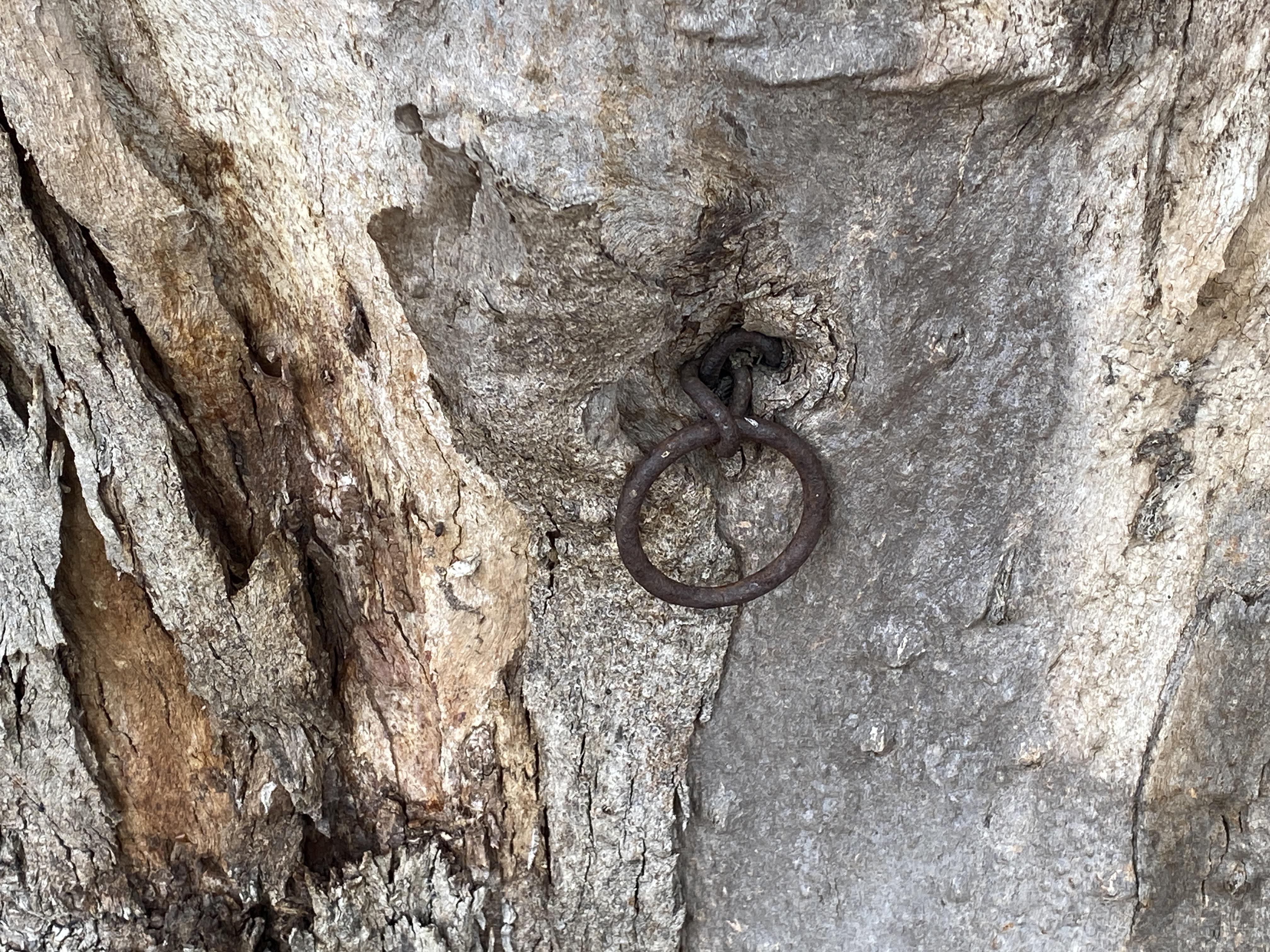
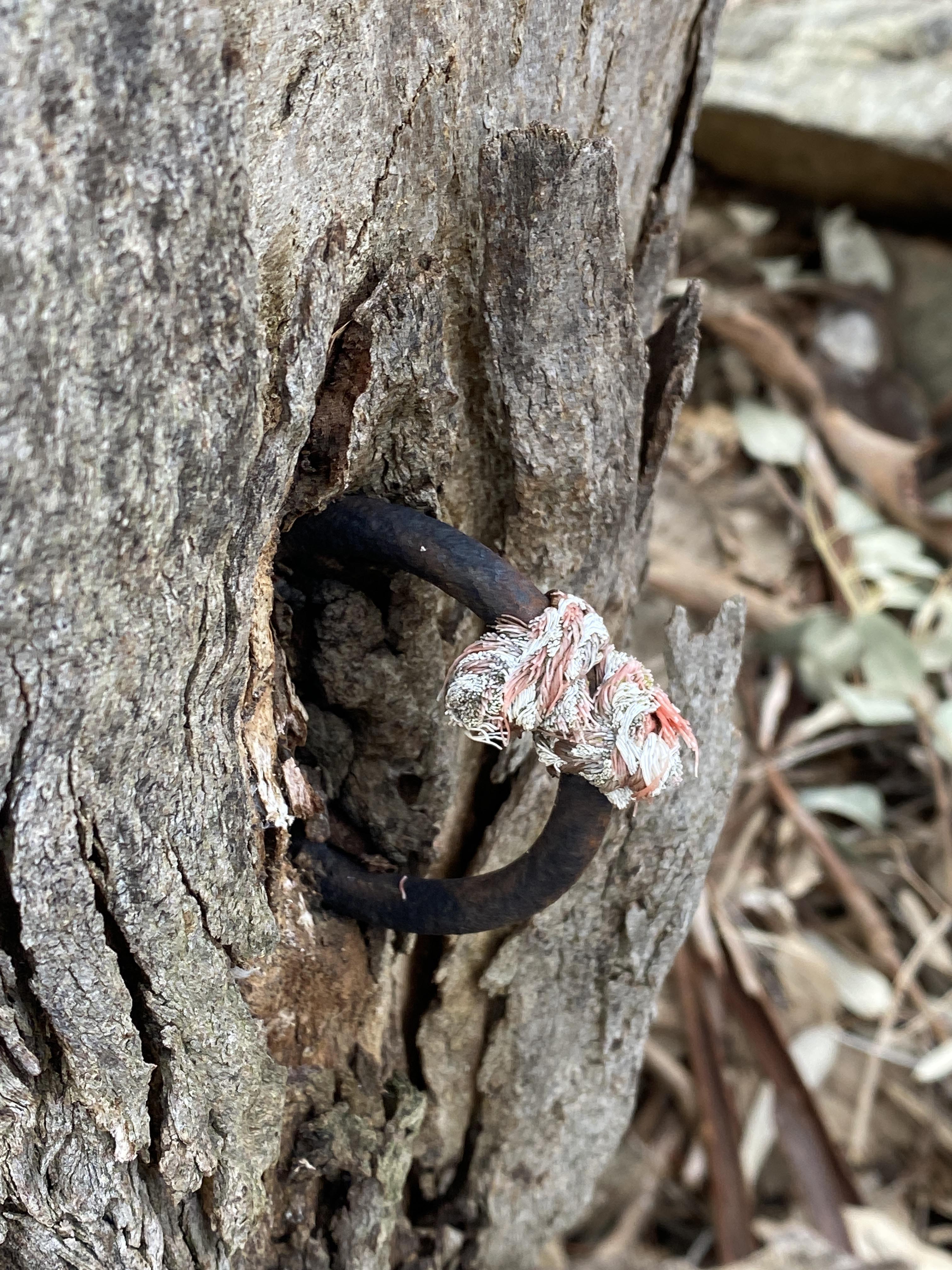
There’s another tree in the garden that looks old, and has rings driven into it for tying up your horses when you come to visit, which are well embedded in the surface, suggesting age.


But it’s actually not a local Blakelyi or part of our local endangered Grassy Woodland species. It’s been identified as a Forest Red Gum (eucalyptus tereticornus), which is taller and not recorded in our area. It has put on some more height since Mum and Dad bought Esdale in 1979, which suggests it could possibly be younger than it looks, but anyway probably at least a hundred years old.
The red box that crashed down in a storm in 2017 was old and had the shrunken crown of a stressed eucalypt. We’ve been storing and making furniture out of the timber, but although we had some circular pieces of the trunk (“biscuits”), we had no clear idea of how old it was.

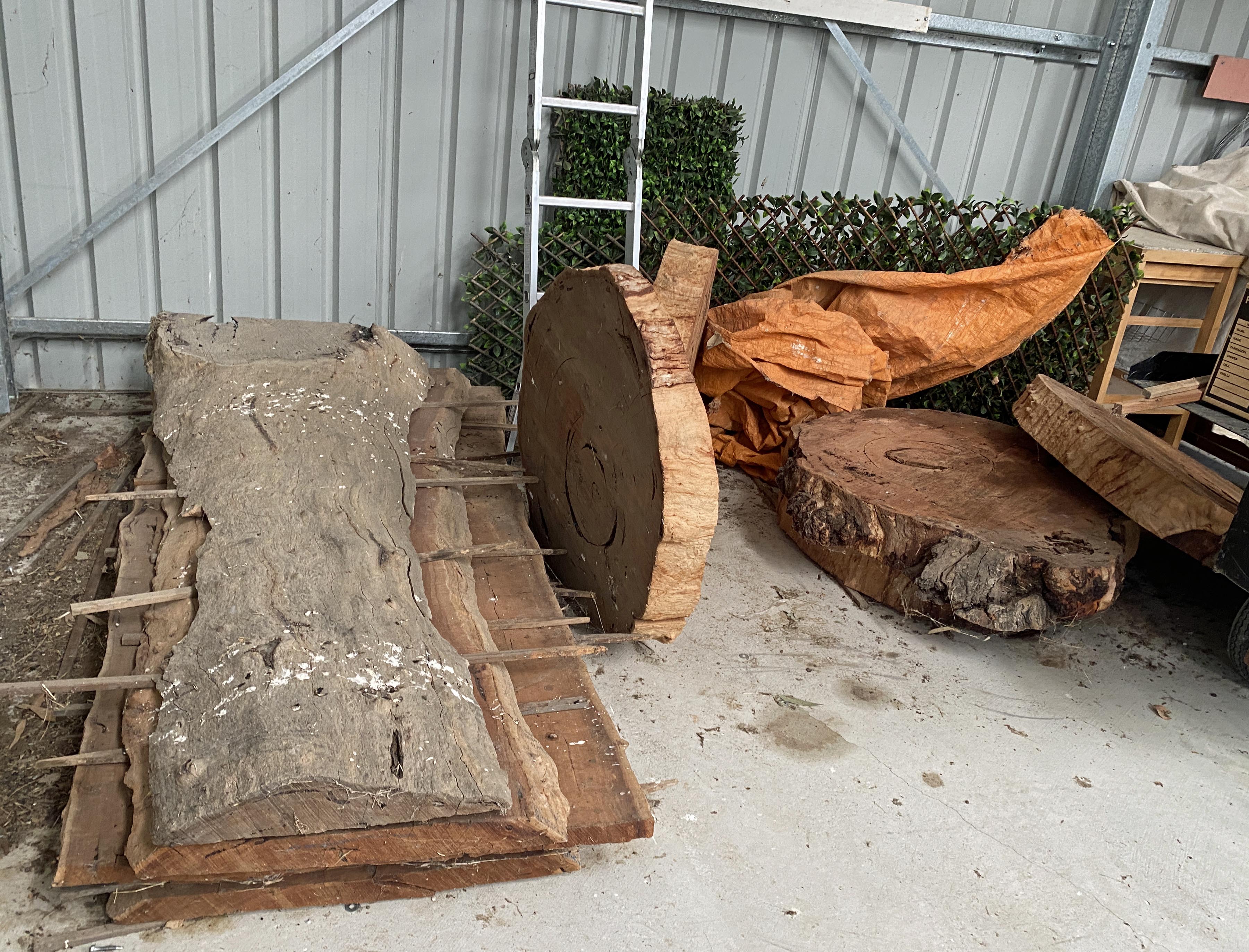

Eucalypts, alive or dead, are not as easy to date as just counting the rings. That’s a technique that works well for northern hemisphere pine trees. Eucalypts may not make any rings at all if the year is unfavourable. They may have been damaged, either by a falling branch tearing away the bark, or by deliberate scarring by local Indigenous people. The ones along the river often have scars from flood damage, and the ones along the highway from car crashes.
When we tried to count the rings we could see, it looked like about a hundred and fifty. That seems low.
Finally, I had the idea of contacting Matthew Brookhouse at the Australian National University, which is local for us. He is doing a study that includes finding ways to efficiently tell the age of woodland eucalypt trees on the Tablelands of New South Wales. For example, they are measuring their diameter at one meter above ground level.

I gave him the widest piece we had, which was cut from between 85 and 109cm above the ground level, and is 115cm in diameter at the widest. It needed the Bobkitten to load into the back of our Toyota Hilux, and it was thankfully not too difficult to get it off onto the Fenner School loading dock.
I asked him about the black patches in the wood and he agreed that they were signs of damage, maybe from insects or from fire or just some genetic anomaly. He pointed out places where the wood had been scarred and grown over again, which I hadn’t even recognized.

One of their plans is to scan and reconstruct trees inside and out, to show how they would have looked at different ages.
They will also drill cores at points along a transect to radiocarbon date them, to use in conjunction with the tree rings. He was pleased they could go all the way to the centre, which is often eaten by insects in big eucalypts. One of the clear dating points they can use is the Chernobyl disaster in 1985 and the atmostpheric nuclear bomb tests of the 1940s and 50s. However, further back than that they get strange readings that can suggest no differences at all for a huge sections of wood, which is clearly confusing.
I am pretty excited to find out more about this. Several people told me afterwards they’d love to know how old their own trees are, and have pieces like we do. Matthew pointed out it costs him about $1500 dollars per tree to do the study, so he doesn’t take all comers.
Still waiting to find out more….
 One Bend In The River
Well, yes. Even more interesting would be to know more about the Indigenous history, since they’re so long-lived
LikeLike
Hello my friend, I’ve been saving this artic
LikeLike
How are you Kyle?
LikeLike
Hi, I’m well. Thanks! Look forward to seeing you sometime! I spent a few years working in development at the Crucible and loved everything I learned there. Max lives in Tucson, I don’t see him nearly enough but I have a best friend who lives there where I stay when I visit. Makayla is in the studio apartment here, she is a ceramicist and works with Guy. Jeffry and Dennine are well, still working and traveling. Please say hello to everyone for me with love!
LikeLike
Wow, the Crucible was great – did you learn to cast hot metal? Great to hear that everyone’s all good. Charlie’s still in Europe finishing his Phd on yeast, and Jessie’s here teaching politics at ANU. Craig’s planning to actually retire next year! Yay! I have many, many, plans for his time…
LikeLike
Looking forward to hearing the tantalising result.
LikeLike
Me too!
LikeLike
When I see old trees like these, I wonder what history was transpiring when they first started to grow.
LikeLike
I know there was a murder in 1870 a few km downstream…
LikeLiked by 1 person
Whoa!
LikeLike
But I’ve always wondered who walked here and saw it when it was young. Europe has castles – we have trees.
LikeLiked by 1 person