
I find the rocks around our hills to be beautiful. Not so much fun when we run into them in long grass with the truck, but otherwise they add interest to what would otherwise be a smooth and boring landscape.
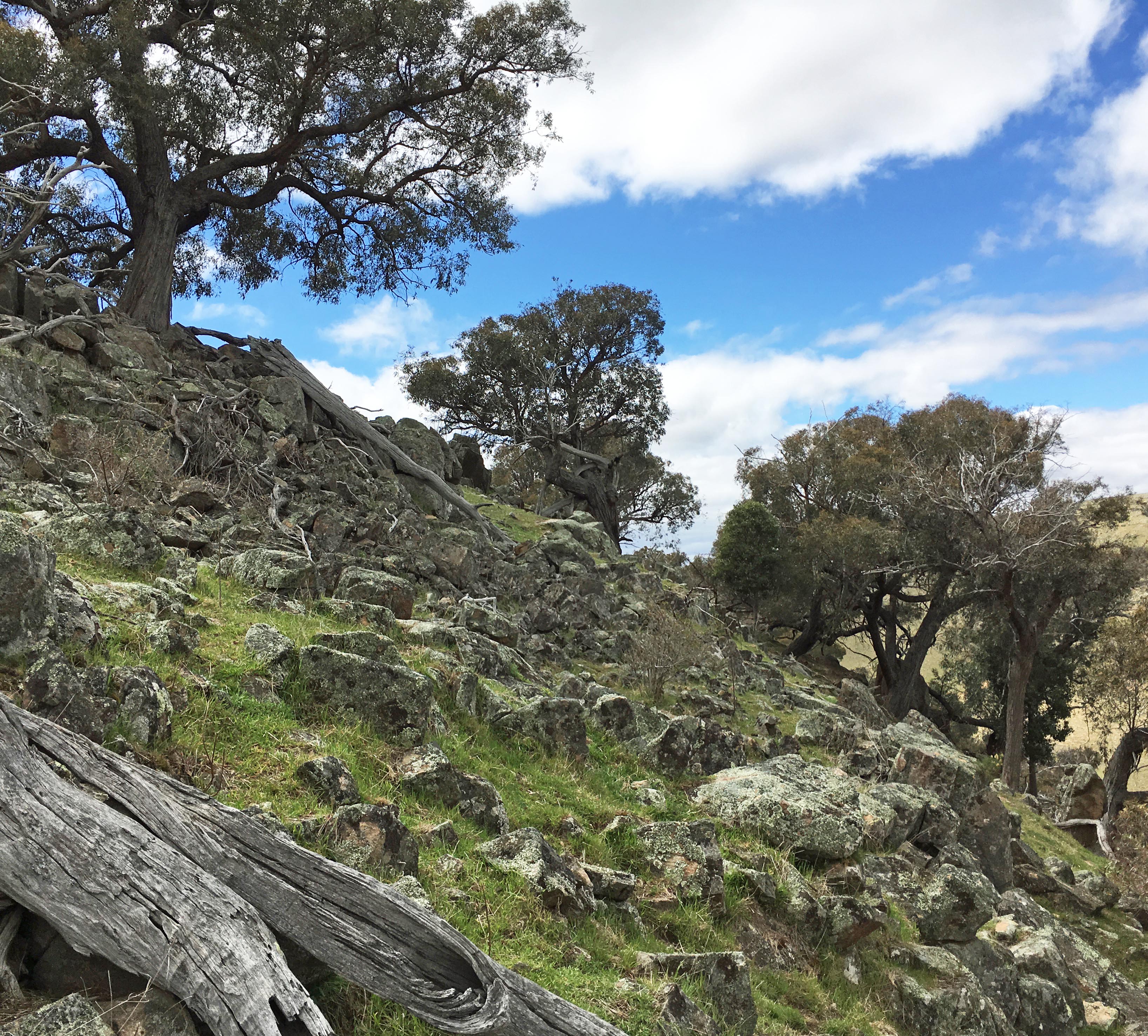
Our rocks are very, very old. Formed over four hundred million years ago, just as the first creatures were making their escape from the nice wet seas onto the barren land, the granite was flung up as magma by volcanoes and have been slowly exposed to erosion for the rest of that time.
Somehow, I spent decades thinking granite was a form of compressed sandstone, instead of the much more impressively named “plutons” or “batholiths”, formed from magma. So, our slopes are a much milder, more worn version of Yosemite Valley, basically. Or how it might look in a few more hundred million years…

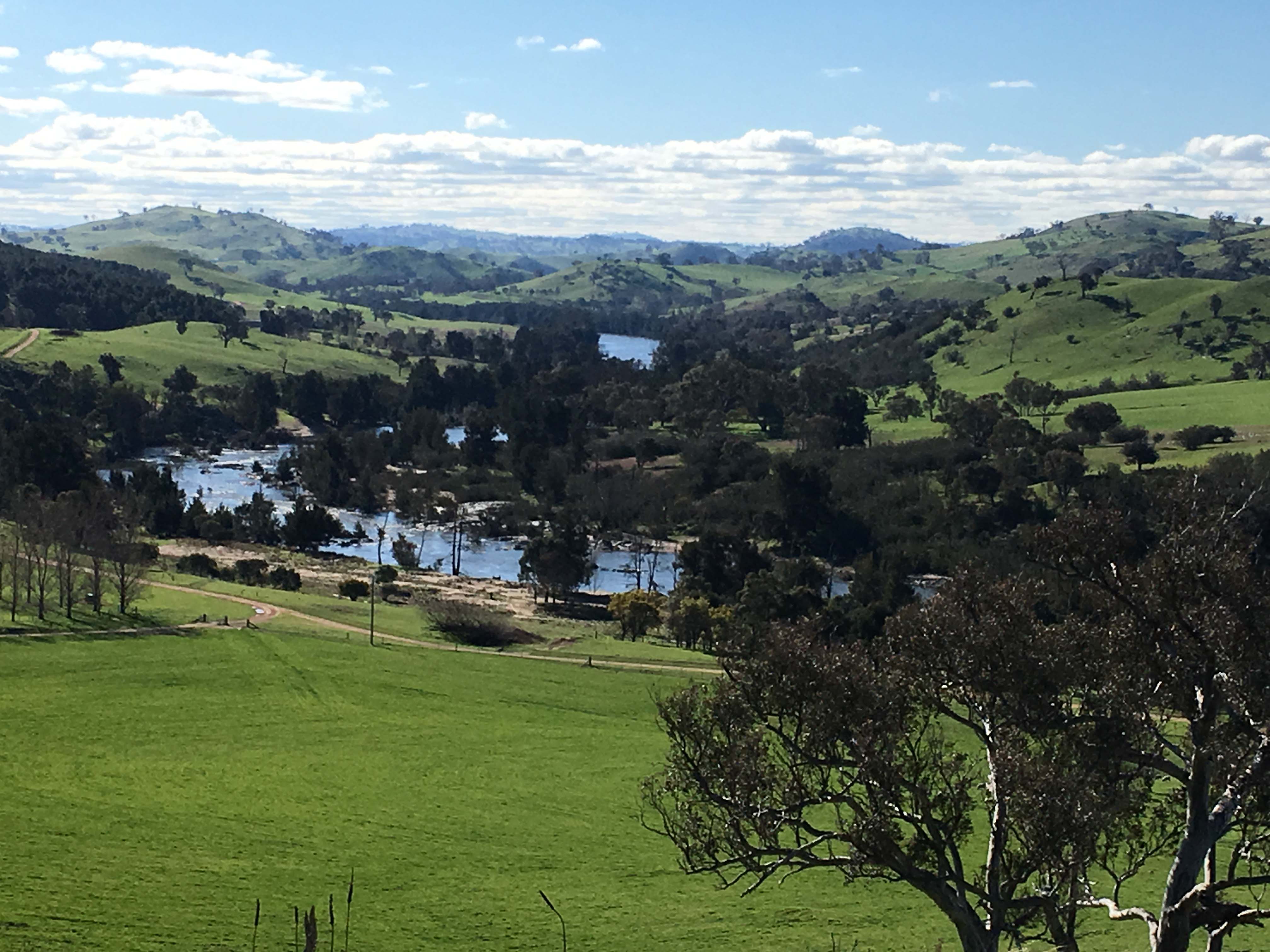
Anyway, I’d decided to restructure the big sloping piece of garden between our house and the Murrumbidgee River, which had an ungainly heart shape, narrow paths and a really large quantity of African Daisy.
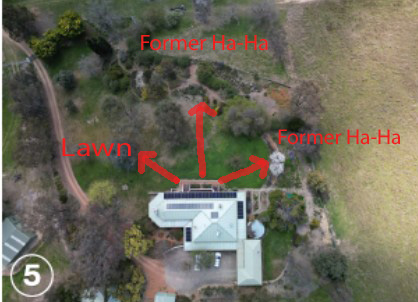
Dad had made a Ha-Ha garden, and I was very reluctant to change that, but time was changing it for me. A Ha-Ha is an invisible boundary that allows you to add extra borrowed landscape into your garden, while not permitting the sheep to come in and eat it all. You can use a ditch with a fence inside, or a sudden drop-off that they can’t climb up, and viewers can’t see.
At one point, there was lawn to the western side of the garden and apparent lawn in two more directions. I’d already created a hedge that destroyed the eastern side of the Ha-Ha, and Dad’s also-beloved oleander hedges had made the north-facing one towards the river less effective.
I struggled along for several years trying to work out what would frame our lovely view properly. I didn’t succeed.
So, a renewal and a rethink were needed.
I got a plan from Lachlan Richardson, who does local native designs based on meadow plants. I found it different from the previous generations of Australia native gardens, that tended to be a lot more shrubby and closed-in. I liked the look and feel of what he’d done elsewhere, with small native flowers and grasses in particular.

The first thing we had to do to put the plan into action was to kill everything we could. I invested in some violent-sounding herbicide called “Sedgehammer” to wipe out the nutsedge which had simply taken over most of the 350 square metre area, as well as lots of other places. This was my chance to get rid of an constant annoyance that stunts the growth of everything around it. My only effective alternative to a targeted herbicide is to cover the ground in black plastic for at least twelve months, but we’d already lost one planting season waiting for the design.
The other main weed, was an African Daisy. It is probably something like an Osteospermum, or Cape Daisy. They will be a long term project to stamp out, because there’s a massive seedbank. I’m not sure even the black plastic would have killed them. I was gobsmacked to see them for sale in Bunnings Hardware store, where I’m sure they will be the source of weeds for years to come. They are not to be confused with capeweed, which we also have, which is actually easier to eradicate.
Mum’s Golden Ash got a severe clipping which may help it survive for a few more years. Grafted Ashes tend to get a disease at the point where they’re grafted onto Desert Ash root stock. They will eventually die. That already happened a decade ago to the Claret Ash further down the garden.
It was spectacular to suddenly be able to see the river under the tree canopy towards the east. I think Mum preferred to block that view off because it wasn’t her land.
The Golden Cypresses at the bottom of the driveway, which were costing us more and more to keep in some sort of hedge, were taken out completely. Mum had a big love of cypresses but I find them a flammable menace. They overgrow if they’re not constantly pruned, and the branches stupidly collapse under their own weight, making a big mess.
A whole row of Dad’s oleanders was ripped out by the roots. Hopefully that will leave less poison in the ground. Previously when I’ve got rid of oleanders their toxic legacy remains for years. The five I removed by cutting and treating the stems in 2013 kept wiping out anything else that I tried to plant in their root area. We trimmed twelve more of them back to knee height, but they’re already expanding frantically.
James the Bobcat Master did the ripping out with his usual speed and enthusiasm.


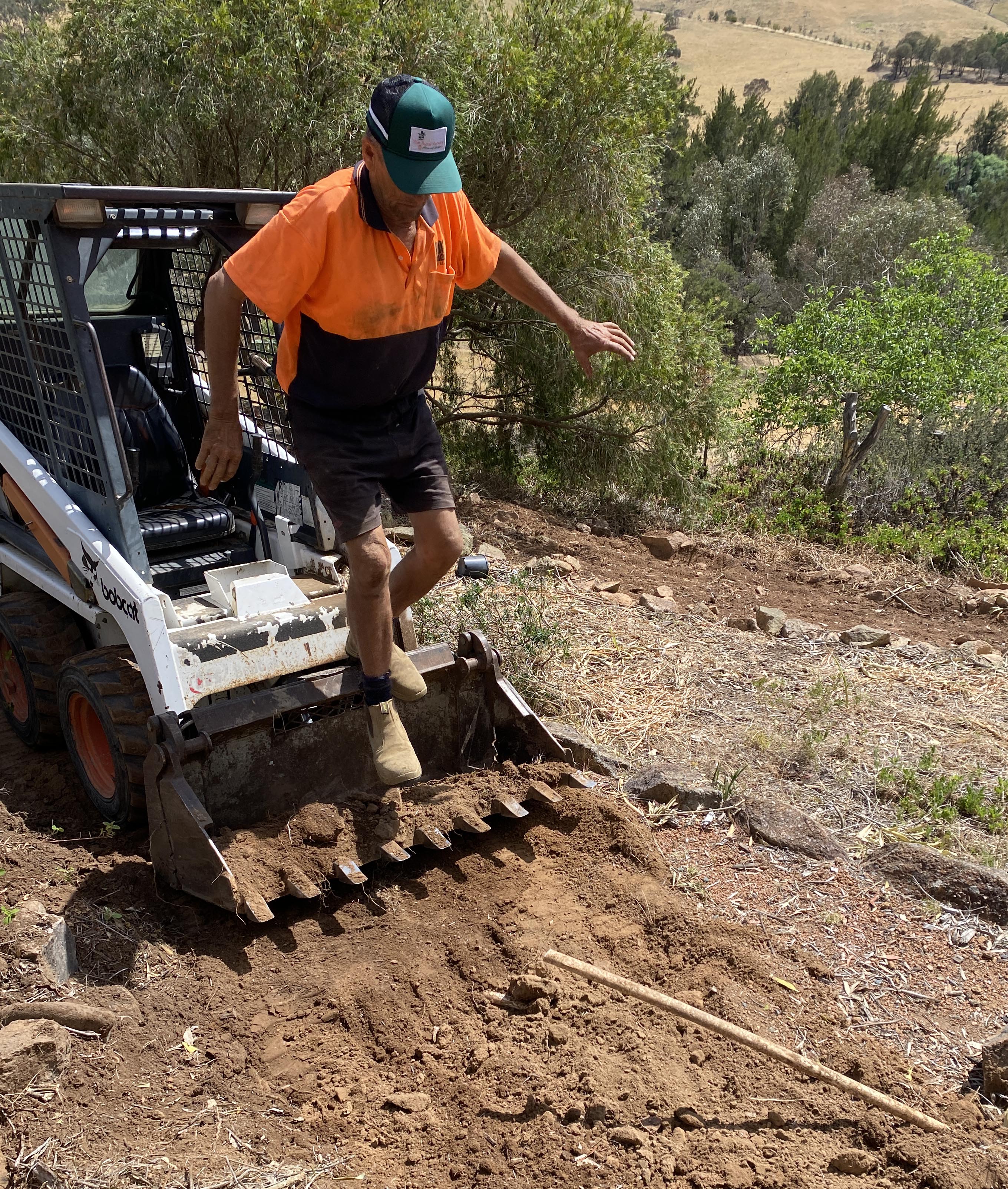
He also re-formed the paths to be wider and to create a straight walkway from the house to the little lookout where my Balinese frog band hangs out.


Suddenly the shape of the garden began to make more sense.
James made a ramp so the slope of the path wasn’t so steep that walkers would be dangerously slipping on the gravel. That required bringing the flowering garden a long way closer to the house, which was also part of the plan. I’d hesitated about doing that for a few years, because I didn’t want to make the big lawn feel smaller, but in fact having clear edges makes it seem, if anything, bigger.
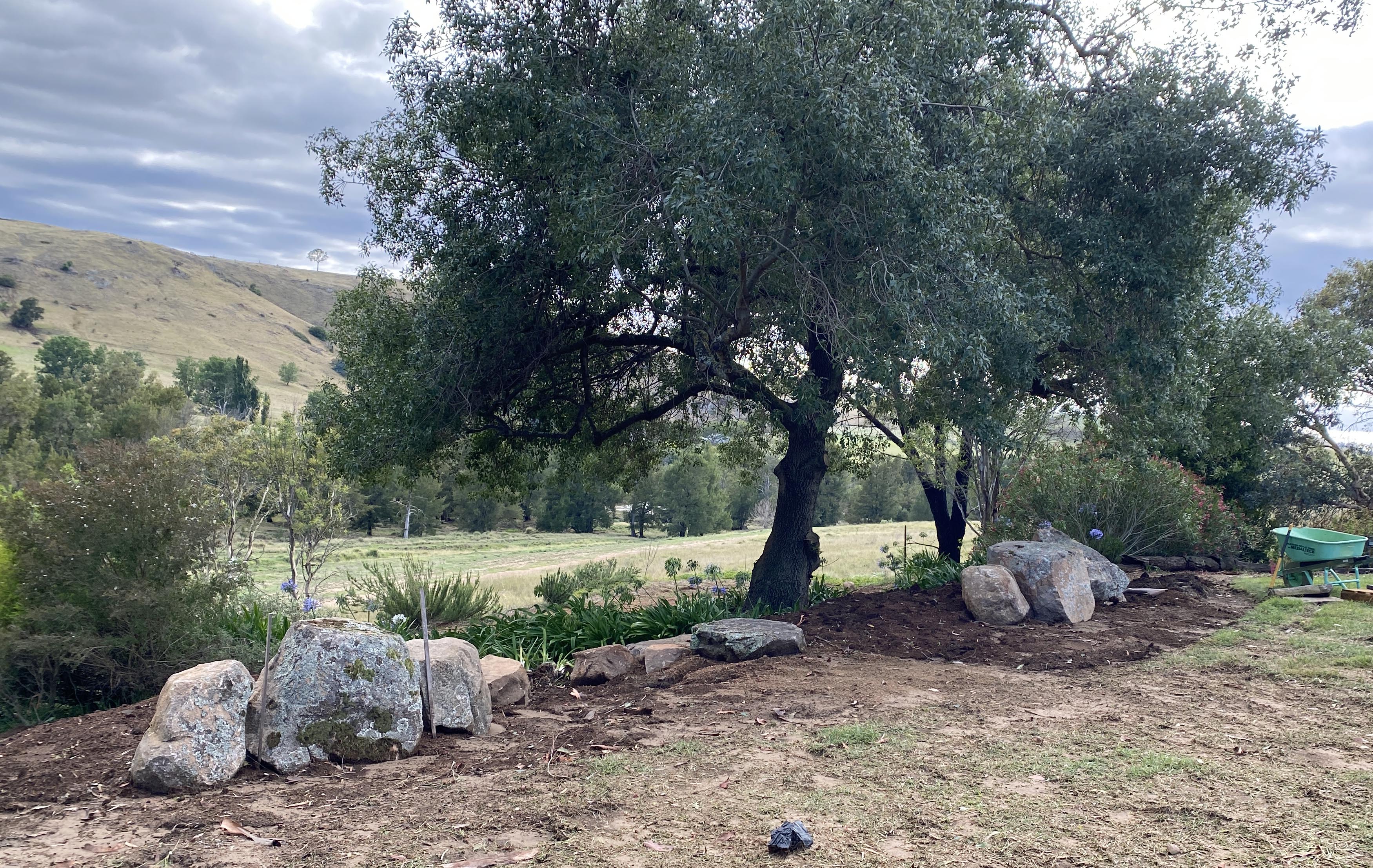
Then it was time for the special scenic boulders.
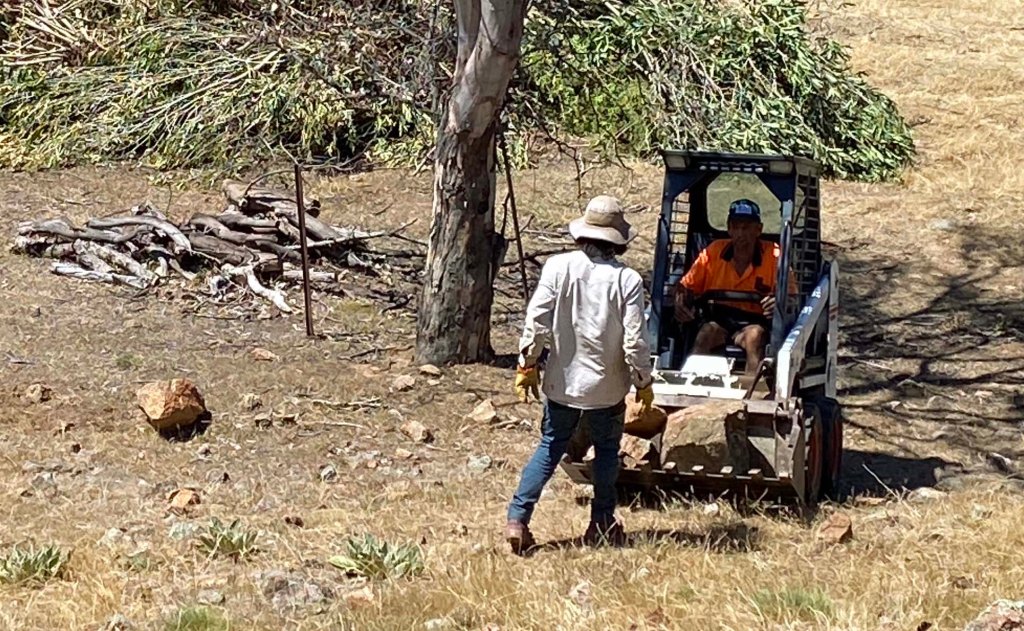
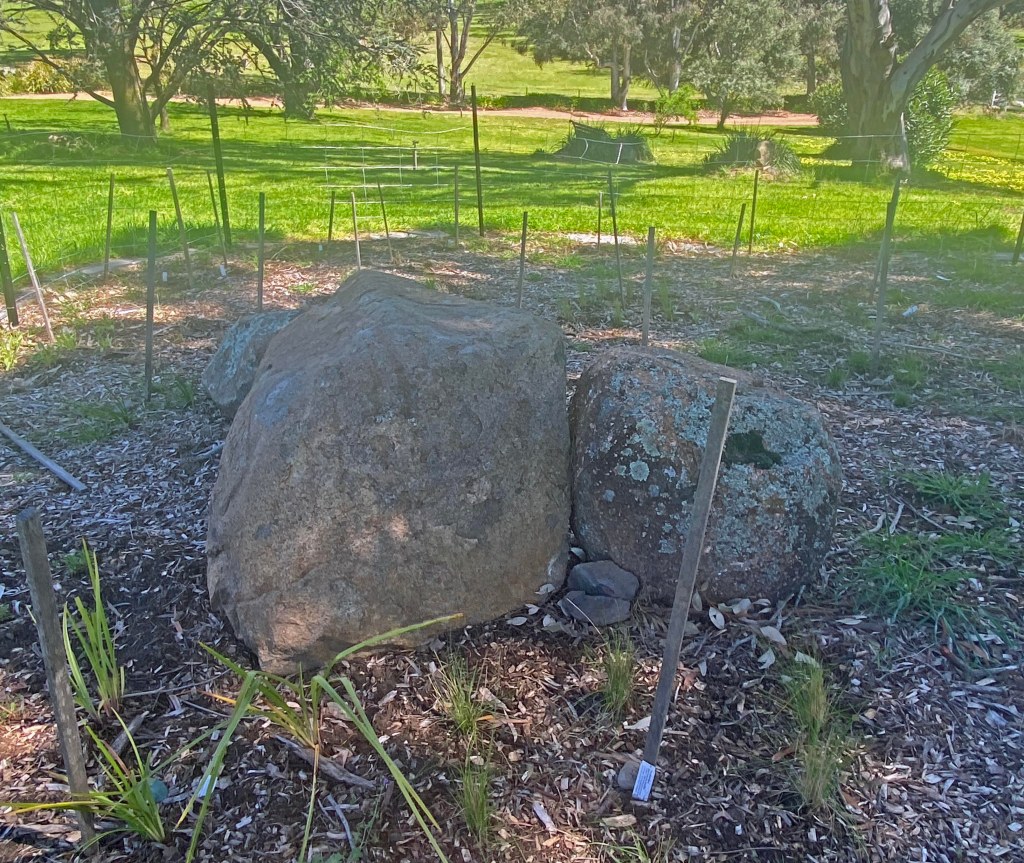


Lachlan had suggested a couple of groups of biggish, stylish rocks, grouped in threes. James went out to the back valley and came back with a truck load of monsters which we grouped into four lots of three, plus all the materials for new path edging. My sole contribution to that part of the design was suggesting one boulder be moved so that it only appeared when you walked around it.
They are magnificent.
Charlie, visiting from Vienna, learned to drive the little Bob-Kitten and trundled back and forth with big boulders in the bucket. He and Dmitry also learned how to lay pavers (to James’s fierce standards) as edging for the new areas that are now garden rather than lawn. We took the opportunity to convert a garden path through the veggie area to gravel as well, as part of my fire safety plan.

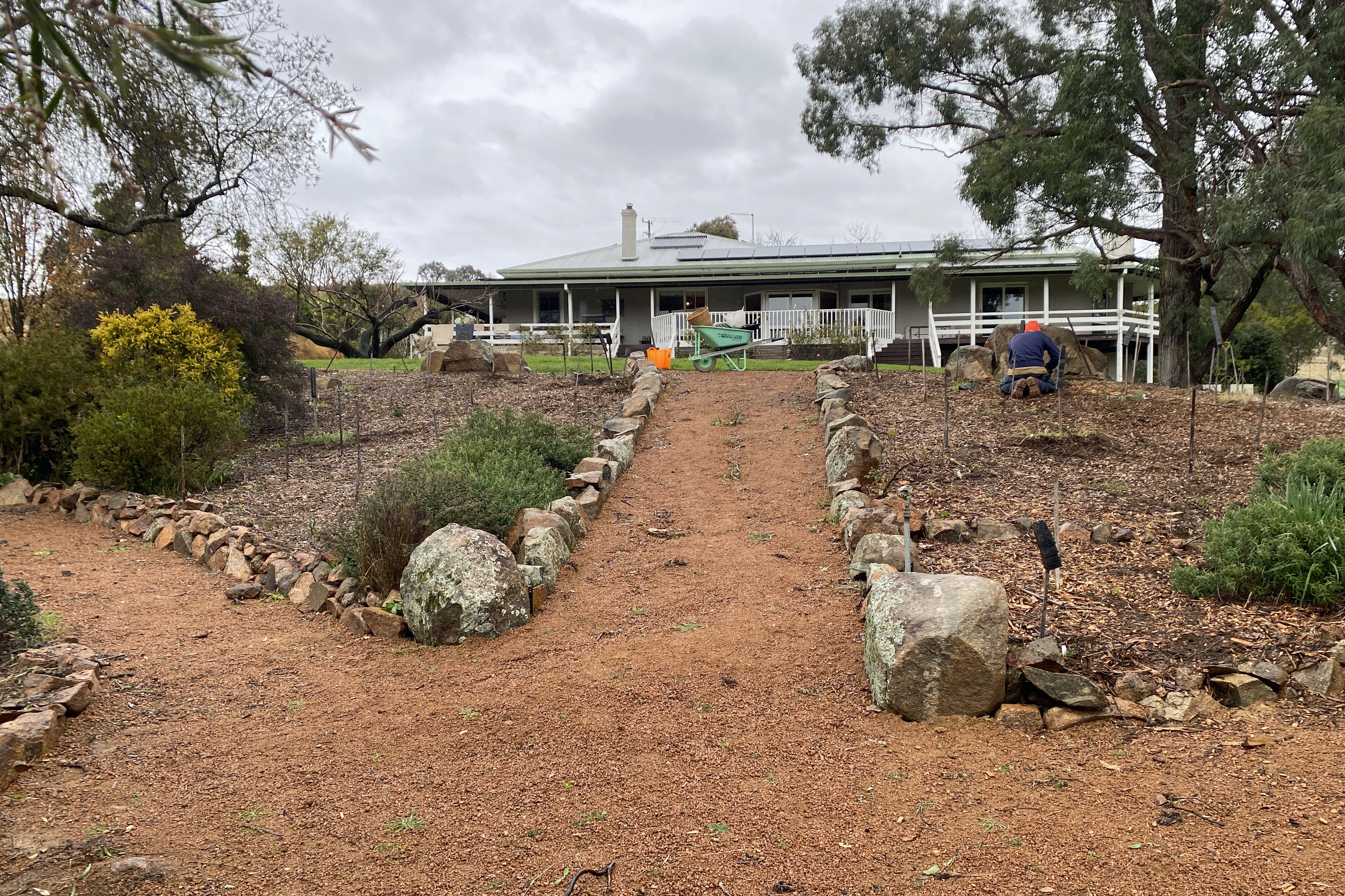
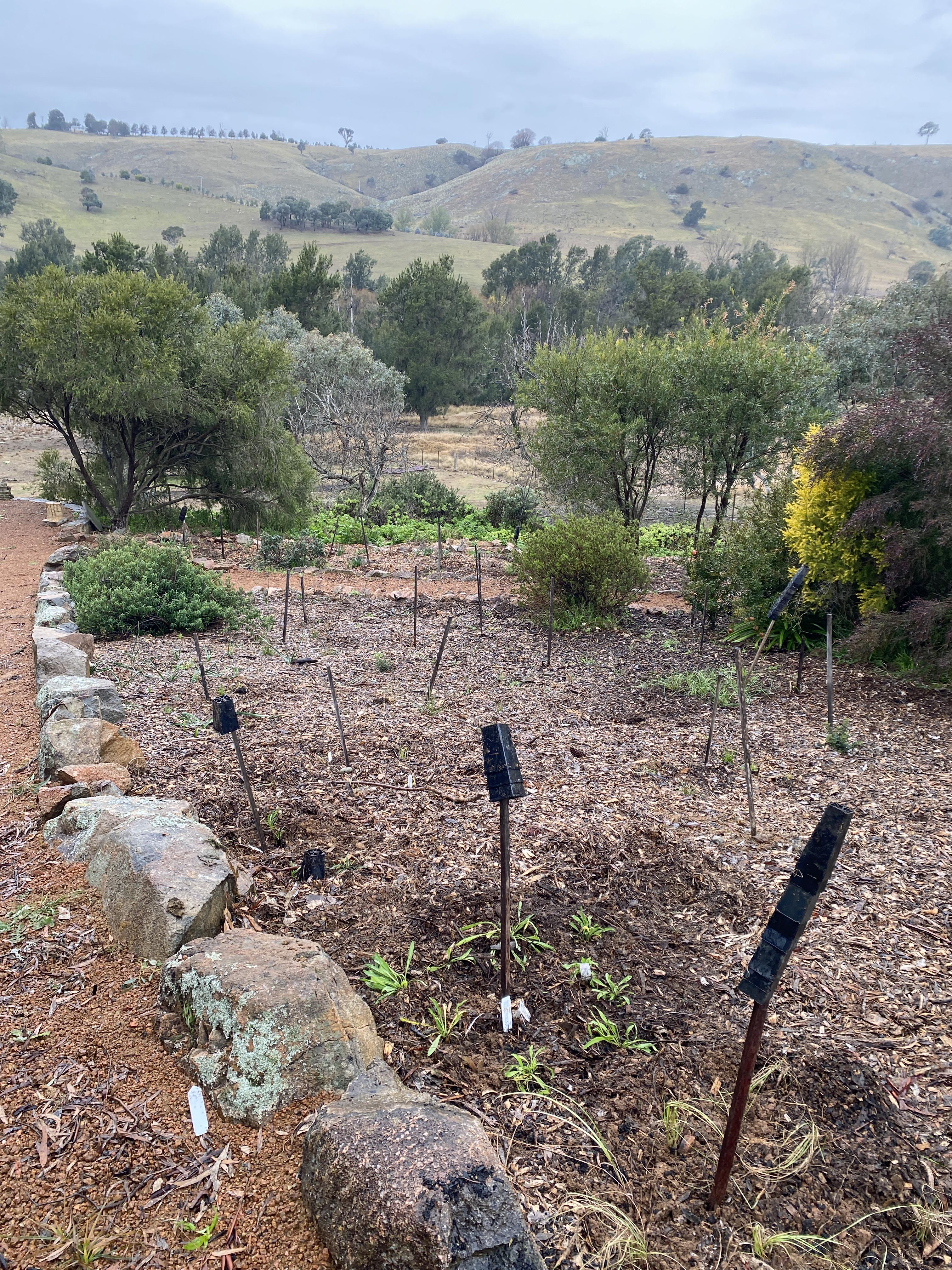

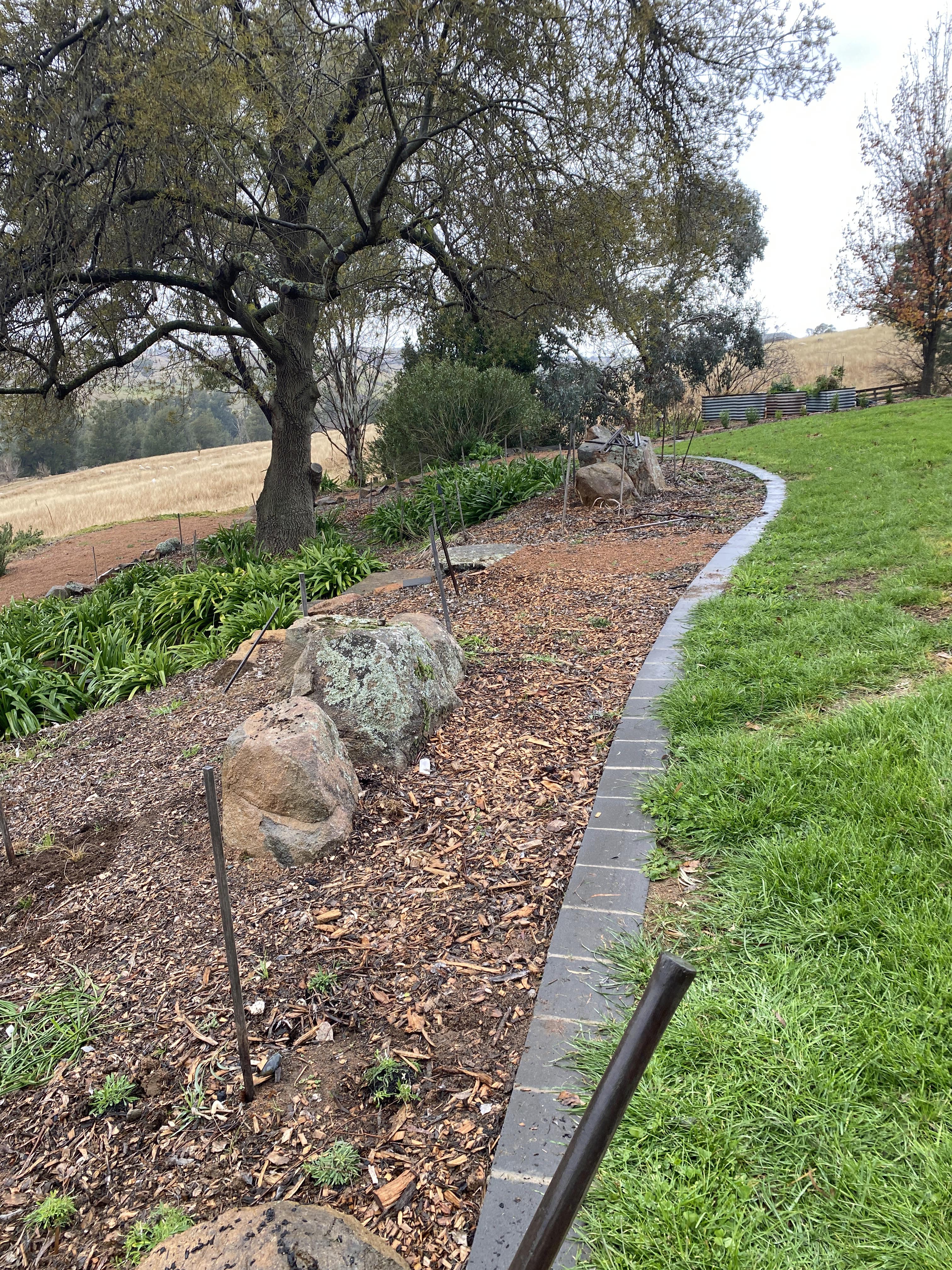
James also levelled the “croquet lawn” which had a distinct slope which encouraged croquet balls to run into the bushes, plus plenty of holes to trip up unwary players. Now there’s a mostly level space, but slightly steep edges to match up with the surrounding ground level. There were huge mounds of dirt, gravel, mulch and rocks for weeks.
The best thing about the rocks is that I can see them from the verandah while I sip a glass of wine, where previously that garden was hardly visible down the hill.
More to come…Part 2: Planting and the Kangaroo Menace
 One Bend In The River
While I was looking for the Ginninderra Falls Association website via my WordPress reader, I came across your terrific blog. I’m sure there are a great many people in surrounding areas who would be interested in following your progress in increasing the biodiversity on your property.
You probably know that gazania, the African daisy, is growing in swathes across Canberra. It is horrendous and plundering farmland, ecologically sensitive areas, urban green spaces and suburban yards alike. Apparently it is impervious to herbicide. I suspect it will have an even greater impact than African Love Grass. The ABC recently did a story on its impact. I imagine your Landcare committee is quite concerned about it and would advise you to tackle it as soon as possible.
I can only comment on your blog through my WordPress reader. Hope that makes sense.
Regards.
Tracy (aka Untidy)
LikeLike
thanks for your comments! I agree with you about gazanias. We have some my Mum planted, but they’re not really thriving, so I’m not as worried about them as about many of our other weeds. It’s amazing how many are in circulation, being handed from house to house by well- meaning neighbours.
LikeLiked by 1 person
They are out of control in Canberra. Glad they haven’t taken off at your place, which looks wonderful by the way.
LikeLiked by 1 person
A very interesting post – thanks for sharing your experiences! 🥰
LikeLike
A very interesting post – thanks for sharing your experiences! 🥰
LikeLiked by 1 person