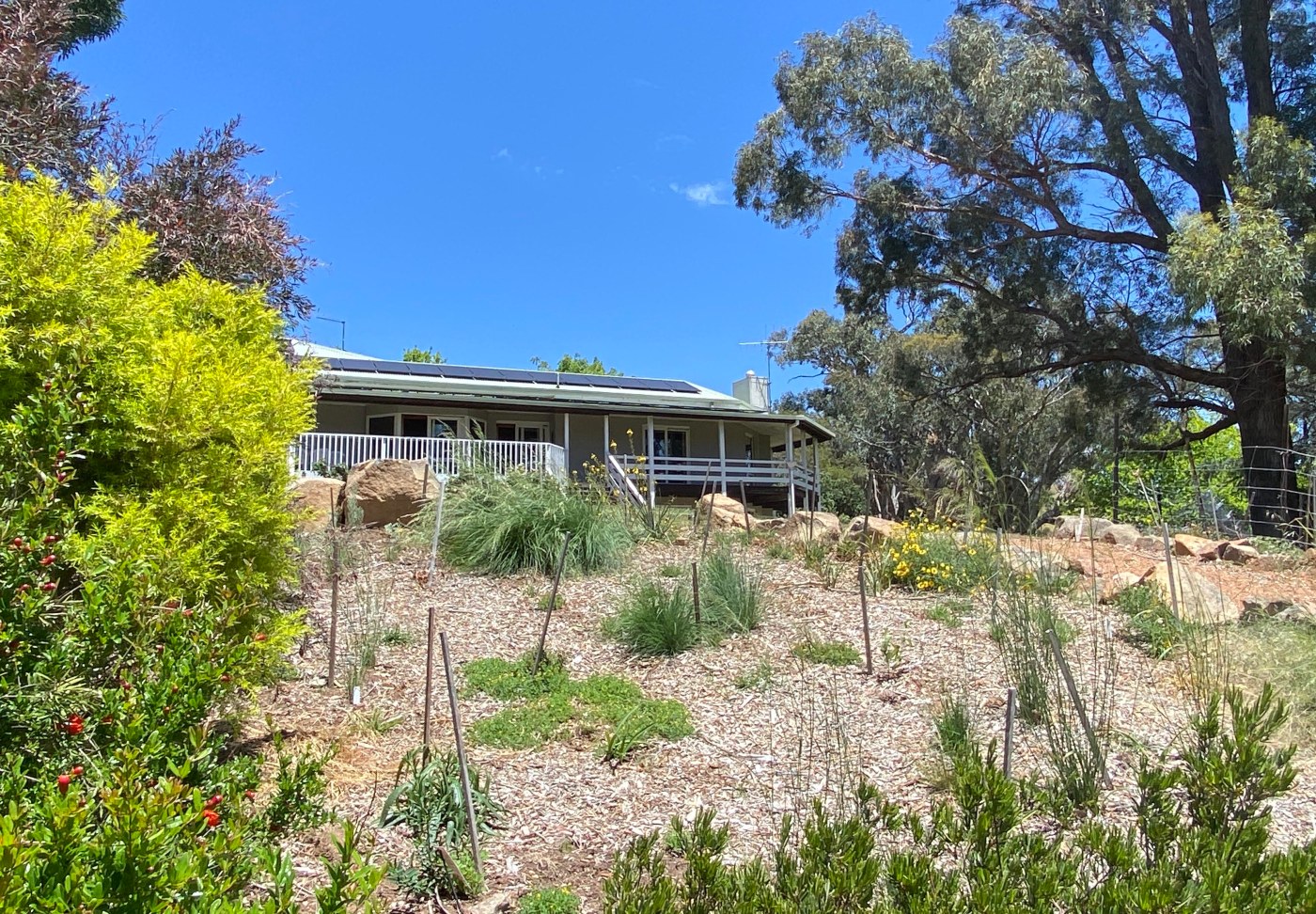
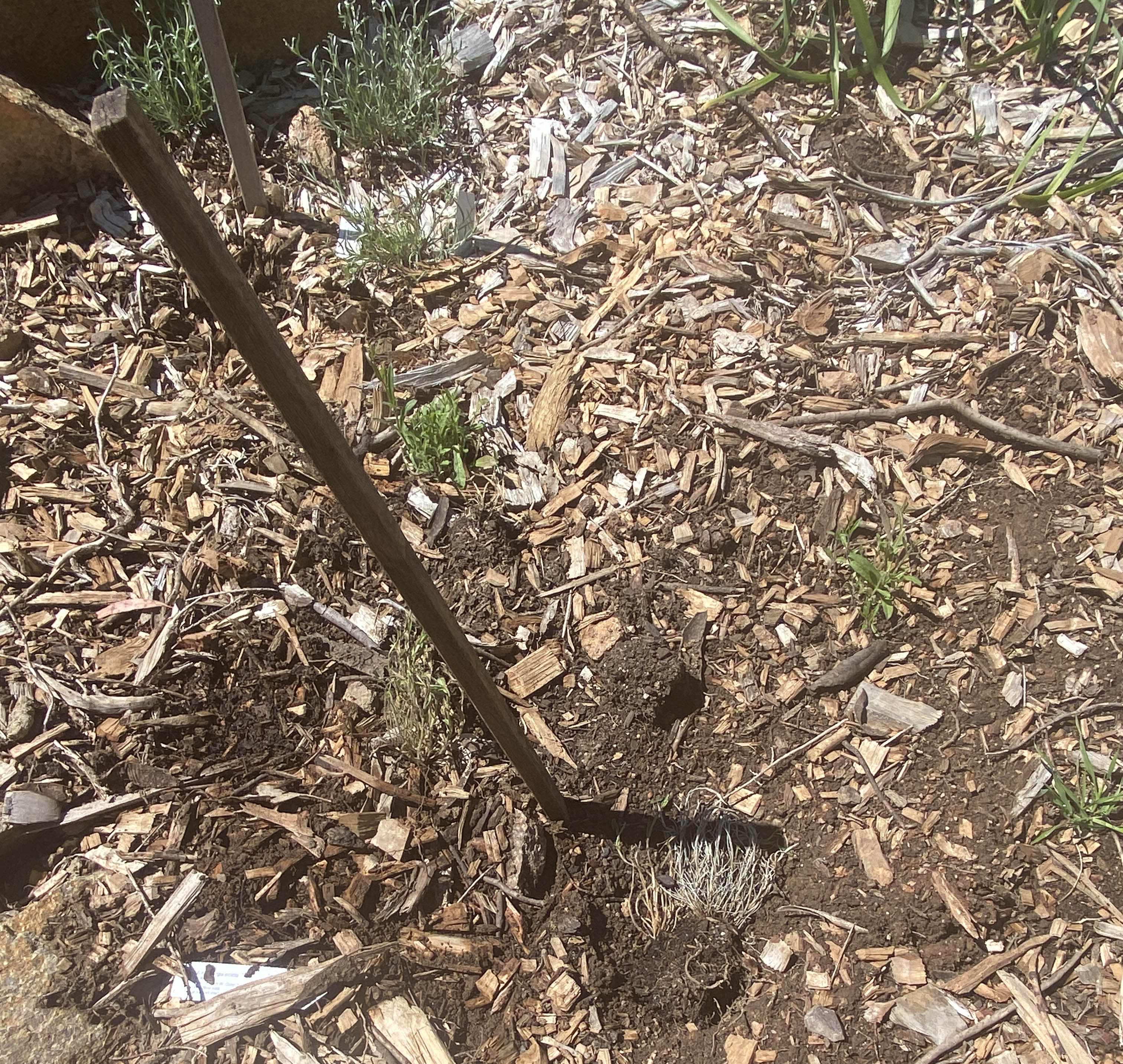
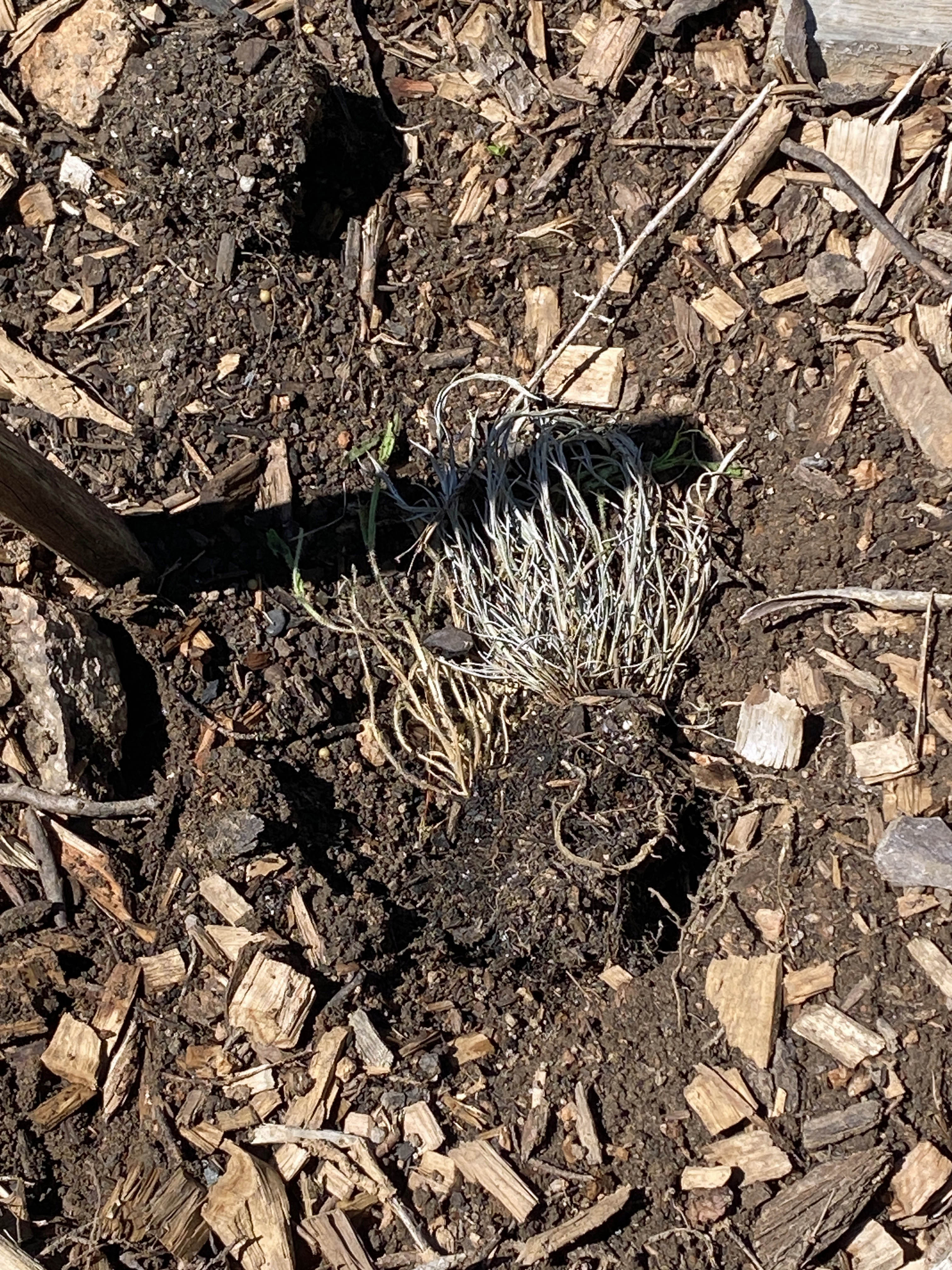
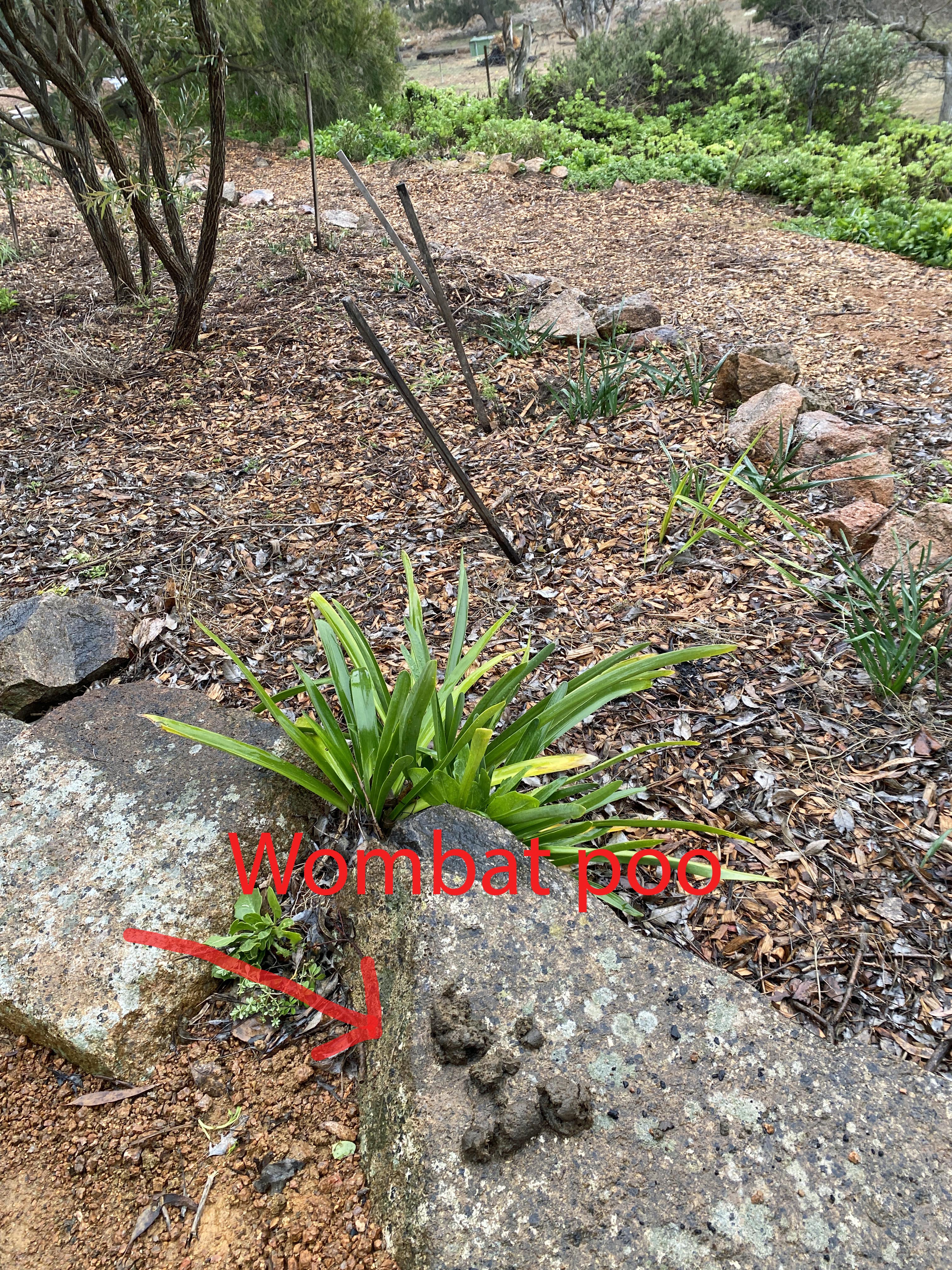
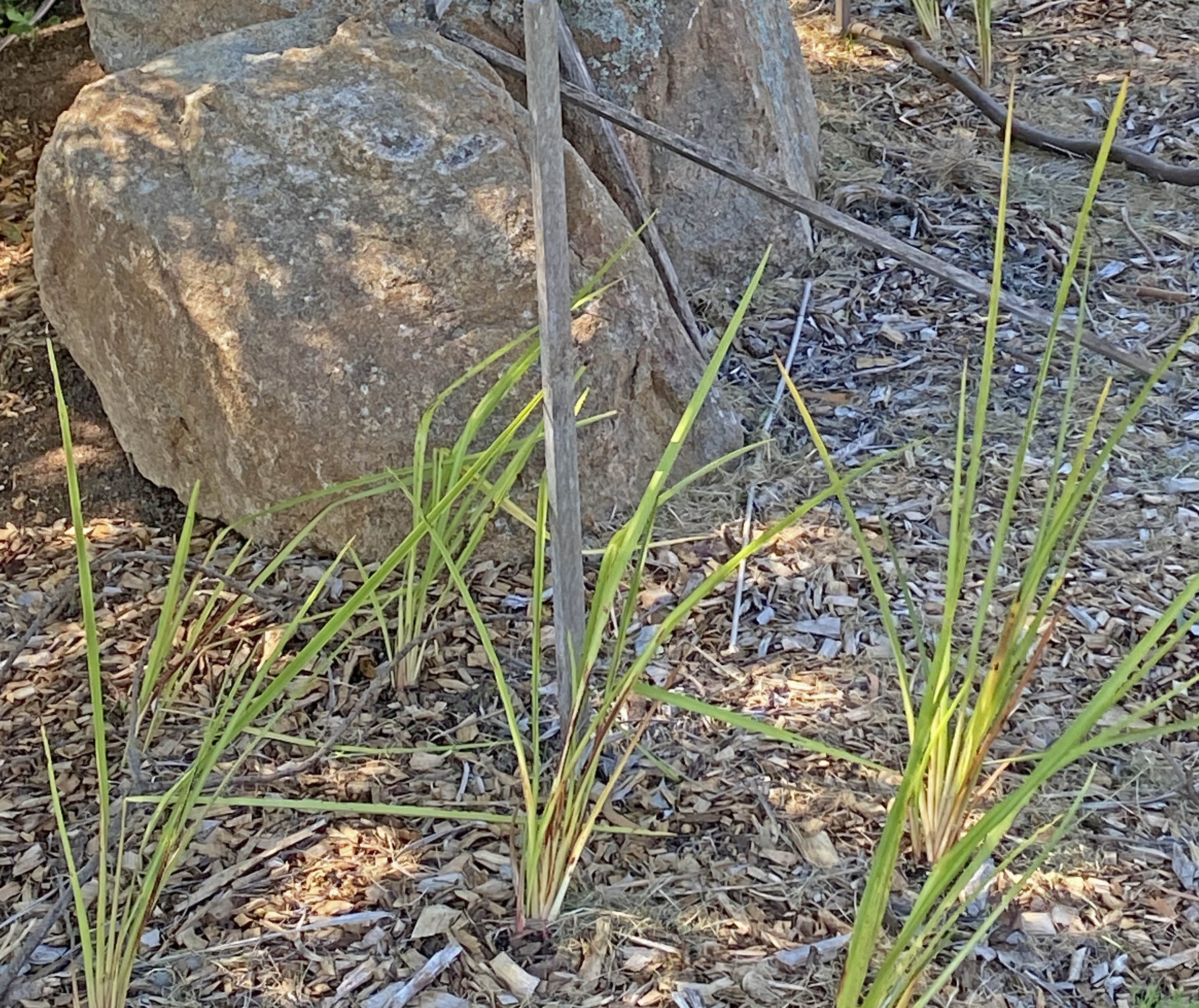
Apparently, kangaroos really do like to eat kangaroo grass. As soon as I started to plant some seedlings, they were nibbled to the roots. The wombats, on the other hand, prefer to yank things out of the ground instead. Then they leave a calling card of square poo displayed on a rock.
Very annoying.
The kangaroo grass was part of my new meadow, using a completely different planting style to what I’m used to. Out in the paddock, I plant in rows or clumps or zigzags depending on the terrain. Each plant is defended by a corflute cover that keeps off the herbivores.
In the garden, I tend to plant things in rows, also. I haven’t had much success with small native plants until fairly recently, when a group of bulbine lilies has managed to survive my neglect for a few years, and some nodding chocolate lilies and blue devils likewise have staggered along.
A lot of places that would have been suitable were infested with couch grass and nutsedge, so it needed a proper plan and a radical change to make a place for them. That involved quite a lot of earth-moving and weed control,
The design from Lachlan Richardson called for about 3000 small plants and shrubs for 350 square metres of newly levelled ground around my fabulous new rocks.
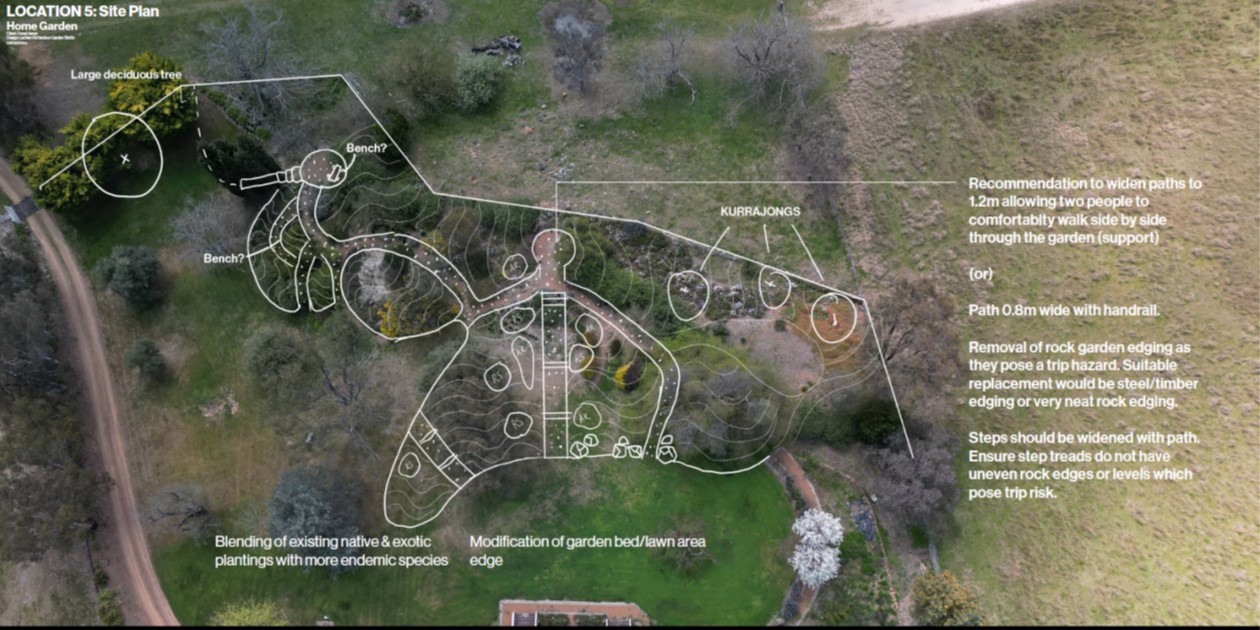
After I expressed confusion, he sent me a coloured picture of how to plant, making random clumps rather than lines or hedges.
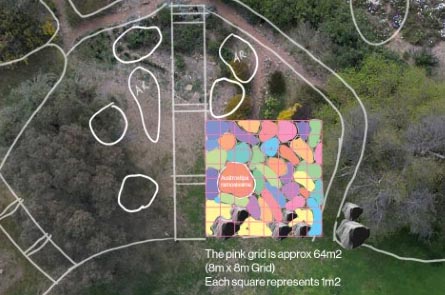
Each clump needed several of the same thing, as they’re so small, particularly the wildflowers.
There were a few shrubs for interest and variation. They provided a structure as well, and were put further down the slope to allow them to grow higher without obstructing the view.
We began under the ash tree with the big supply of Vanilla Lilies I got from Murrumbateman Landcare. These make vanilla-flavoured edible tubers which were well wedged into the pots, so they took a lot of coaxing to get out. Often we just had to tear the plastic pots apart. These, the bulbine lilies, some violets provided by our neighbour Leonia, and the indigofera, with their gorgeous purple flowers, seem to be doing well in the semi-shade. Eventually I hope they will begin to compete with Mum’s agapanthus.
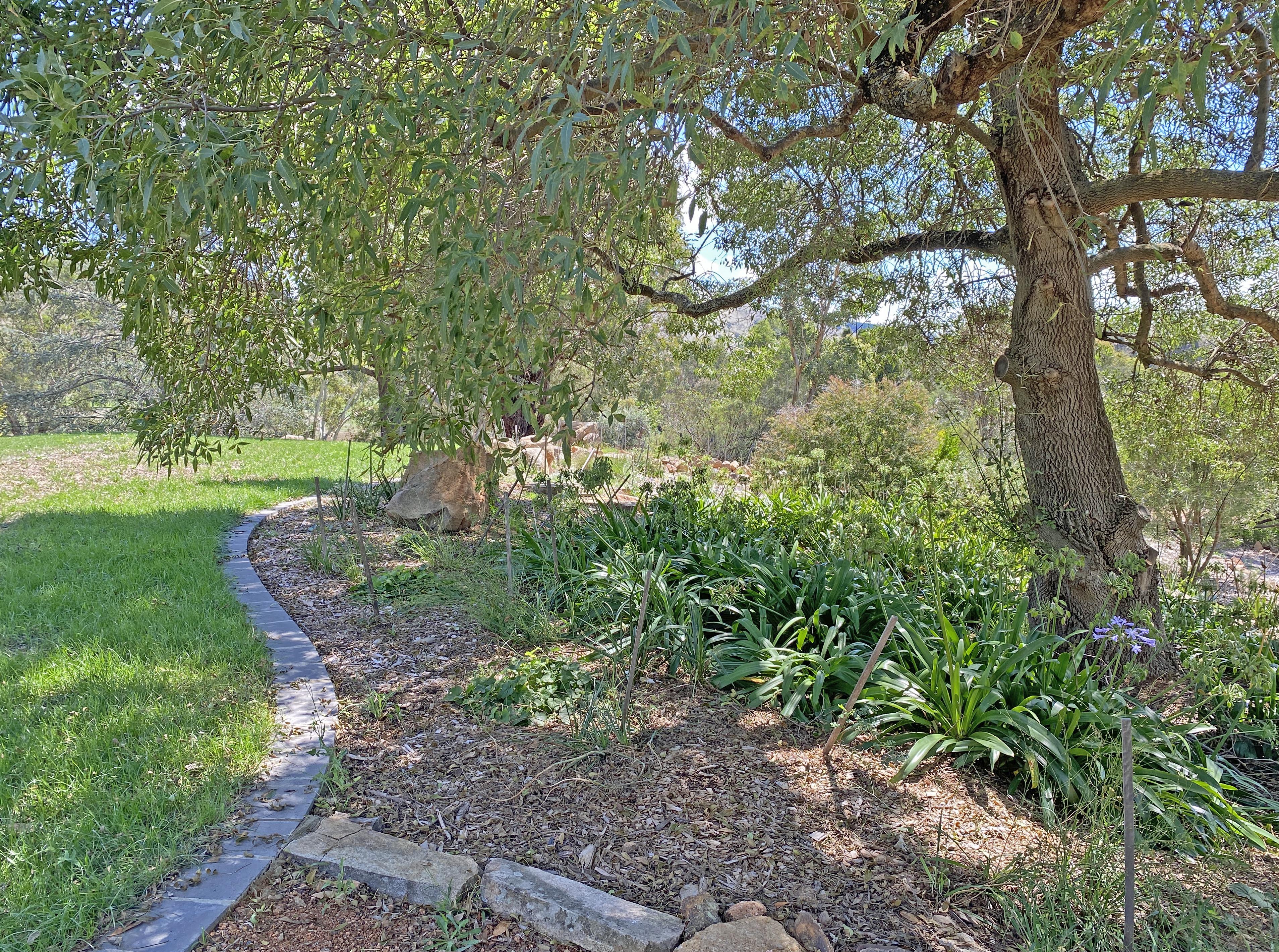
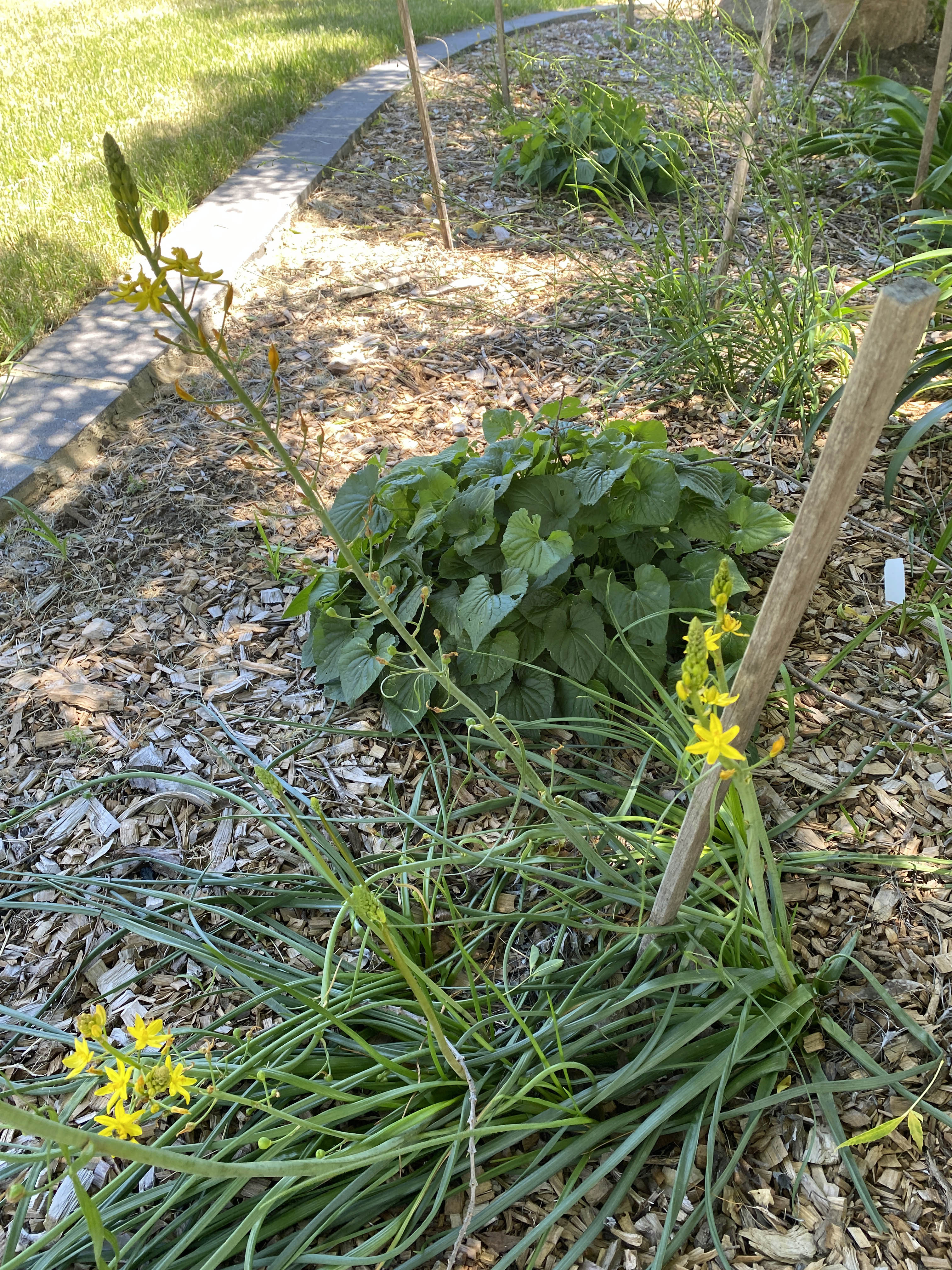
Also in the shady area I put Hardenbergias to make mounds. Since they can get really big, I just planted singles, but they were very small and I may have to add a couple to fill out their patches.
The middle area (where the coloured pattern is) was more sunny and fertile, because soil had been added to bring it up to the level of the pathway. Everything planted in that section has done quite well, even when they’re being munched on every night. Australian native plants often don’t like excess nutrient, so it’s interesting that this had such an effect.
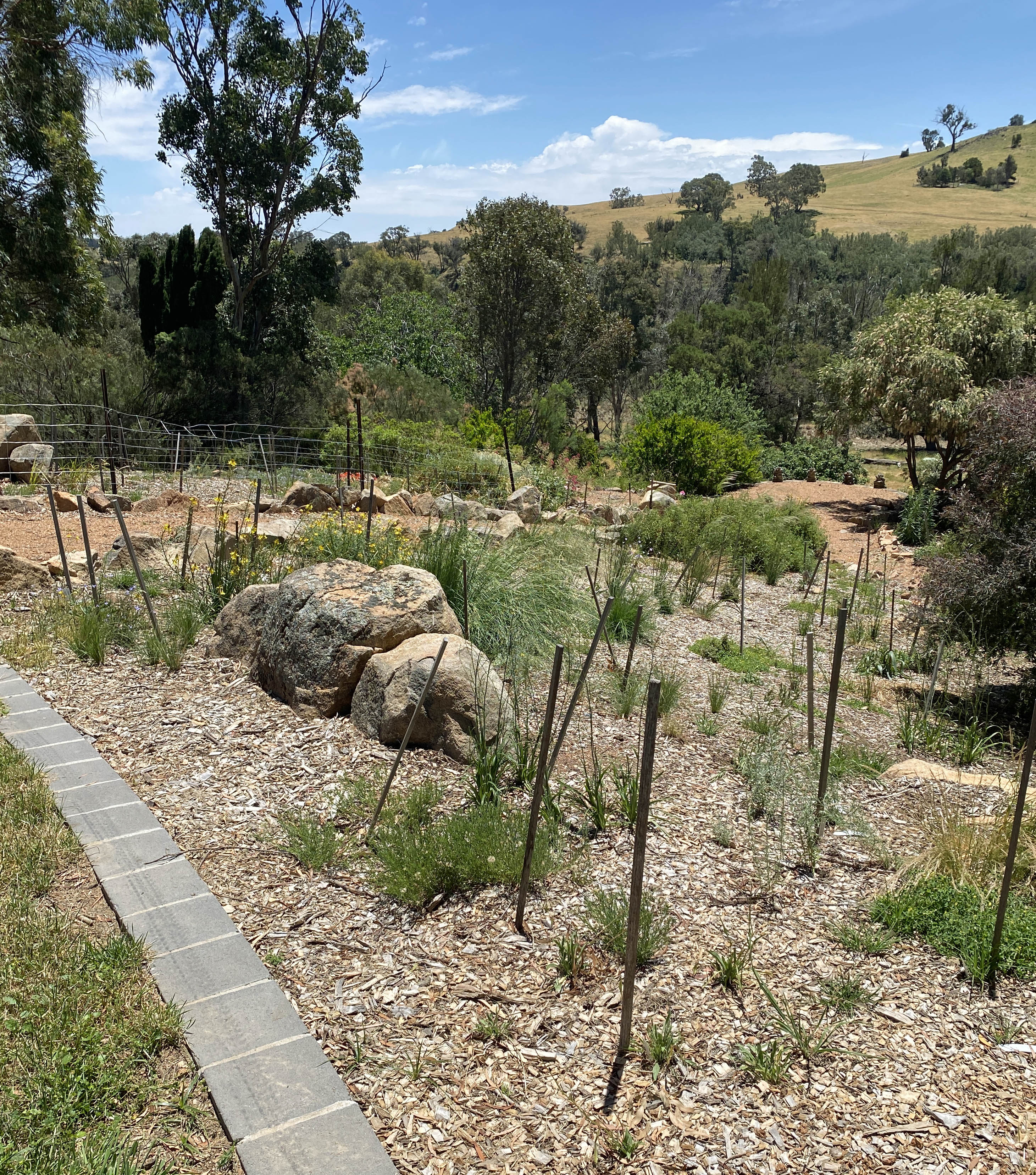
The most difficult area was under two peppermint gum trees, which give lovely shade to the garden, but defend themselves sternly against other plants. They seem to have fairly shallow roots and pull all the moisture out of the ground around them.
With the cold weather last winter, nothing grew, and the small plants got smaller every day. Over my protests, Craig and Dmitry put up an ugly hinge-joint fence with a leftover roll from last year. Craig promised to remove it for Christmas, but in the end it stayed up until we got some decent rain and the kangaroos found some other grass to eat.
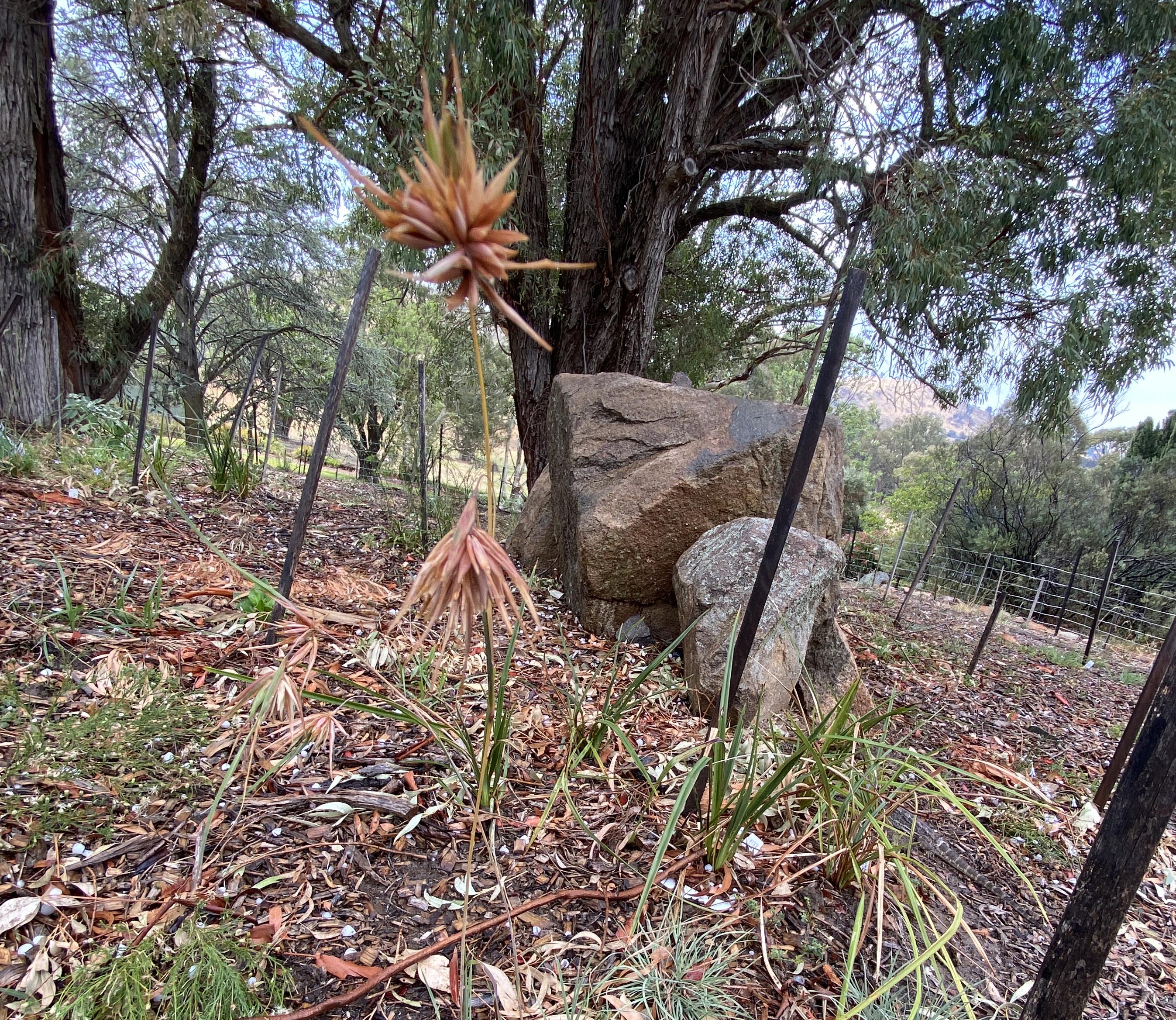
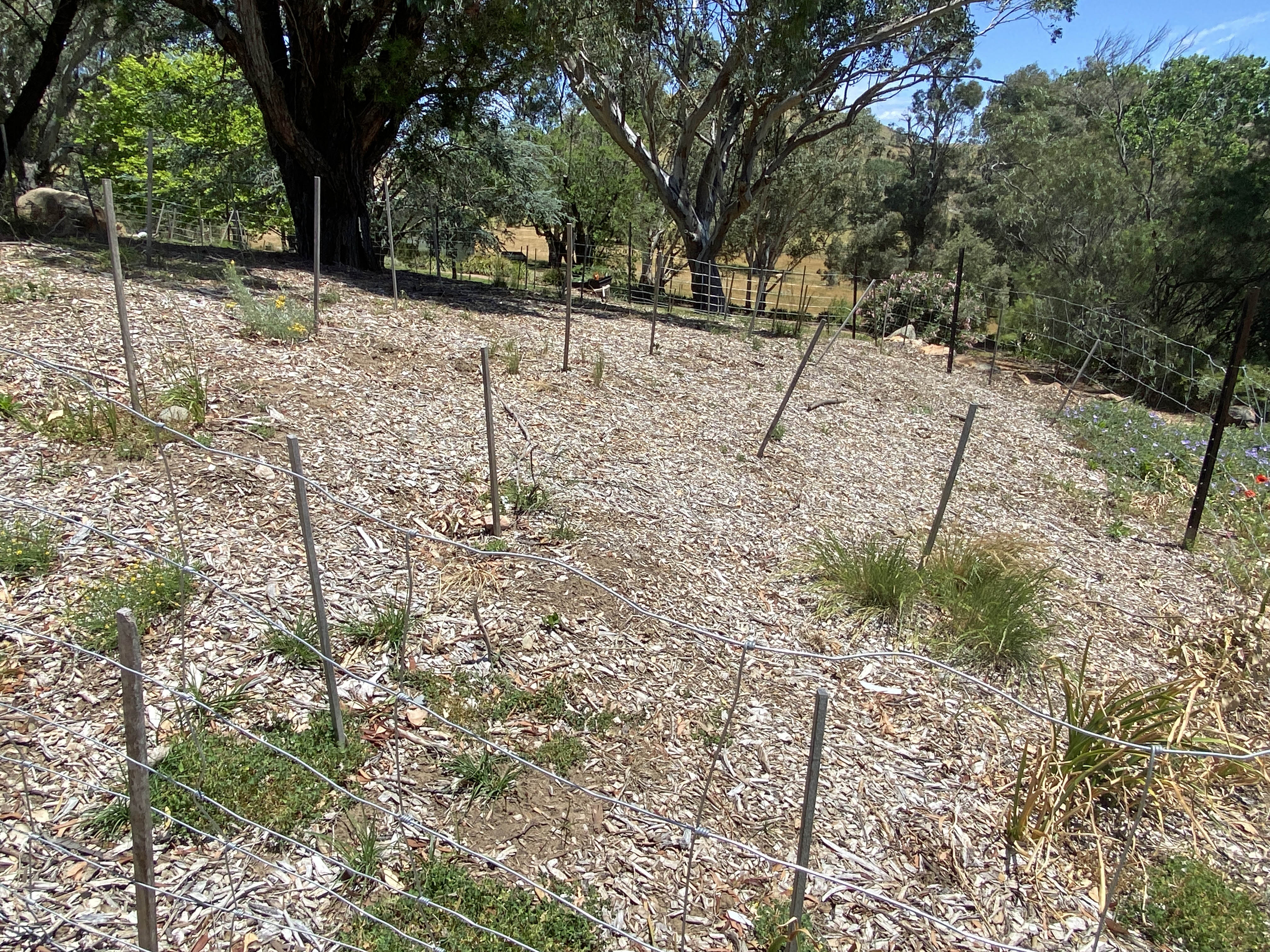
In order to keep track of what I was planting, I put sticks in to mark each clump. I also used nice round pebbles and wrote on them with permanent marker what was planted there. In some places I also used the plant tags, especially after I found the permanent marker was wearing off the pebbles.
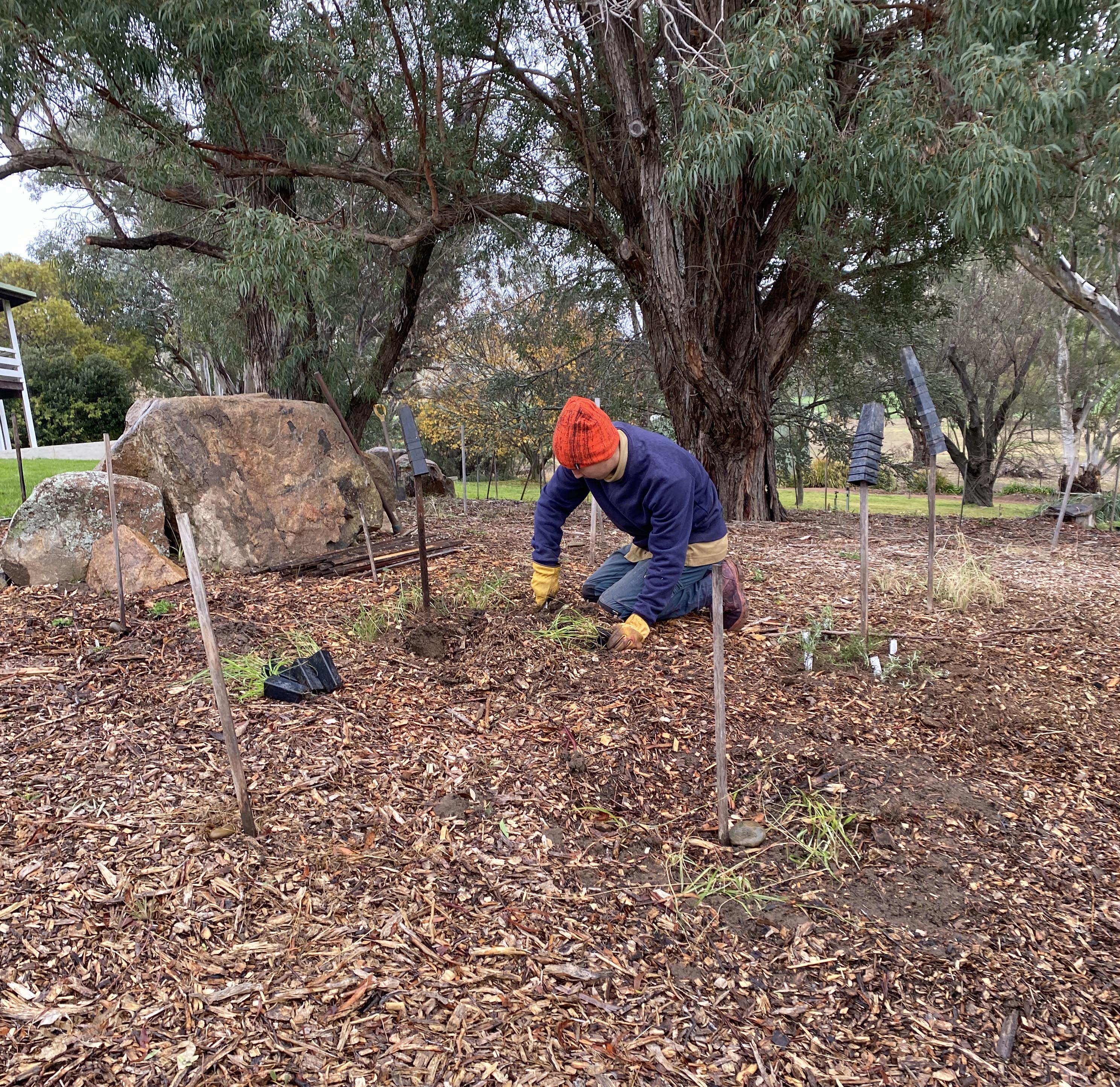
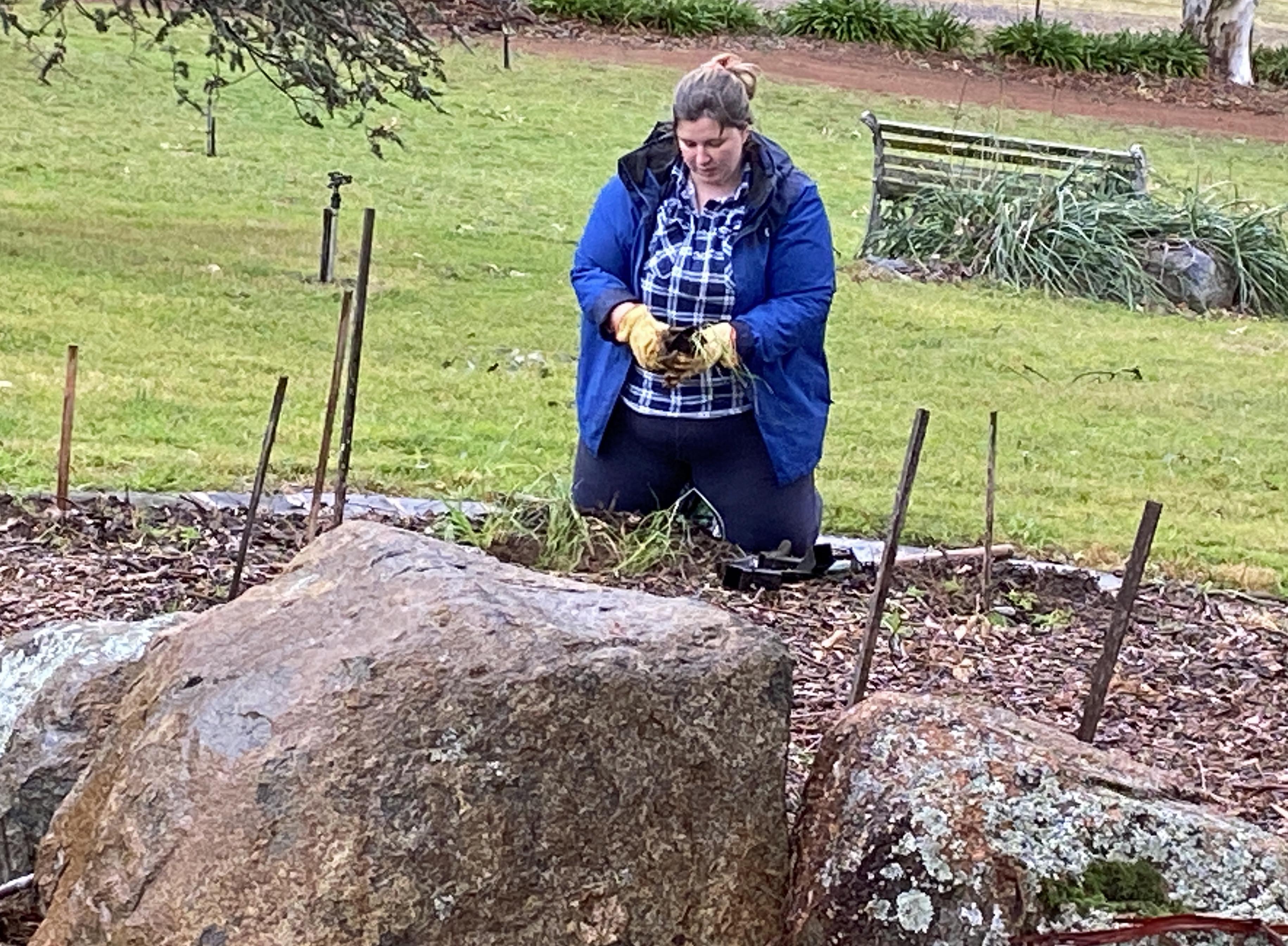
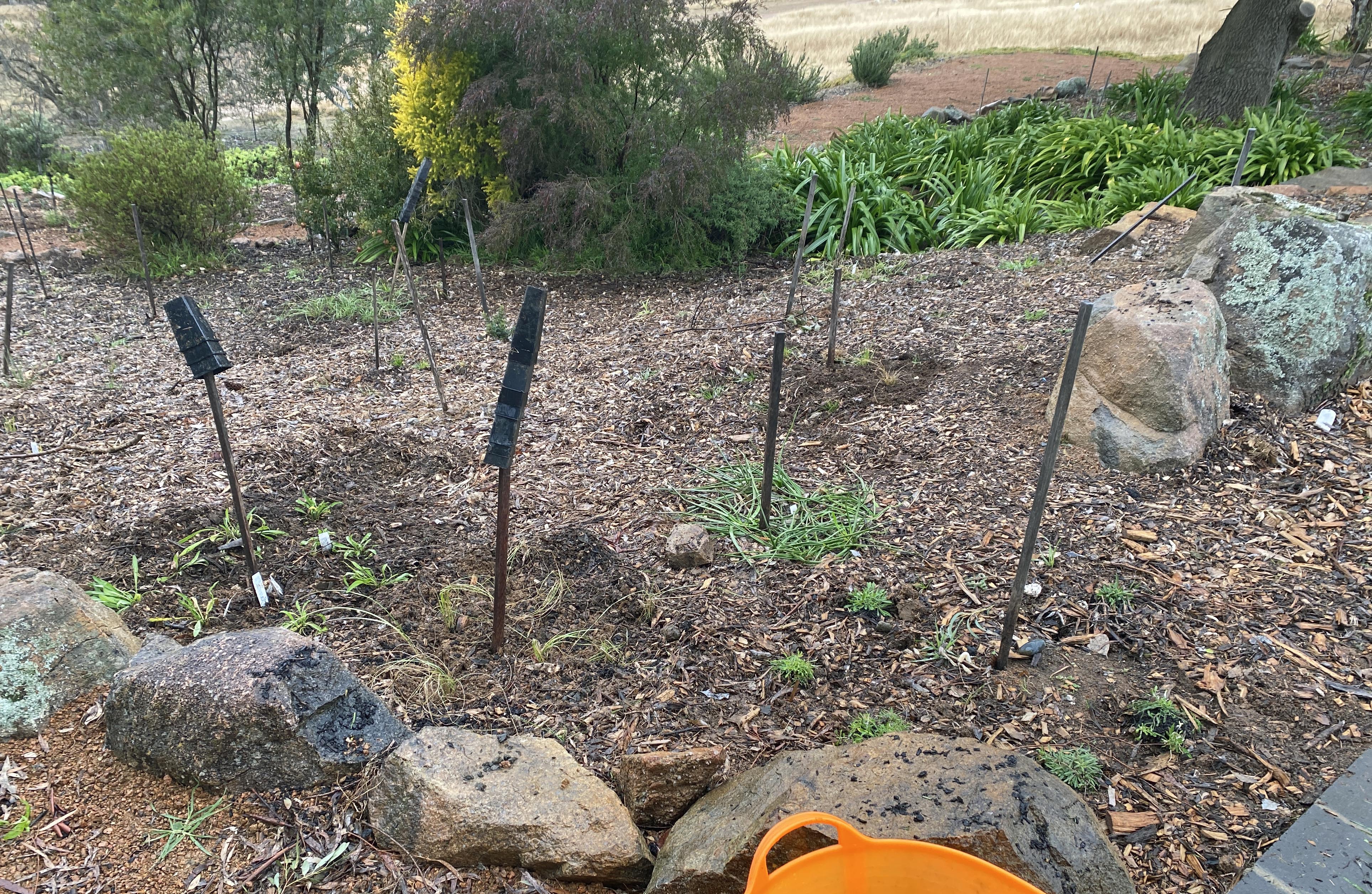
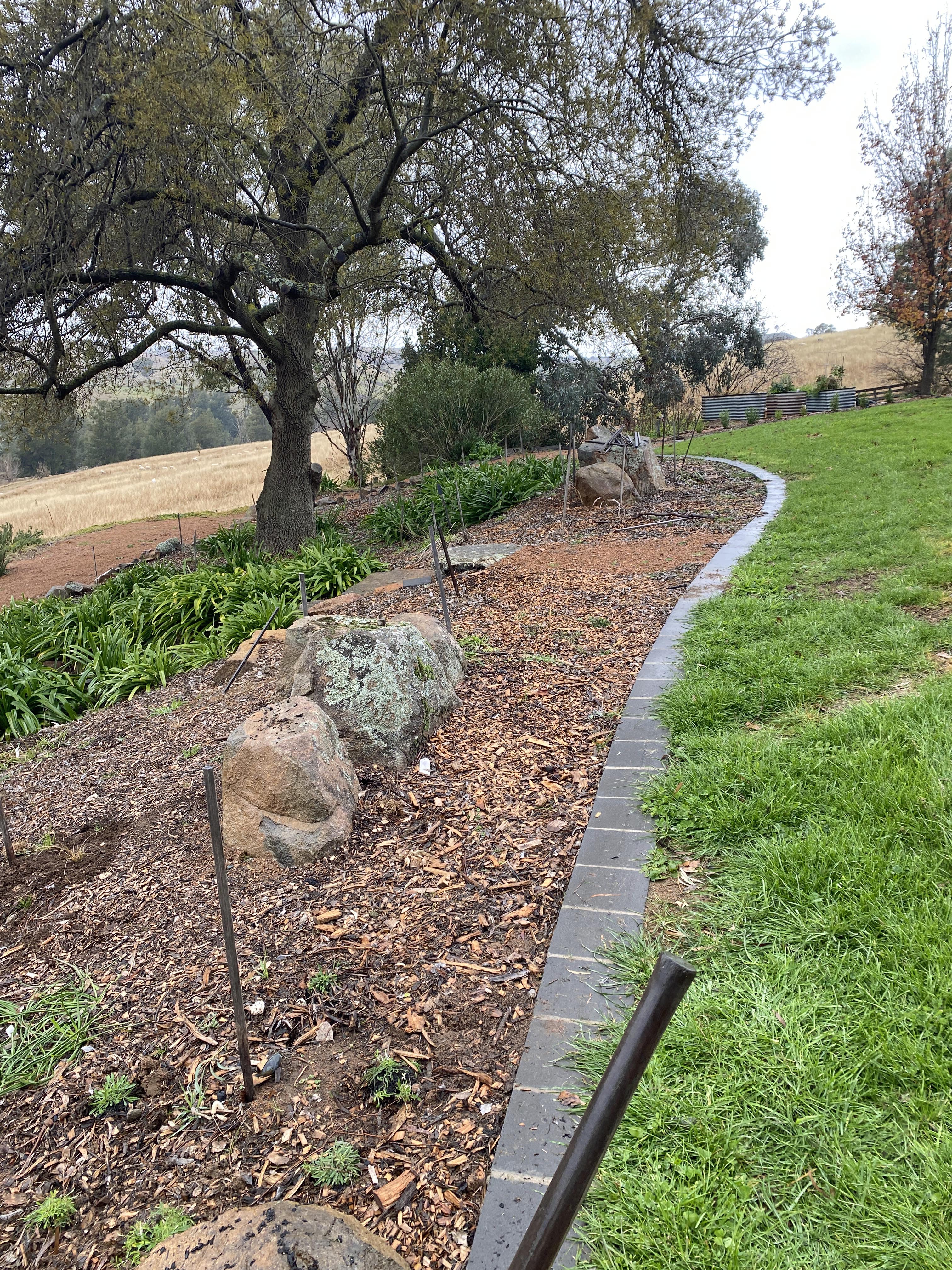
Eventually I had a little forest of sticks, but lots of the plants were nowhere to be seen. In the spring I went back, however, and found a surprising number had survived. I wouldn’t have known they were there if I hadn’t had the sticks and tags to hunt around.
This summer Craig did a sterling job keeping the water connected so that the survivors can establish properly. The ones under the shade of the ash tree are still in the best shape, especially after the 40-degree heatwaves of January.
One reason I had to use markers was because I added species as I could rather than buying everything at once. The ones that I got from Murrumbateman and Yass Landcare were the least expensive, Cool Climate Natives had a wider selection but also ran out of many of the things I wanted. When I got around to talking to Jayfields, the bulk nursery in Holbrook, they had already sold out of everything I wanted. Cheapest of all would have been using seeds instead of tubes, but
So, this autumn I’ll be doing some significant replanting and adjusting the list of what I need. Even the shrubs were hammered by the herbivores.
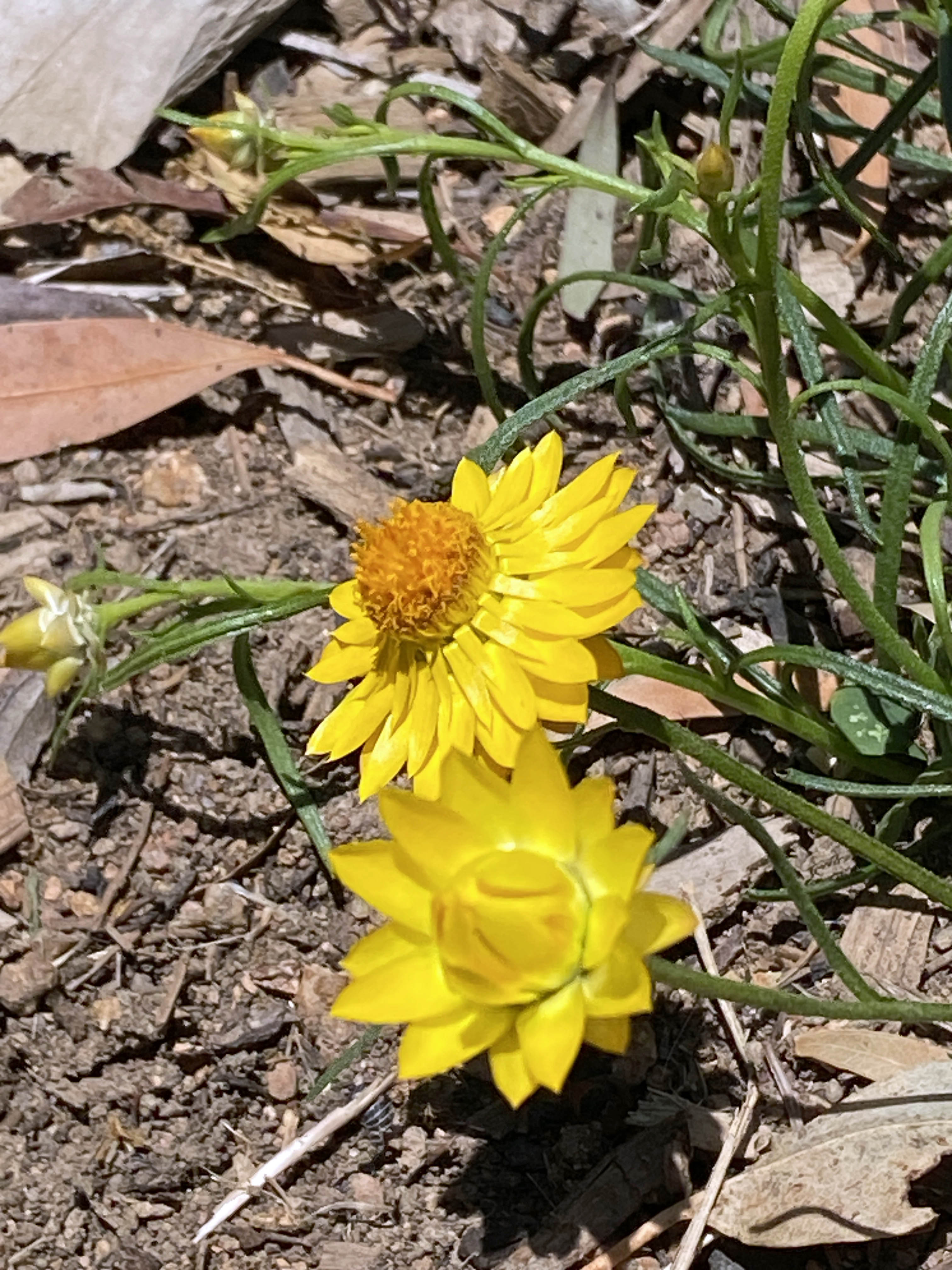
So far the everlasting daisies have done beautifully, the bulbine and vanilla lillies, and the poa grasses well enough . The bamboo grasses (austrostipa ramossissima) are beginning to thicken up into sturdy clumps. It’s going to be fun to keep tinkering with the mix over the next few years.
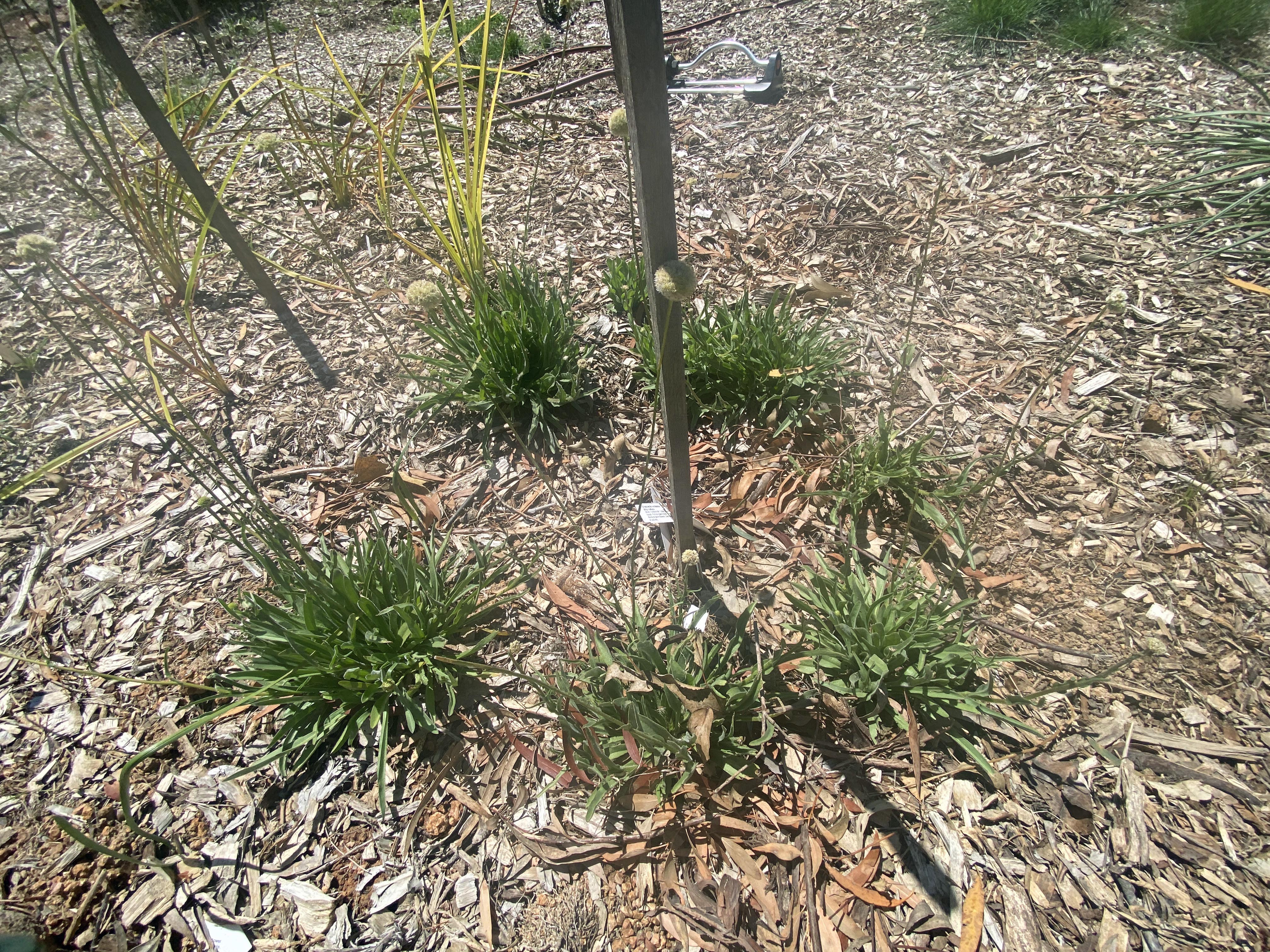
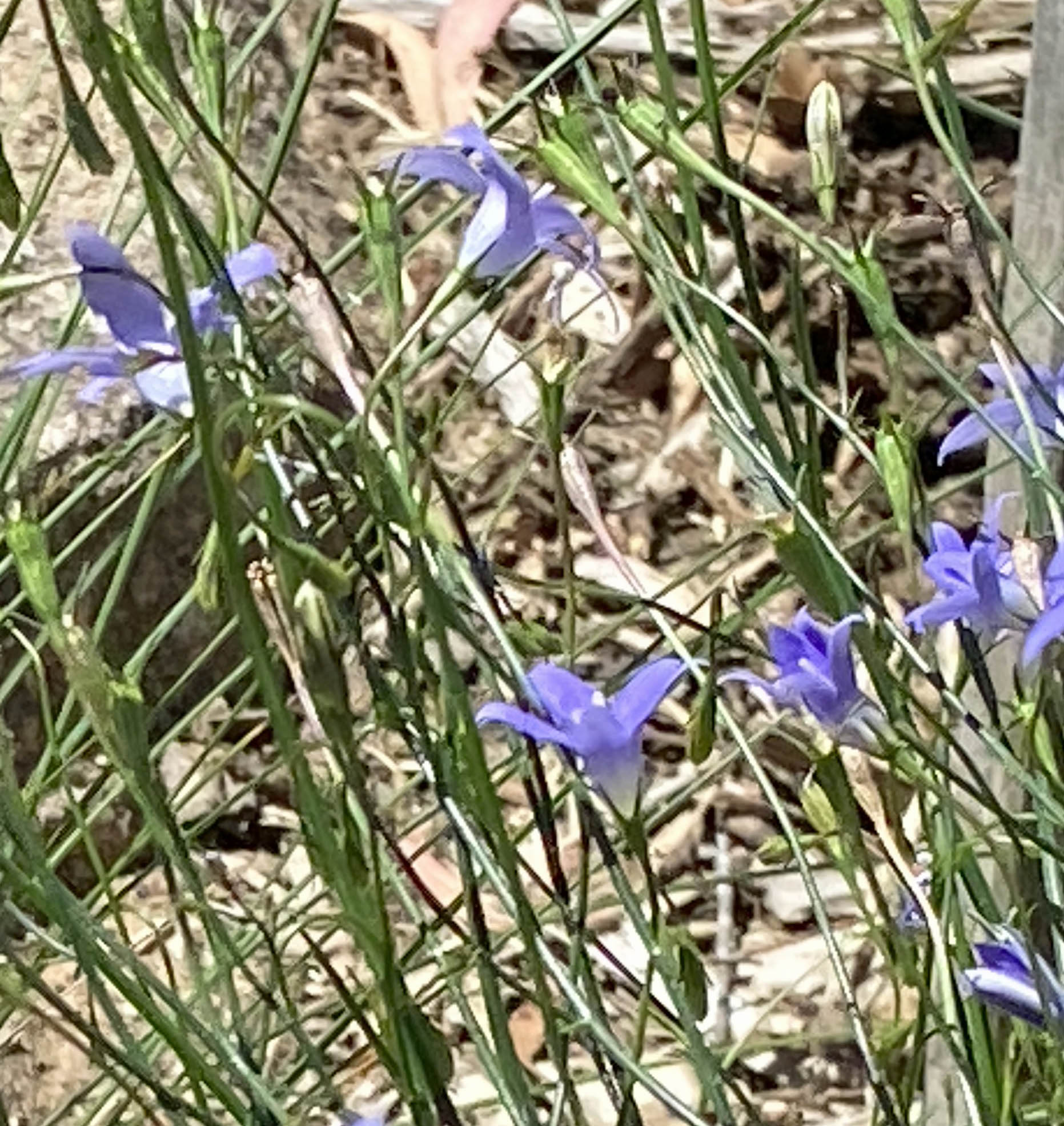
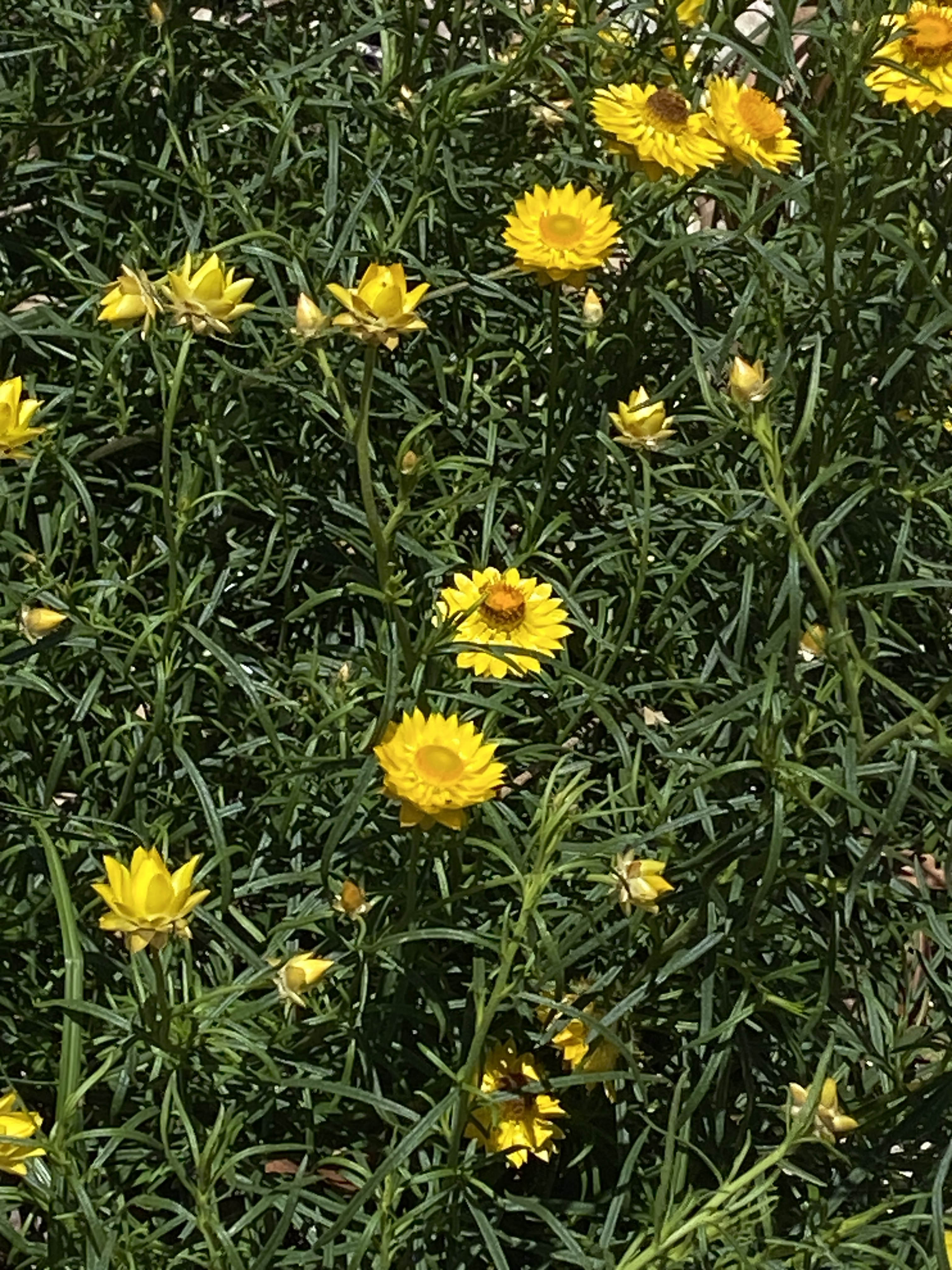
One day my tiny plants might fill out to make a real meadow. Am I an optimist, or just really stubborn?
 One Bend In The River
Leave a comment