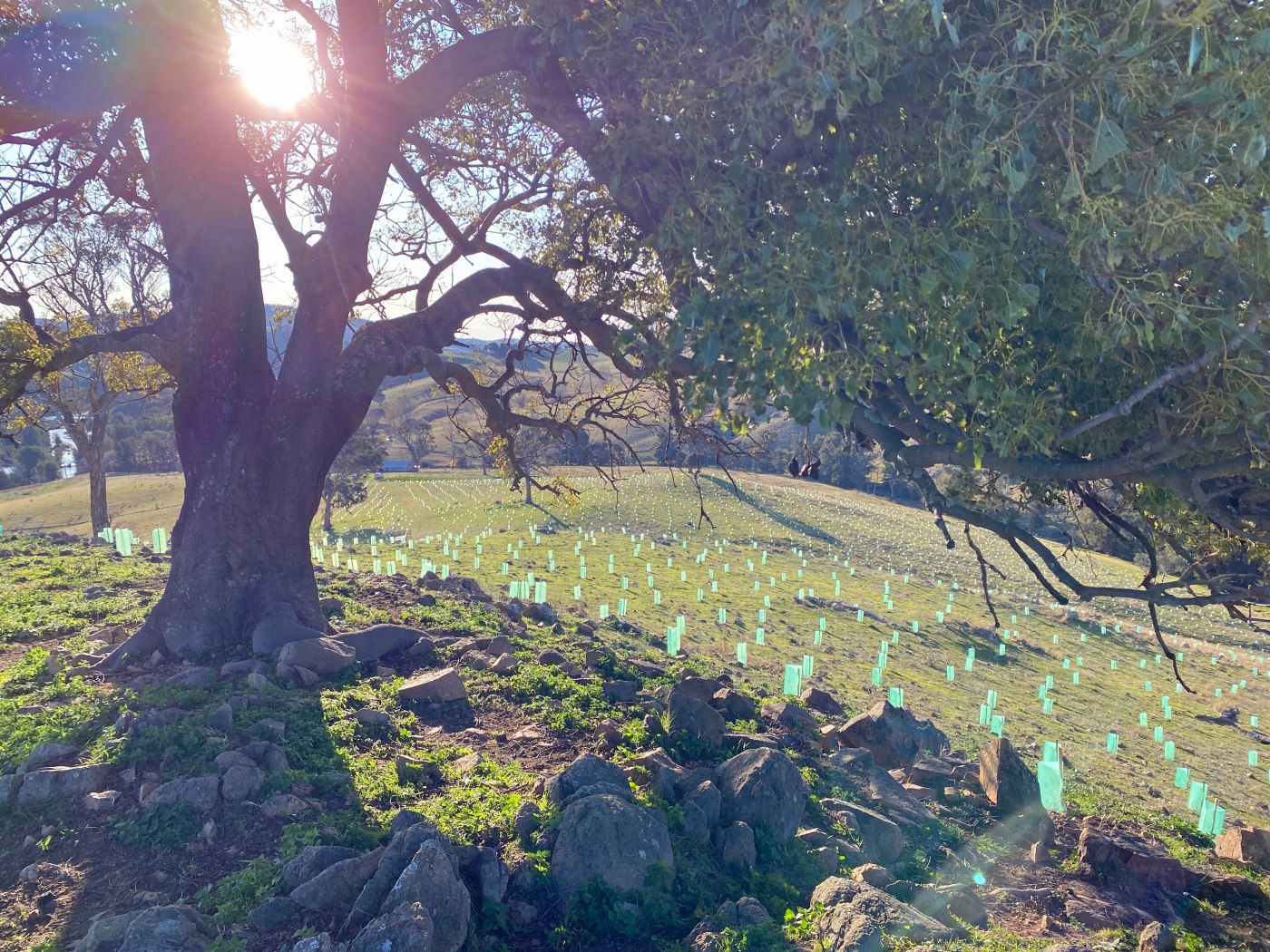
The Kurrajong trees on our hills are some of my favourites. They are, however, also mysterious and strange.
They were valuable to the local Indigenous community for food (seeds), string (bark) and shade, and I’ve heard for memorials. Many of our big, old, ones were planted inside hollow stumps, to give them a head start with the fertility of the rotting timber.
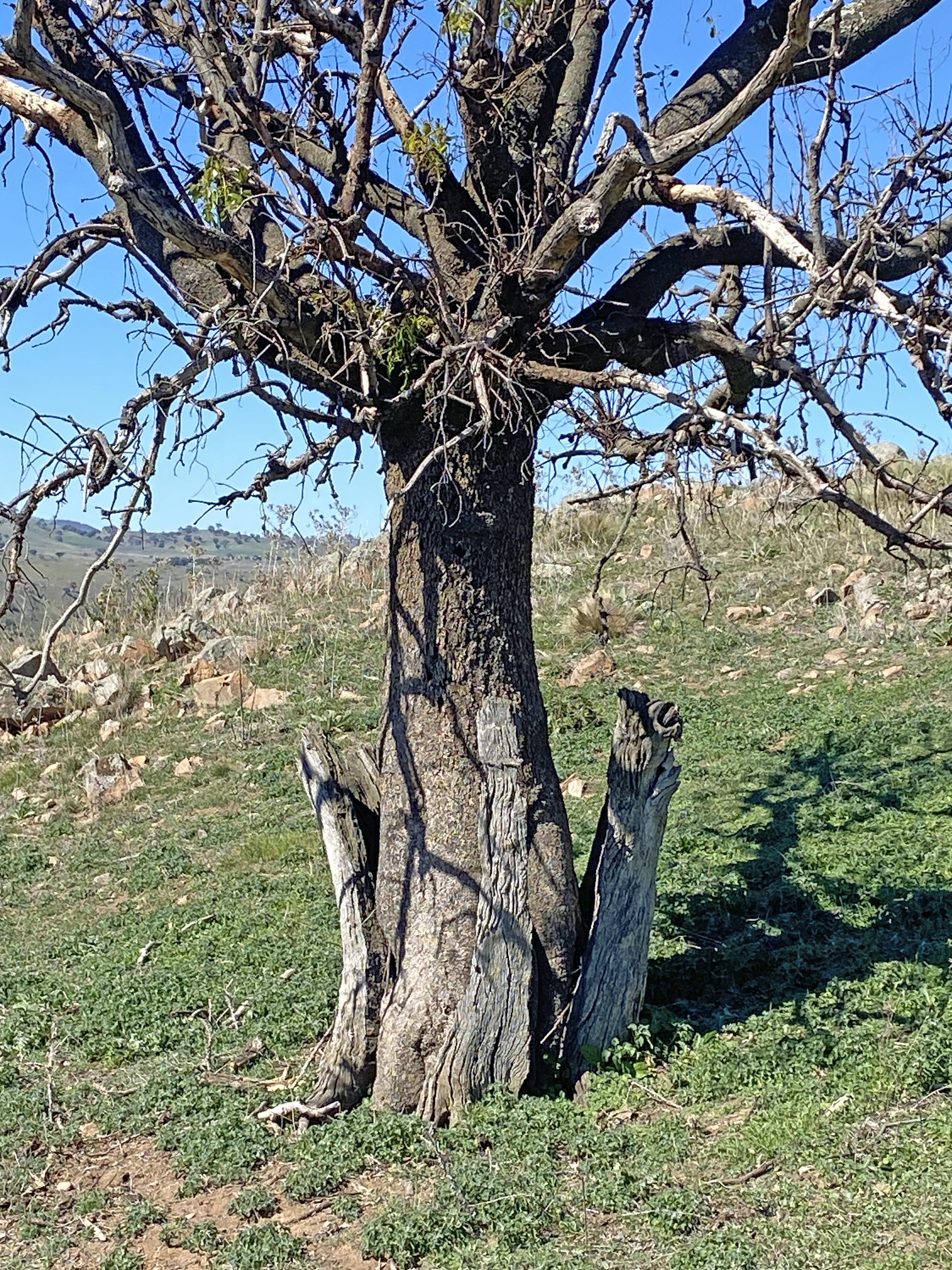
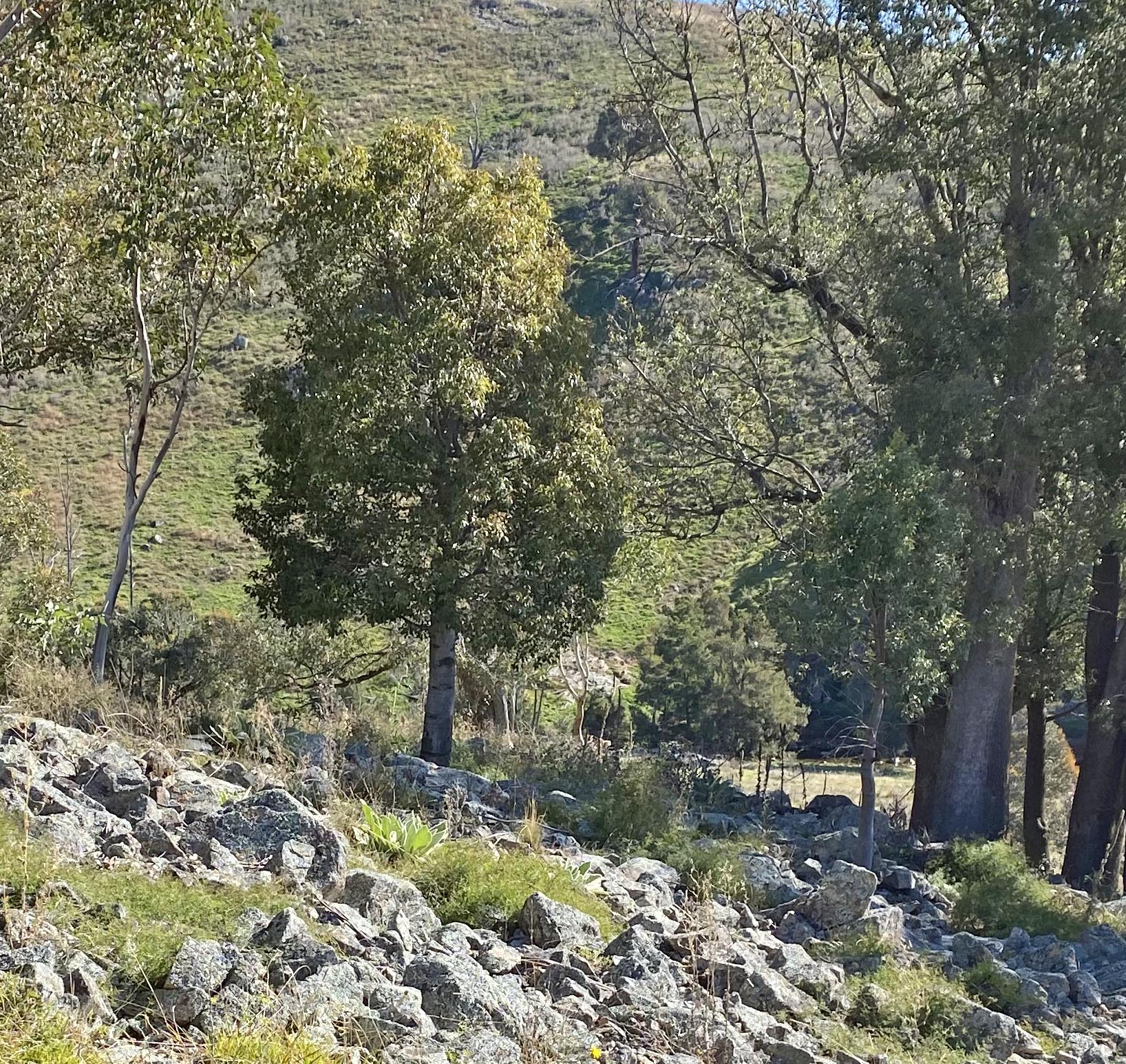
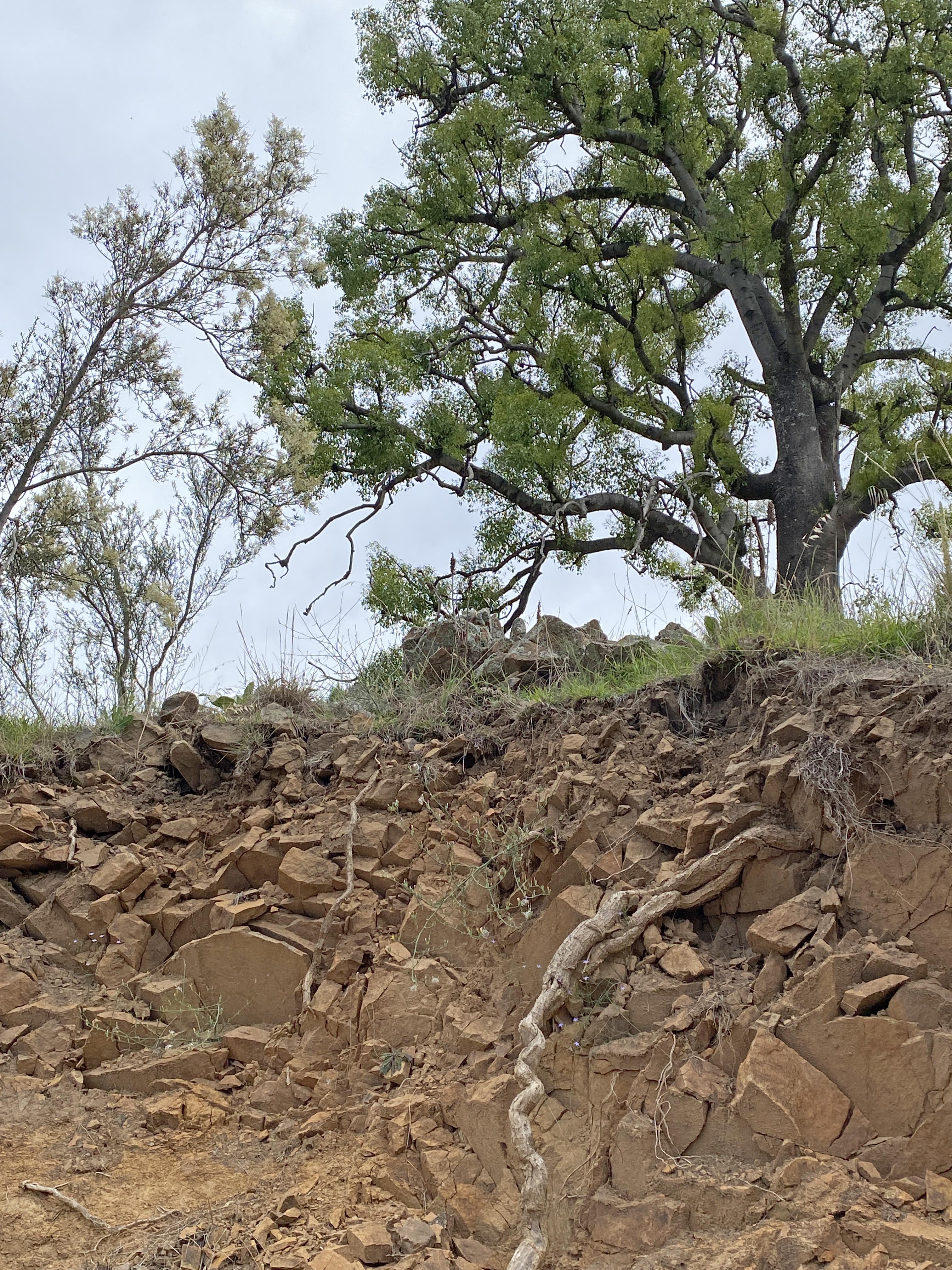
One on Adnamira always stood out, with its pale green leaves looking like an exotic import from another continent, which it isn’t. They often grow among the rocks, in otherwise unpromising places, and struggle in more fertile spots. They have extraordinary skills at finding moisture and nutrients by sending out their fleshy, tuberous roots in all directions.
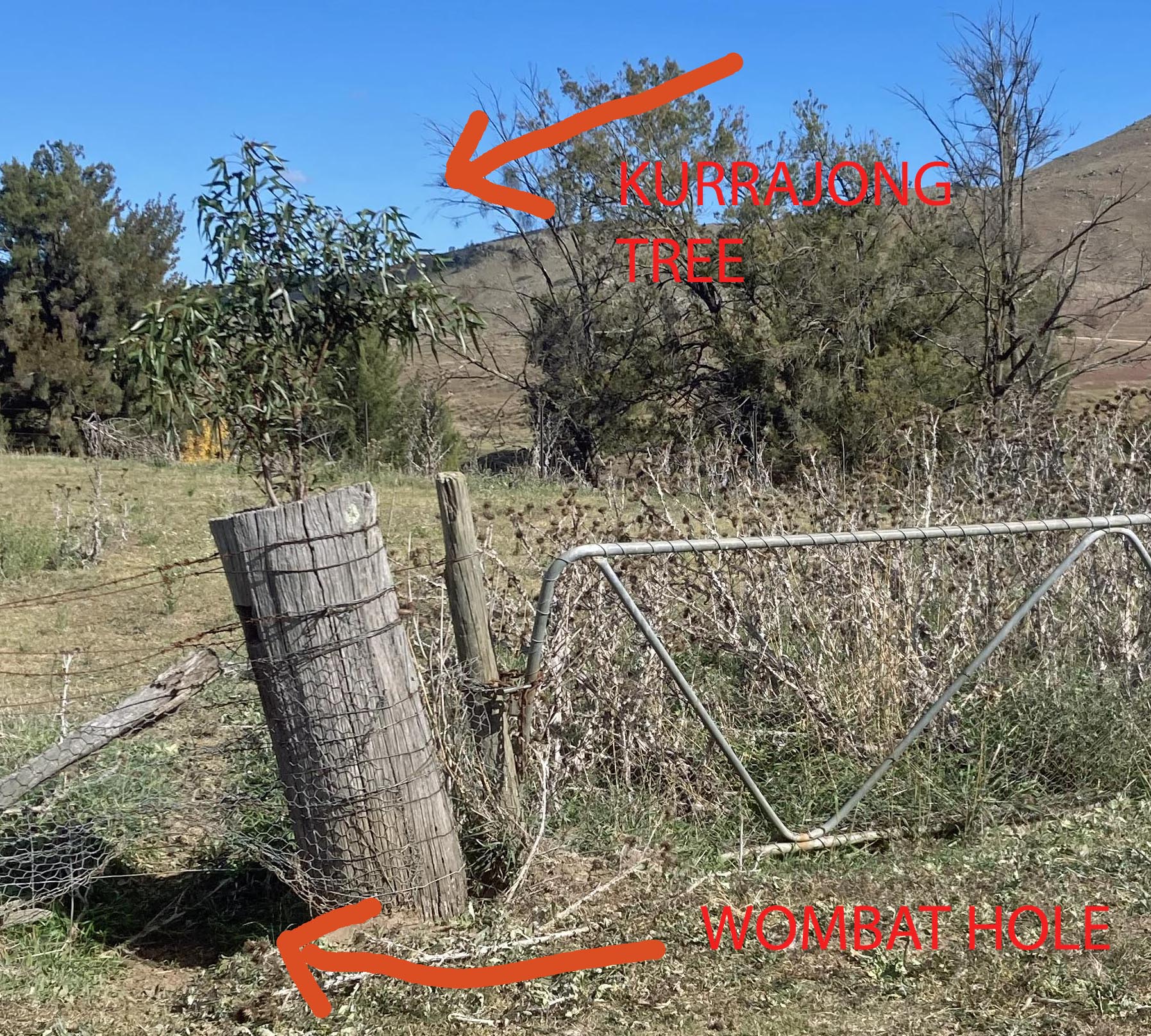
Their seedlings can be very variable, with all leaf shapes from narrow to triangular to round. One decided to self-seed in the top of an old gate post, which seems to be adding an extra challenge. It’s ten years old and still quite small, but that’s not really unusual. It’s difficult to move a seedling without breaking the fleshy tap root, so I usually just accept wherever they choose to appear. I’ll have to replace the gatepost eventually with a steel one a few metres along.
They make gorgeous bell-shaped flowers which seem to appear at unexpected times, perhaps after rain. In Canberra, some were planted in lines on Ainslie Avenue, but they are unwilling to put up with that sort of bureaucratic regimentation. They are all different sizes and shapes, and will flower and drop leaves at their own individual pace. They just do things their own way without regard for order.
They will lose some or all of their leaves from time to time, for their own purposes. One reason is stress – as when I made the mistake of spraying some horehound at the foot of a beautiful tree, and it dropped its leaves for two years. I was horrified, thinking it had died, but eventually it recovered.
Then that fragile return was undercut, literally, by road widening, which exposed some of the roots. They withered away in the open air, but the tree didn’t go into retreat again.
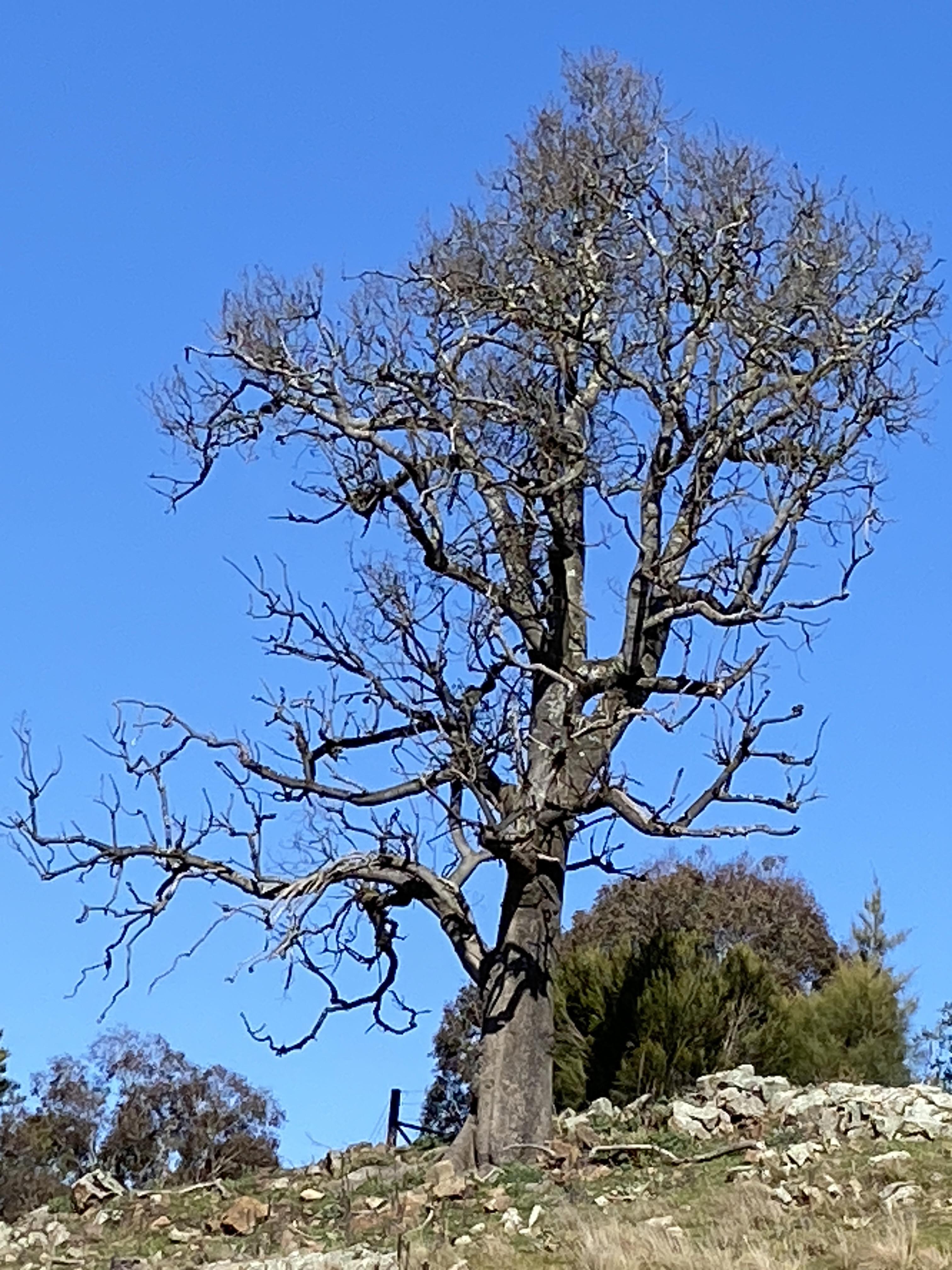
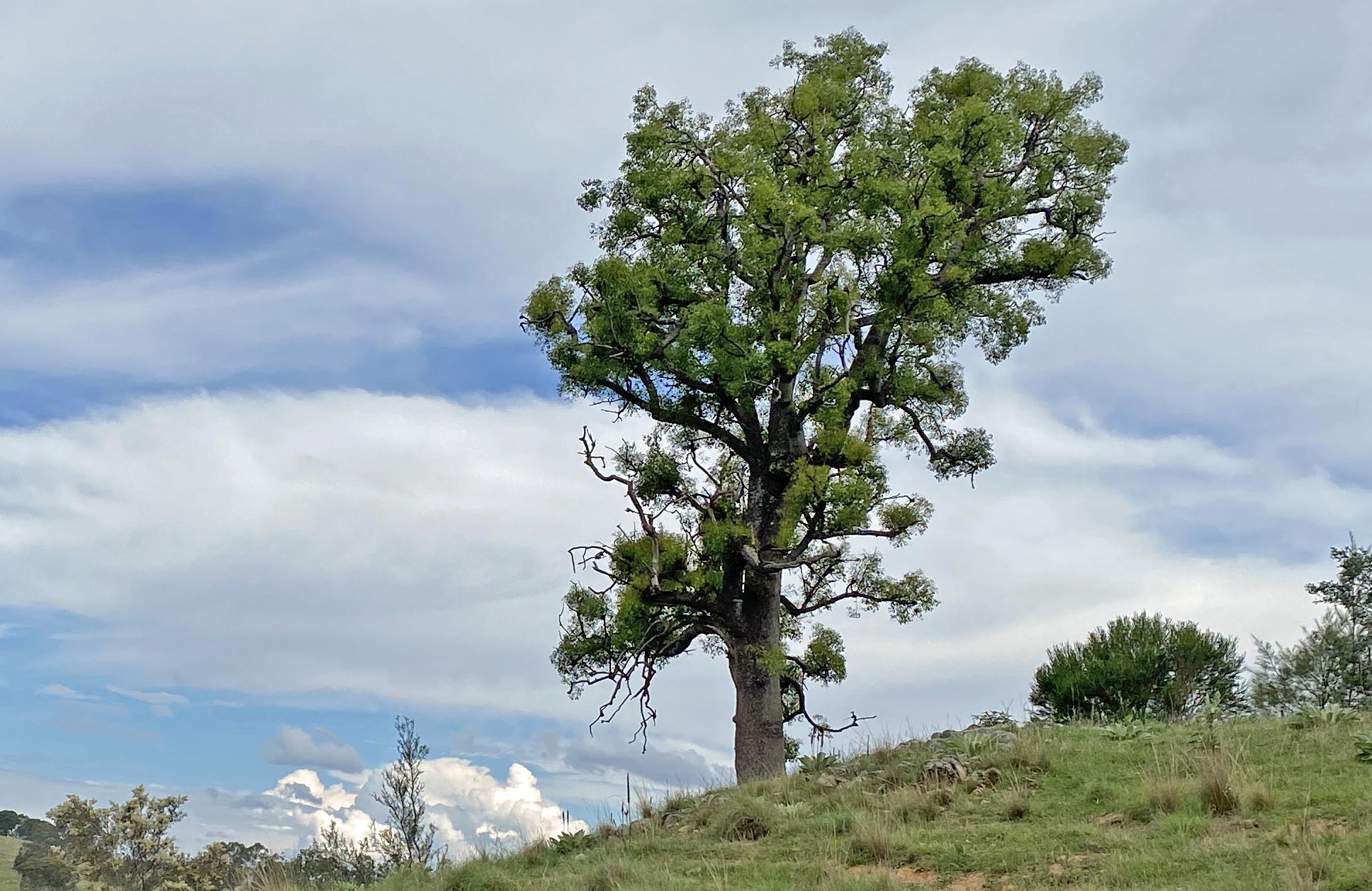
Our friend, Dave Rowell explained that kurrajongs can survive without their leaves for a long time, because they can photosyntheize through their green, leathery twigs and bark. As they get older, the main leathery stem that gives them the name “brachychiton” becomes thicker and greyer, similar to an English Oak tree with its deep fissures.
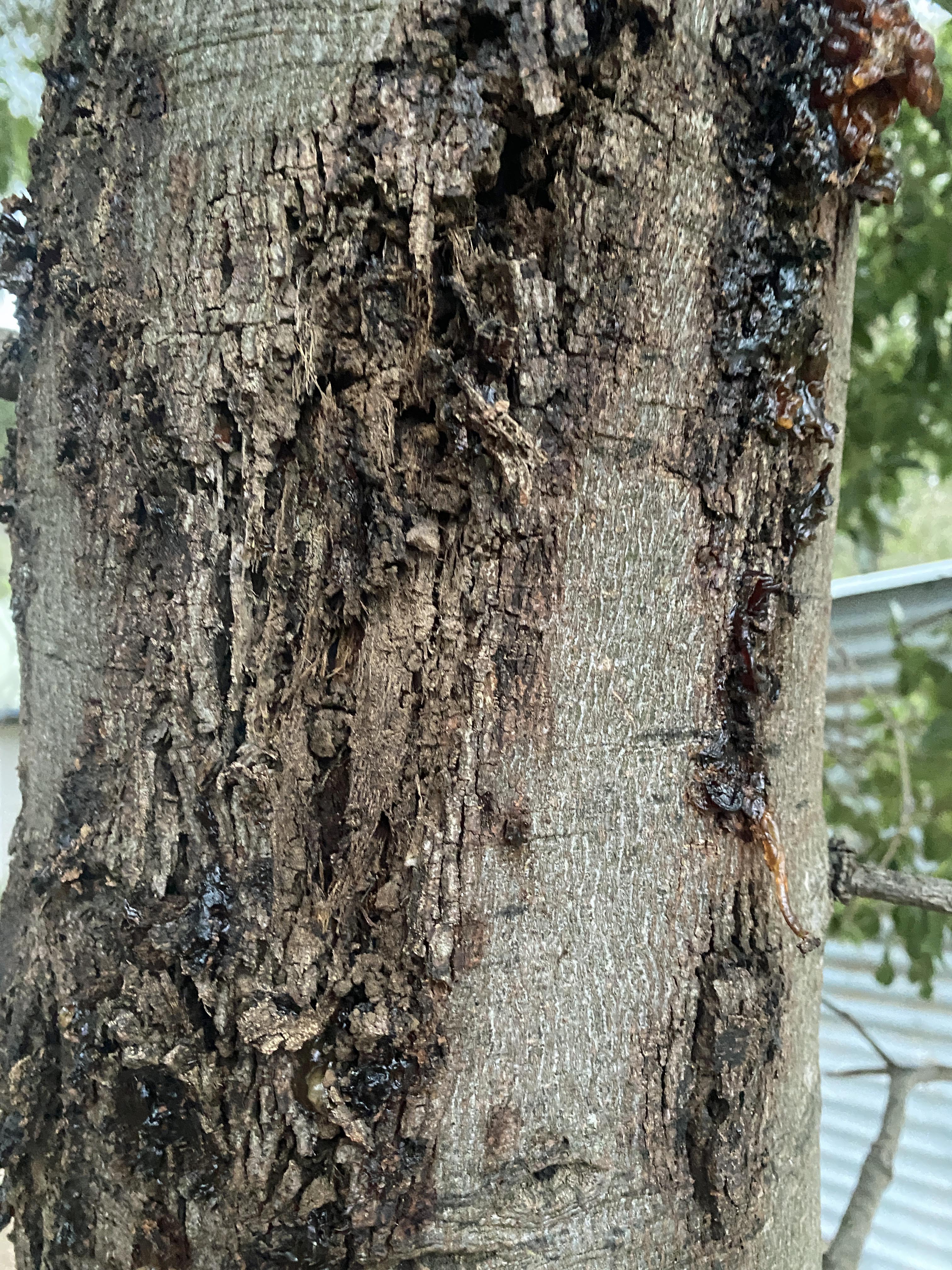
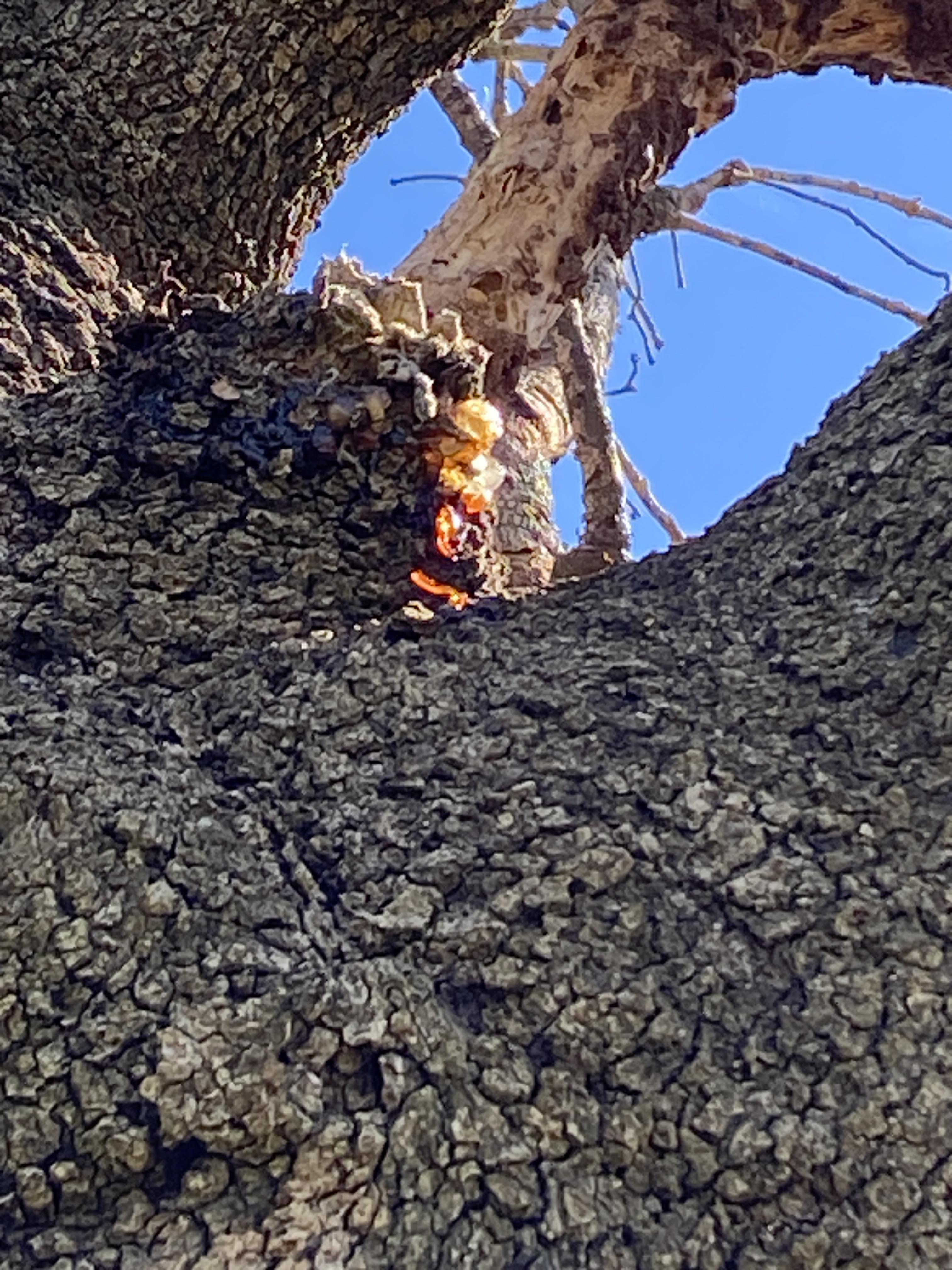
One thing I’m not sure they will survive is an insect attack. The one next to our new chook house drew my attention because it was exuding big blobs of orange sap. Looking more closely, I could see tiny weevils clustered around, looking almost indistinguishable from the grey bark. Looking them up on iNaturalist, I found they were “Axionicus insignis”, the Kurrajong weevil. Usually I like weevils, finding their long snouts quite cute. The New South Wales DPI lists several other pest insects (from the Kurrajong point of view) but suggests that healthy and widely spaced trees seem to suffer less than crowded or artificially planted ones.
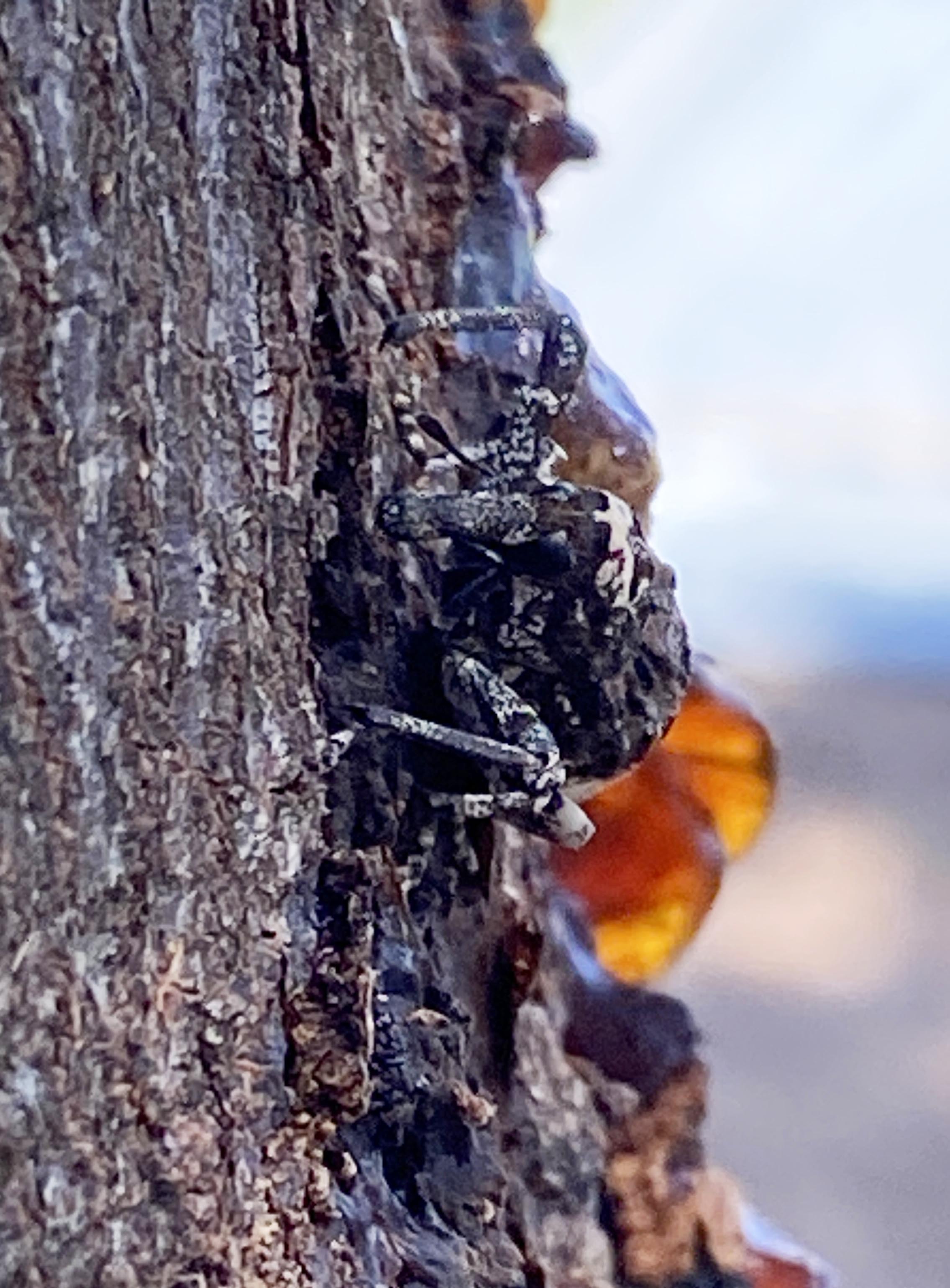
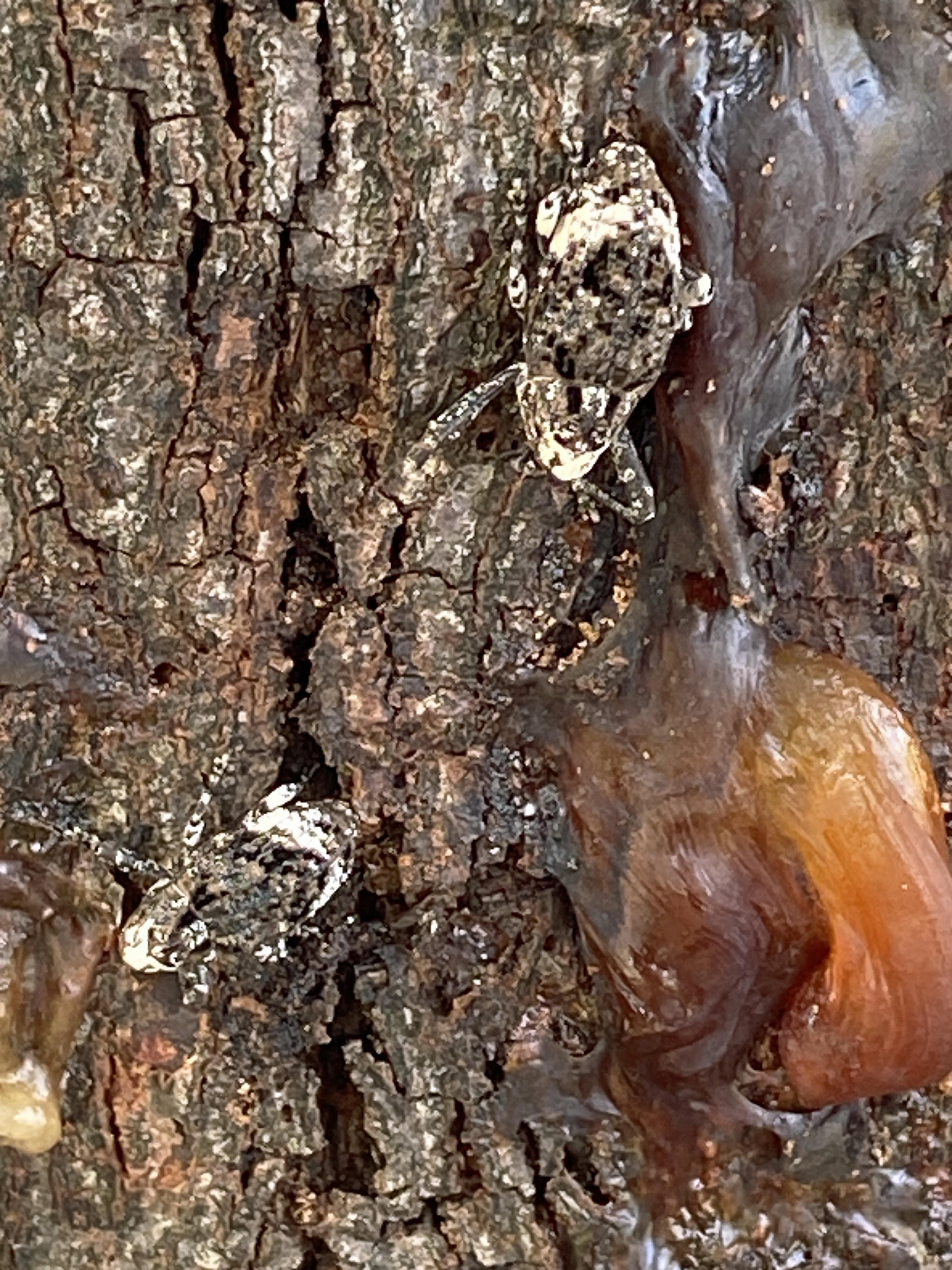
A few weeks later they’d disappeared, leaving nothing but some blackened fissures in the bark and some areas that were spongy and hollowed-out. I’ll just have to keep watching the tree to see how it goes. The old one planted in a stump had the same sap marks, and was looking very unhealthy with branches actually so dead the bark had fallen off.
Basically, Kurrajongs like their privacy. It’s a good reason to keep the numbers low, even though they’re beautiful.
Beautiful but contrary.


We’ve had a couple of seedlings pop up and then disappear. Thanks for the information. You’re lucky to have such an authoritative friend. Gosh, the Rowels are so knowledgeable. We know Alison, who is David’s sister.
LikeLike
They’re great aren’t they, (both Rowells and kurrajongs)!
LikeLiked by 1 person
Indeed.
LikeLike
Love Kurrajongs and love your articles .
Sent from Gmail Mobile
LikeLike
Thanks Katherine!
LikeLike
Fascinating! I agree there’s something mysterious about Kurrajong’s – love them!
LikeLiked by 1 person
They are quite strange…
LikeLiked by 1 person