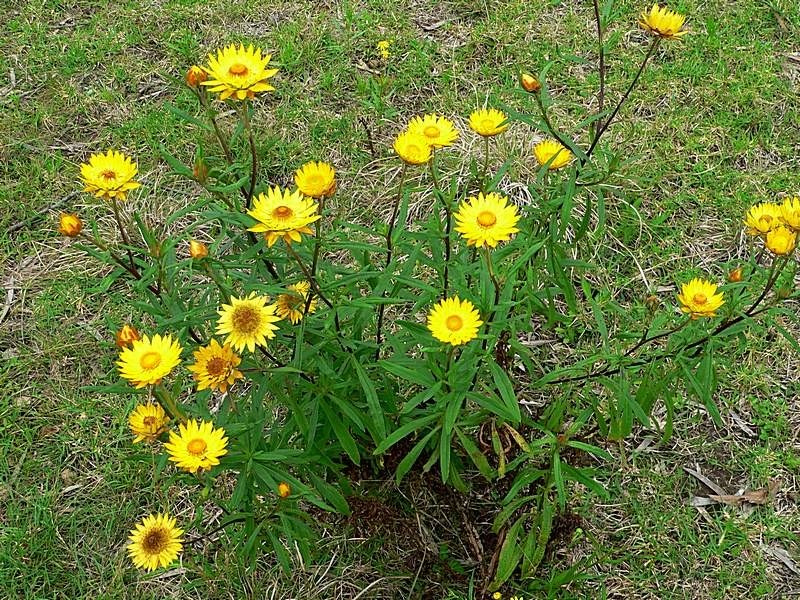
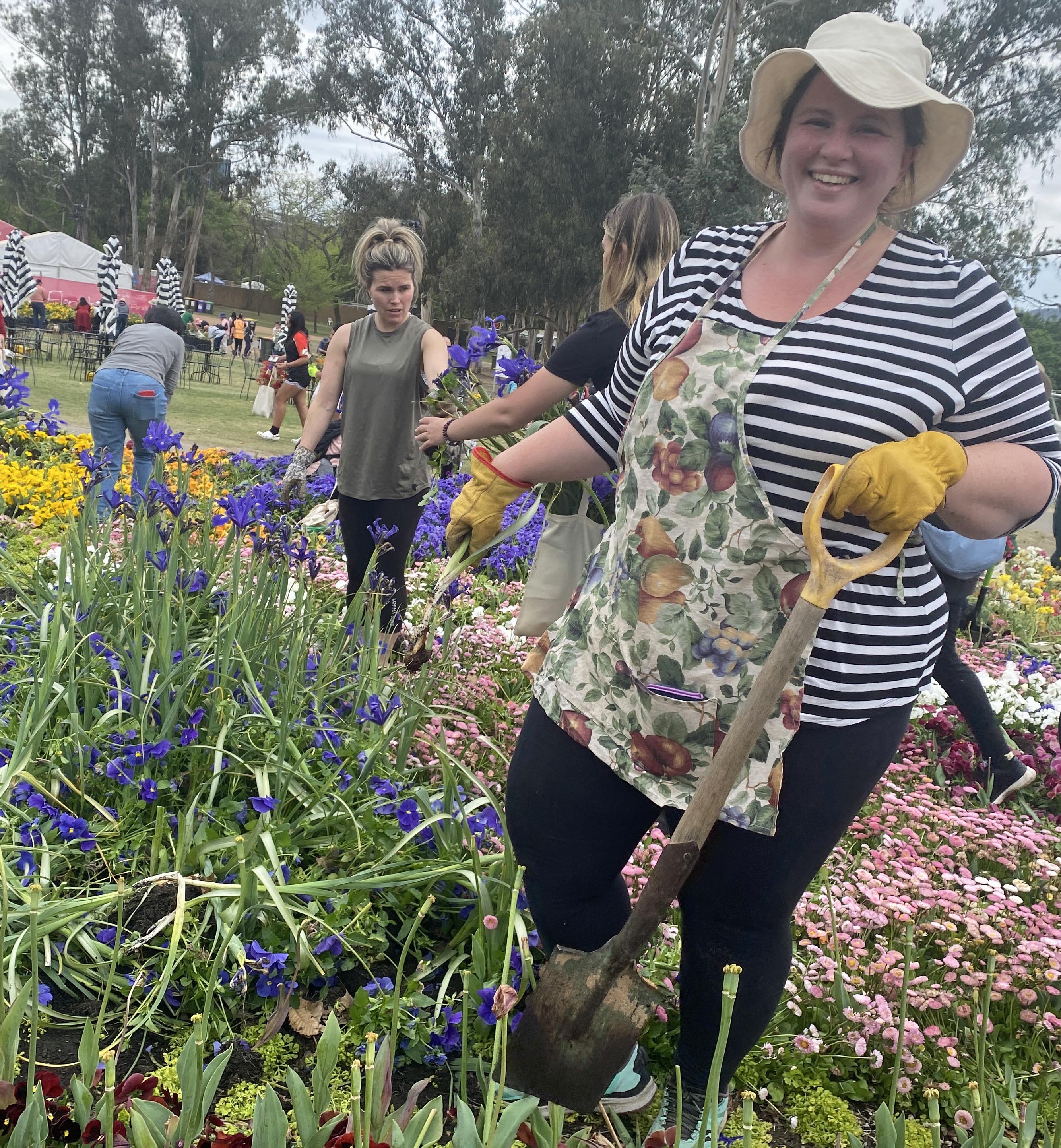
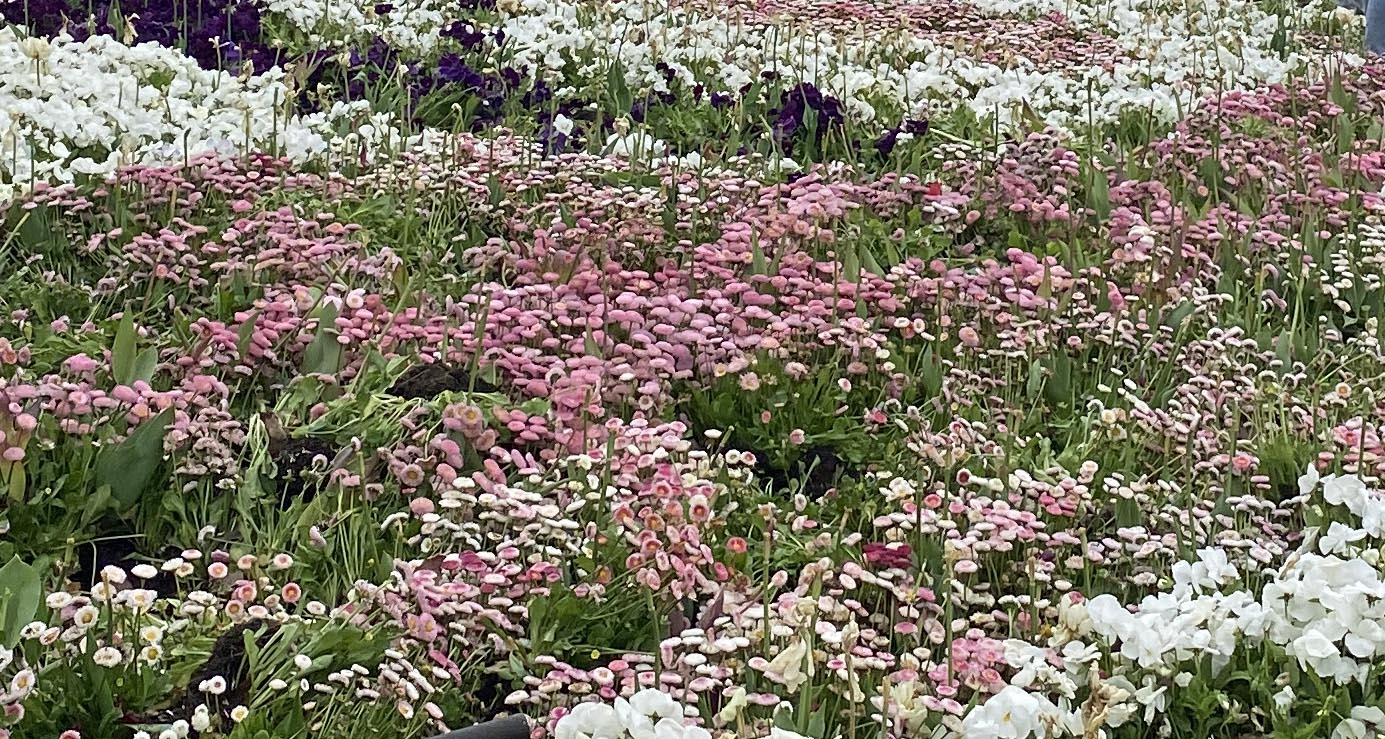
As an addition to my garden native meadow area, I’ve been wanting to grow pretty everlasting daisies in the garden closer to the house for a while. Especially after wading through a sea of pink and purple in the chaos at the end of the Floriade Festival, when Jessie and I picked up a couple of bags of mostly bulbs, but also some pink annual everlastings.
Australian native plants are adapted to life in a fire-prone landscape. I’ve noticed the short-lived wattles are both short-lived and very vulnerable to burning, but their many, many seeds are able to survive and thrive. In the Landcare nursery context, that means the seeds won’t germinate unless they are treated with hot water or “smoke water”.
I sort of knew this when I had Charlie and his friend Hannah do some seeding of acacias on the steep Cutting slope near the river, using seeds from our existing wattles. Unfortunately, I didn’t do any boiling or smoking, and few of them came up. I should also have used a stocking or a bag to catch the seeds at perfect ripeness, rather than cutting off seed pods and hoping for the best.
So, smoking is a real thing. Let’s call that an experiment.
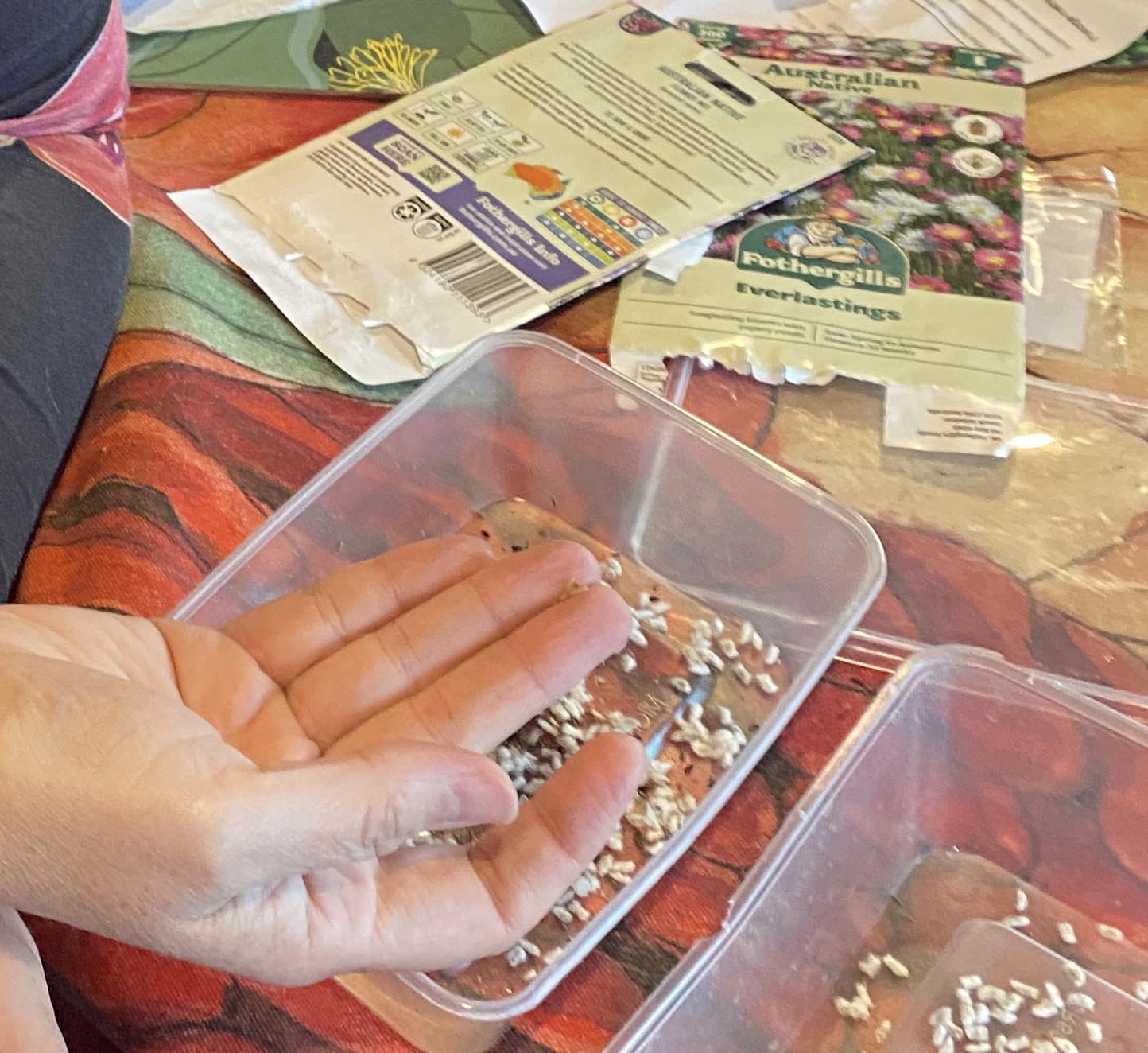
I bought some commercial everlasting seeds with pretty pictures on the packets, and Jessie added some others, which may have included brachyscome.
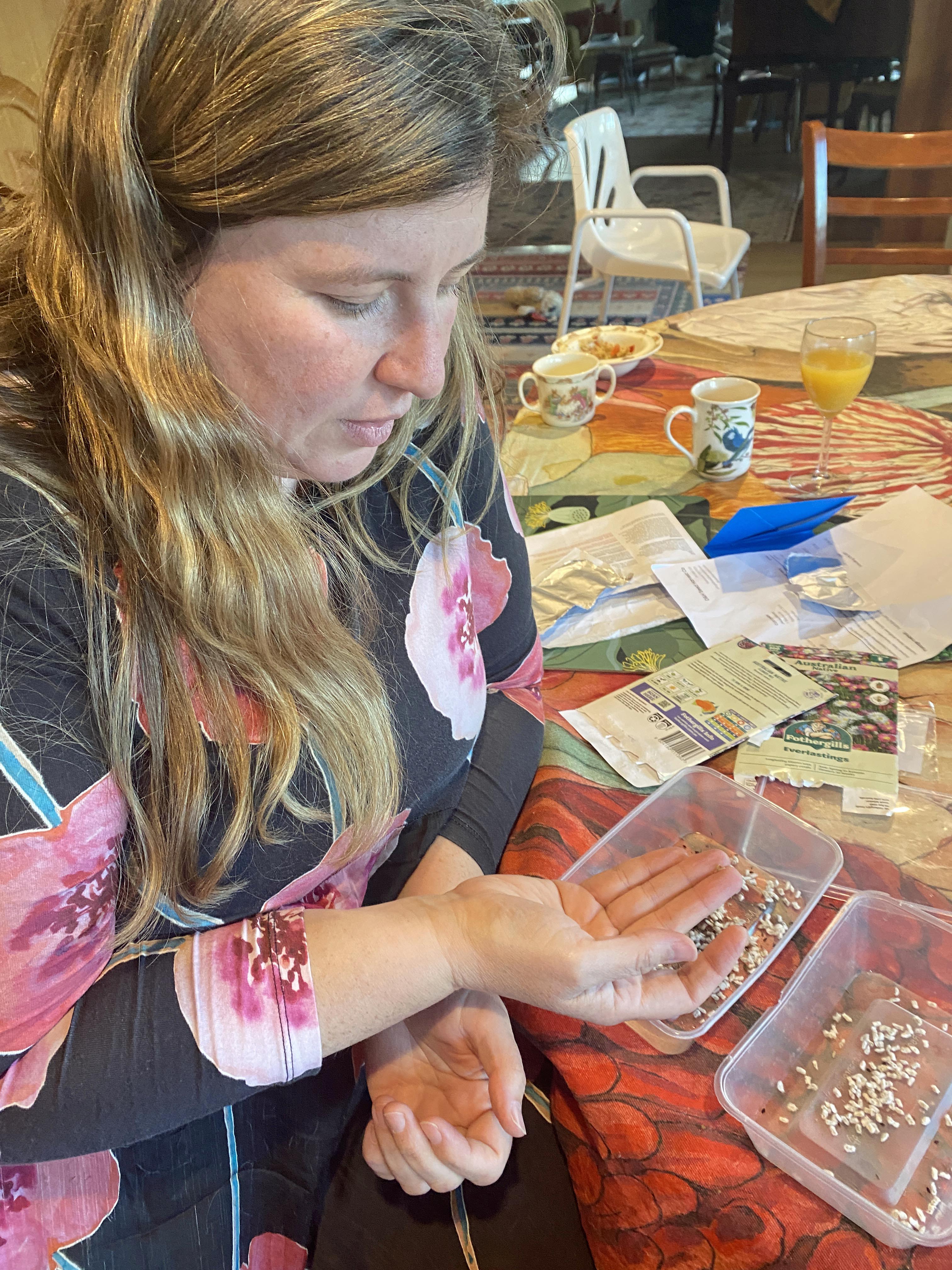
You can buy smoke water commercially in a number of places. It definitely smells strong, a bit like creosote. You can make your own by burning some hay in a fairly closed container and then straining water through the burned stuff.
I decided to try directly smoking some seeds for the everlasting daisy cultivars, having looked up a few tactics. Gardening Australia recommended using a “kettle barbecue”, such as one of the round ones that uses charcoal as fuel. We didn’t have a kettle barbecue, but we did have Craig’s lovely gas barbecue, which has an upper shelf and a lid.
Craig wasn’t excited about using it for this.
I collected a lot of dried leaves, grass and bark to make the smoke. Not wood, and avoiding eucalypt. I collected far more than we needed, it turned out. An entire garbage bin full. What we needed was about two handfuls. Because it’s a gas barbecue, we sat a metal tray on the grill to light the fire, and then spread the seeds into open plastic takeaway boxes on the top shelf (on foil) to smoke. The plastic is a good indicator that it’s getting too hot. If the containers start to melt, you need to cool it down.
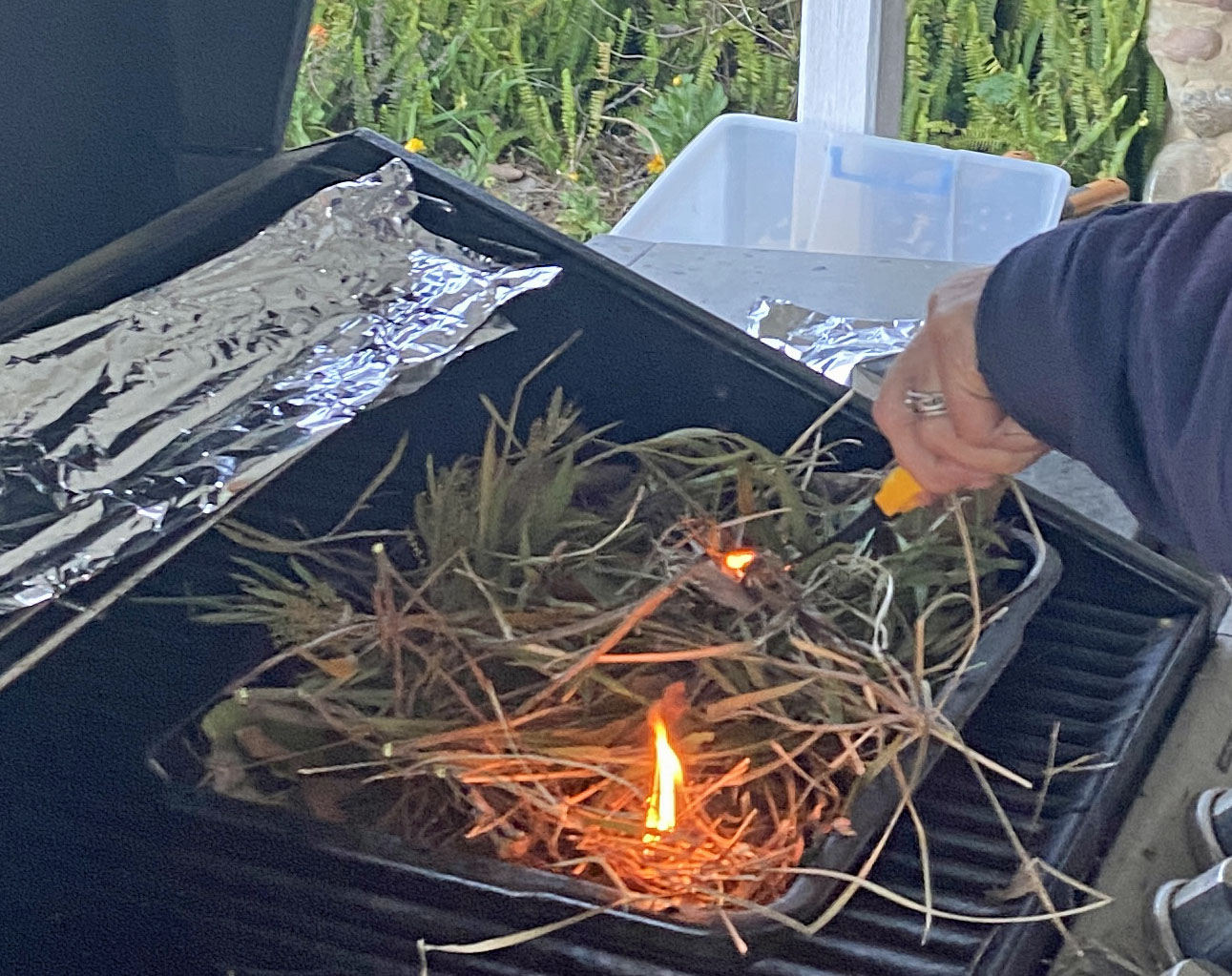
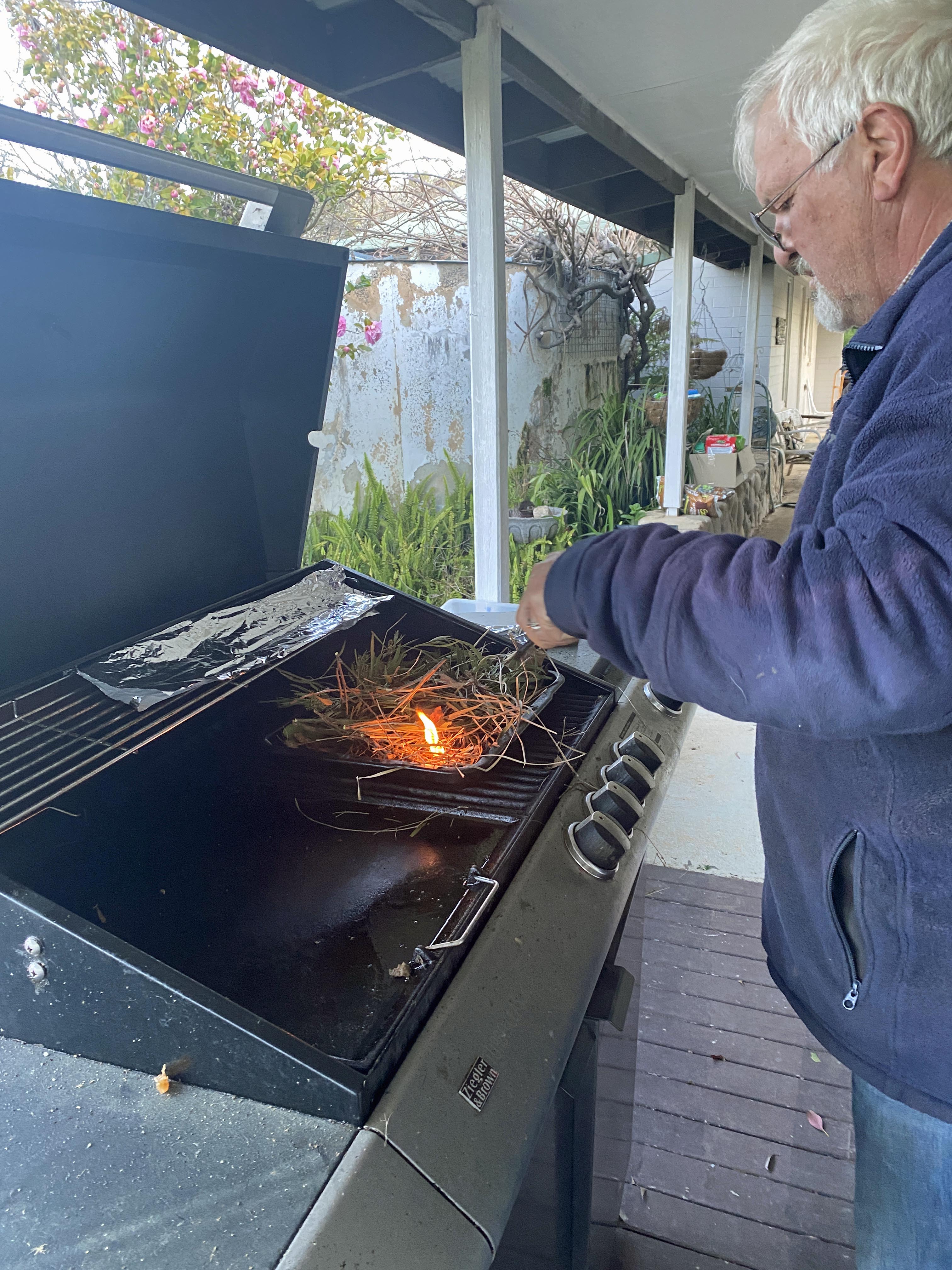
We lit it, then shut the lid. Then peeked inside and panicked, because it was too hot. The plastic was starting to warp. Craig was still struggling with the idea of a barbecue that was only supposed to be warm. We were busy shouting at each other when our lovely neighbours dropped by for a drink and found us shrouded in smoke. They were a little surprised.
In the confusion, I didn’t really time a full fifteen minutes. Craig was very keen to get the plastic trays out of the barbecue before they became sticky puddles on the griddle, even though the grass and leaves had finally settled to a nice smoulder. The seeds didn’t seem to have the full brown coating that they are supposed to get, but everlasting seeds are very tiny so it’s hard to tell.
I sowed them and they all came up in the tray, which I’m pleased about.
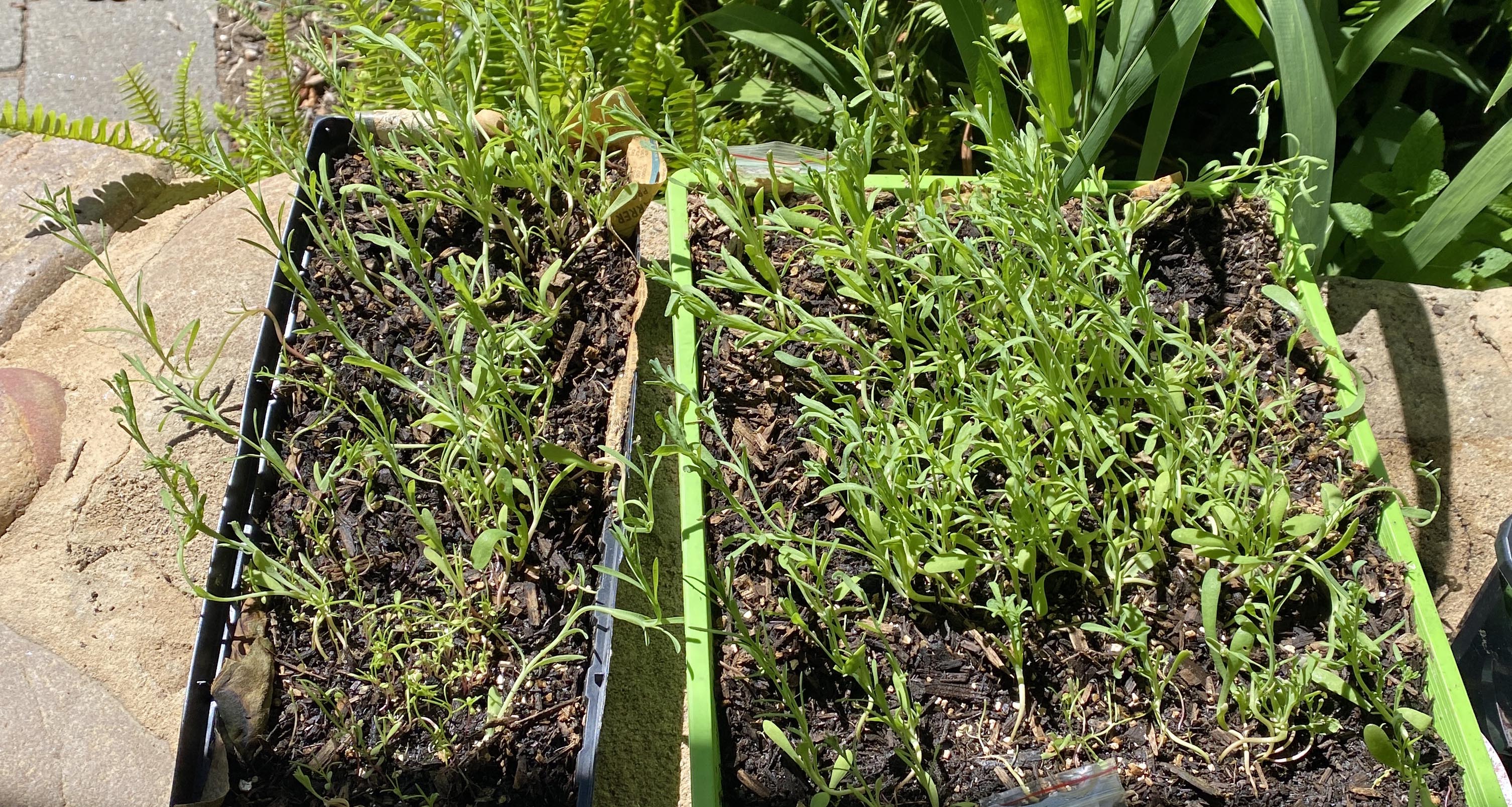
The success rate is much better than the previous (unsmoked) time I tried, when depressingly few everlastings germinated. I gave up on them for several years after that failure.
The seed trays were full, but by the time I was ready to get them planted out (thanks Dmitry) they were still a little small and stringy. Probably I should have given them some more native fertilizer while my knee recovered from its replacement, as the seeding mix runs out after a few weeks. Since they are annuals, it felt like the time spent in the tray was a waste.
Snails, slugs or earwigs (I think) removed the planted ones from the garden quite quickly. I still have some survivors of the biggest ones that Dmitry protected with upturned pots. I’m not sure how many flowers we’ll get.
Smoke isn’t the only thing needed for success, but it is a good first step.
Meanwhile, my wild versions have successfully seeded themselves into the gravel pathways. Perhaps gravel was what they really wanted all the time.


Leave a Reply